
CLAS graduate student helps researchers better understand ultrathin crystals
Thursday, October 22, 2026
CLAS graduate researcher Ramachandra Bangari and associate professor Thomas Folland of physics and astronomy collaborated with researchers from McMaster University and Vanderbilt University on a new method for determining how ultrathin crystals are oriented, an important step toward understanding materials that could be used in future technologies.

CLAS researchers find parents should combine words with gestures to help their children learn
Monday, October 19, 2026
Ece Demir-Lira, associate professor in the UI Department of Psychological and Brain Sciences and the study’s corresponding author, says combining words with hand gestures can be applied by parents and teachers alike.

Using AI in violence prevention should put survivors first, CLAS researcher argues
Tuesday, October 13, 2026
Artificial intelligence is increasingly being used by social service agencies to handle cases involving child abuse, intimate partner violence, and elder abuse. But a CLAS researcher and former social worker says the agencies need to establish safeguards to ensure that AI technology does not lead to bias against vulnerable or disadvantaged populations.

Jason Robey investigates changes in American incarceration
Friday, October 2, 2026
Jason Robey researches what has driven major changes in the criminal justice system and how those lessons could help shape its future.

Photo gallery: CLAS students take part in high-profile physics experiment
Thursday, October 1, 2026
Called the Deep Underground Neutrino Experiment (DUNE), physicists from Iowa and around the world have teamed up to detect neutrinos, elusive particles that may explain what makes up the universe and all that’s in it, including us.
When an image becomes a place: How Kaia Olsen reimagines visual storytelling
Wednesday, September 23, 2026
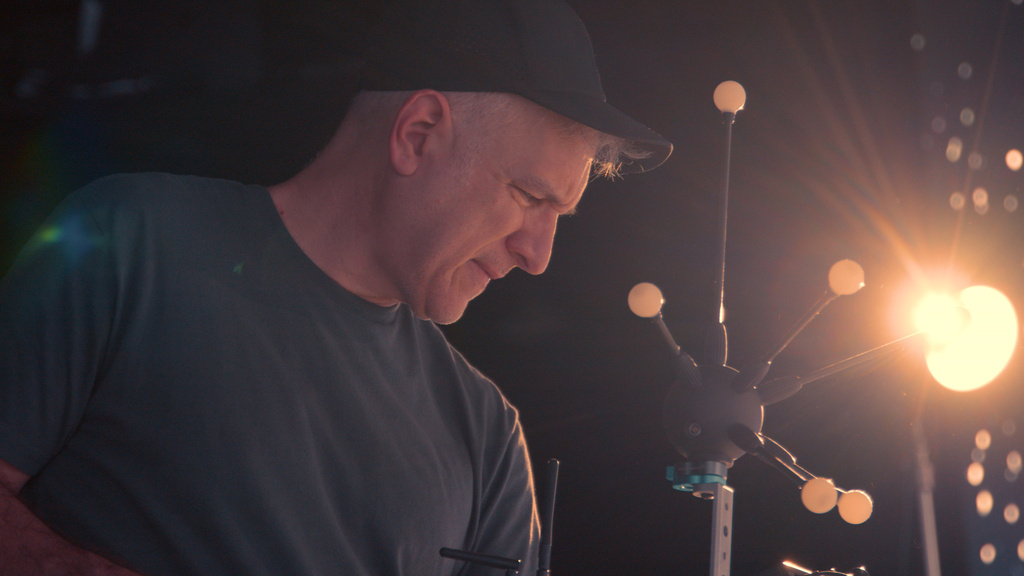
Kaia Olsen's experimental research invites audiences to move through photographically captured events reconstructed as three-dimensional spaces, revealing new perspectives and possibilities for storytelling.

CLAS researcher finds gemstones on Mars using NASA rover
Wednesday, August 26, 2026
A planetary geologist from the University of Iowa is part of a team using one of NASA’s rovers on Mars that’s found the makings for precious gems like rubies and sapphires in the Martian soil.

CLAS researchers reveal deeper workings of brain’s information hub
Tuesday, August 18, 2026
In a new study, CLAS researchers demonstrate how the frontoparietal cortex handles uncertainty in decision-making and organizes and coordinates responses in the brain and body.

CLAS physicists find low-cost way to calibrate magnetometers
Tuesday, August 4, 2026
A new method developed by CLAS physicists could make magnetic field research more accessible to students, educators, and citizen scientists.

Iowa-led research team names, describes ‘Lucy’s hunter,’ a crocodile from our ancestors’ world
Monday, March 30, 2026
A University of Iowa-led research team has identified a new crocodile species that lived over 3 million years ago alongside early human ancestors like Lucy. Named Crocodylus lucivenator ("Lucy's hunter"), it had a distinctive lump on its head and would have been a predator of these early hominids in African rivers and lakes. The findings were published March 11 in the Journal of Systematic Palaeontology.