By Claire McGranahan
When Scott Icenogle (BA ’91) returns to the University of Iowa, he tries to save one day for himself.
He walks the routes he took as a student. He visits familiar buildings. On his most recent trip, knowing he might be asked to create something for Iowa, Icenogle went further: he tried to see the campus through the eyes of his younger self.
He remembered rushing to marching band rehearsal; the excitement of presenting a film, television, or radio project in class; finding an hour to eat with friends before hurrying somewhere else. He remembered walking across campus on football Saturdays, collecting friends along the way until they became, as he describes it, a “blob” headed toward the stadium.
“I started walking the campus and tried to look through the eyes that I had when I was a freshman,” Icenogle said. “My first days on campus: what did they feel like? And I just remembered how overwhelmingly excited I was to be there.”
Those memories eventually became music.
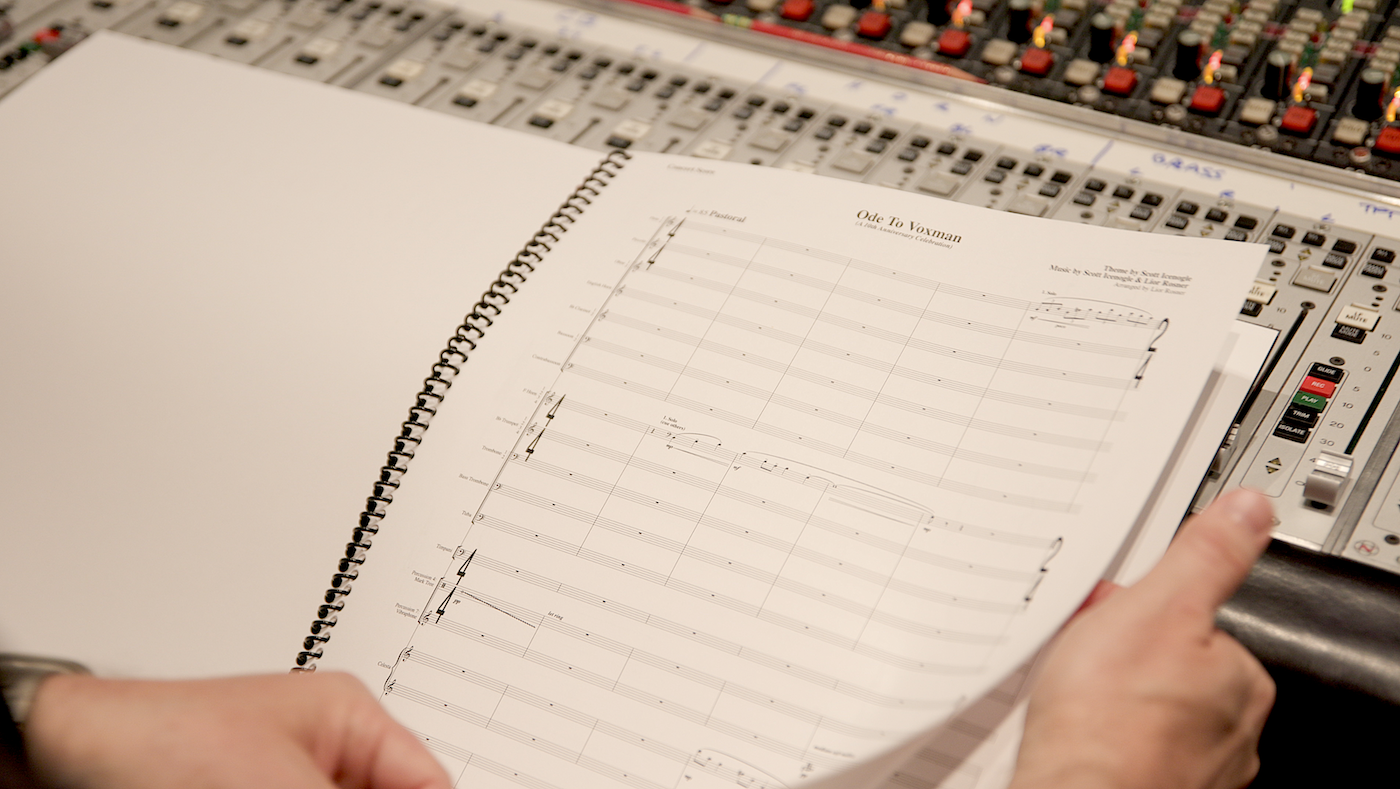
Icenogle, a College of Liberal Arts and Sciences (CLAS) alumnus who majored in communication studies, transformed them into Ode to Voxman, an orchestral work inspired by the university where two interests that once occupied different parts of his life—communication and music—began developing side by side.
Finding the connections
Icenogle knew almost immediately that he had found something important in communication studies. His first introduction to broadcasting and film opened a world that included radio, television, and film production alongside the study of interpersonal communication and messaging.
Music occupied a different place:
“I always just felt like music was kind of my oxygen around me,” he said.
After Iowa, Icenogle went to ABC Television headquarters in New York, working first in production before moving into marketing. But music remained a constant presence in his life, and eventually the interest he had pursued alongside his formal studies became his career.
In 2003, he became the original DJ on The Ellen DeGeneres Show. He later built a career as a remixer and music producer, working on projects for artists including Christina Aguilera, Mary J. Blige, Madonna, Justin Timberlake, Katy Perry, and Britney Spears. His work increasingly extended into the film and television worlds he had first studied at Iowa.
As a composer and music producer, Icenogle has worked on projects including Will & Grace, Netflix’s Q-Force and CNN’s The History of Comedy, collaborating with longtime composing partner Lior Rosner on main title themes, episodic scores and music direction. The two also collaborated on "Ode to Voxman," bringing their creative partnership to a project inspired by Icenogle's Iowa memories.
In retrospect, Icenogle sees those professional paths as extensions of interests that were already developing together at Iowa. Understanding how television and film are made taught him how other storytellers communicate their ideas—and, eventually, how his music could work alongside them.
“I just think understanding my place in the puzzle of putting something onto a screen or a TV set, I think it just honed my communication abilities as it relates to music,” he said.
Composing from memory

For most of his career, that has meant composing in collaboration with someone else’s creative vision. Then Iowa gave him a different assignment.
The idea began over lunch in Los Angeles in spring 2025, when Icenogle met with School of Music director Tammie Walker and Jane Van Voorhis, senior director of development for the UI Center for Advancement. As the School of Music looked ahead to the 10th anniversary of the Voxman Music Building, the group envisioned a commemorative video accompanied by an original piece of music—a way to celebrate the building and the community it serves.
For Icenogle, the commission presented an unusual creative challenge. There was no television episode to score, screenplay to interpret, or director explaining what a scene should feel like.
“The only inspiration was my experience at Iowa,” Icenogle said.
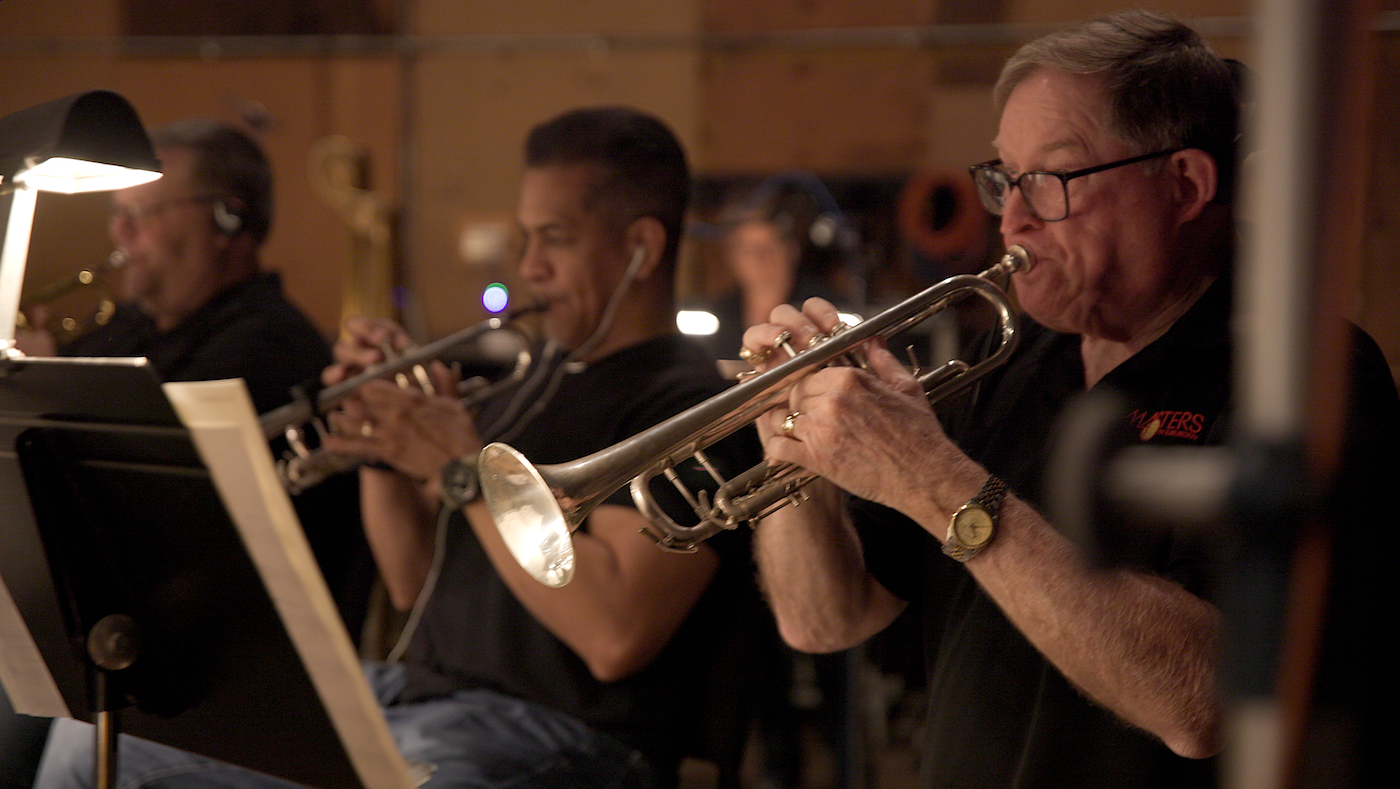
He thought about the excitement of arriving at a university for the first time, the shared spirit of college life and his own memories of the Midwest. He also drew from his time in the Hawkeye Marching Band. Listening to the finished piece later, Icenogle realized some of its rhythms, accents, and prominent brass may have emerged from that experience without him consciously intending it.
Walker said the finished composition brought together the anniversary and Icenogle’s own connection to Iowa.
“It has been inspiring to witness how Scott so beautifully incorporated the significance of the 10th anniversary with his personal Iowa experience,” Walker said. “We are so proud to have his extraordinary piece of music forever linked to the Voxman Music Building and the transformative work that happens within its walls.”
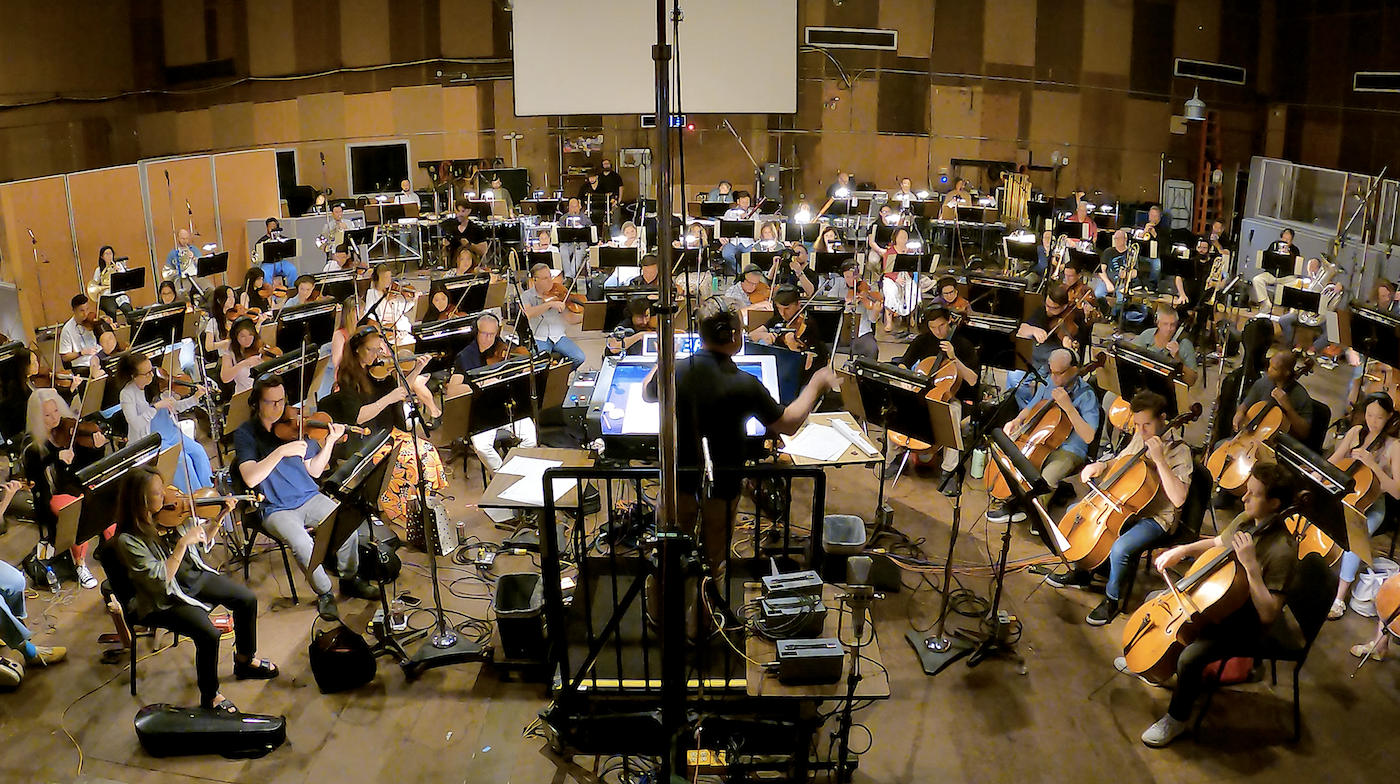
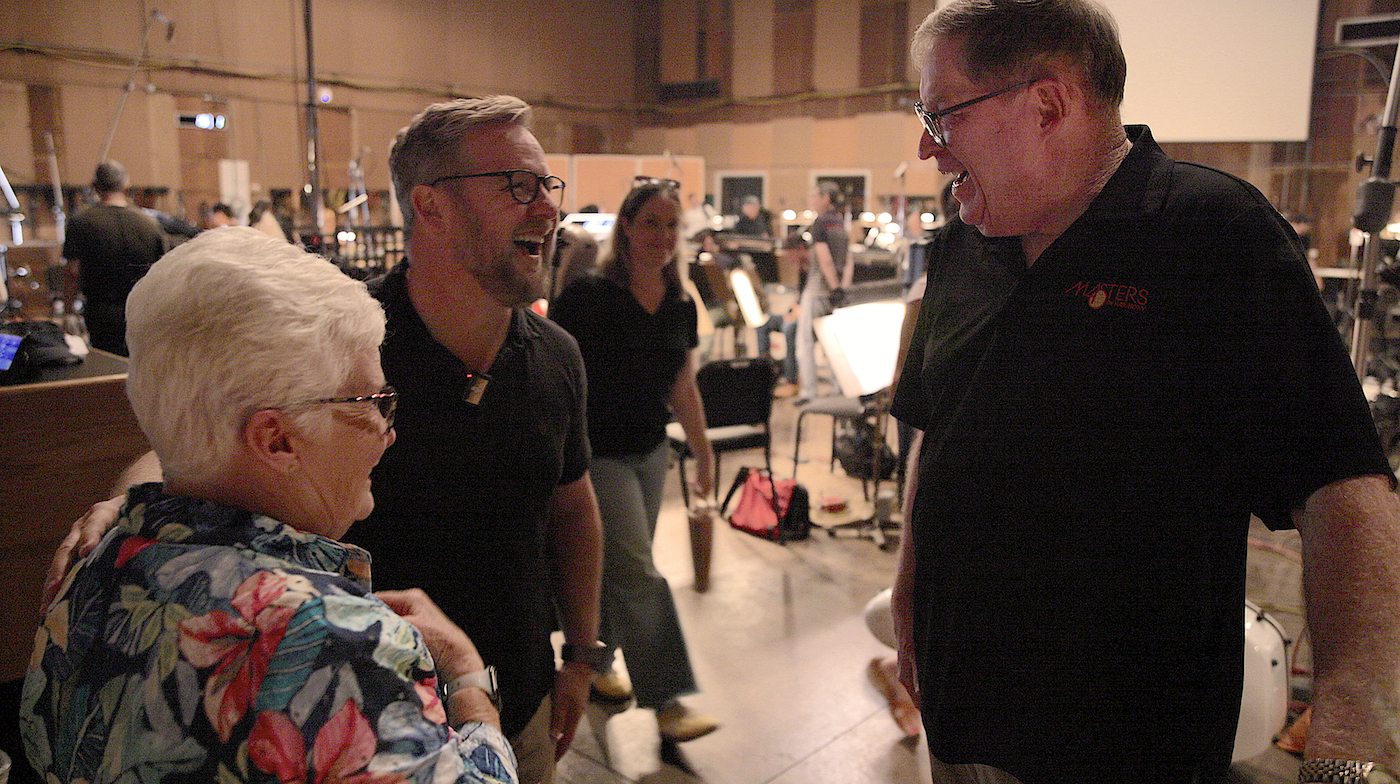
For the recording, Icenogle assembled an 85-member orchestra and conducted the piece himself. He also recruited recording engineer Shawn Murphy, whose work on film scores Icenogle had admired for years.
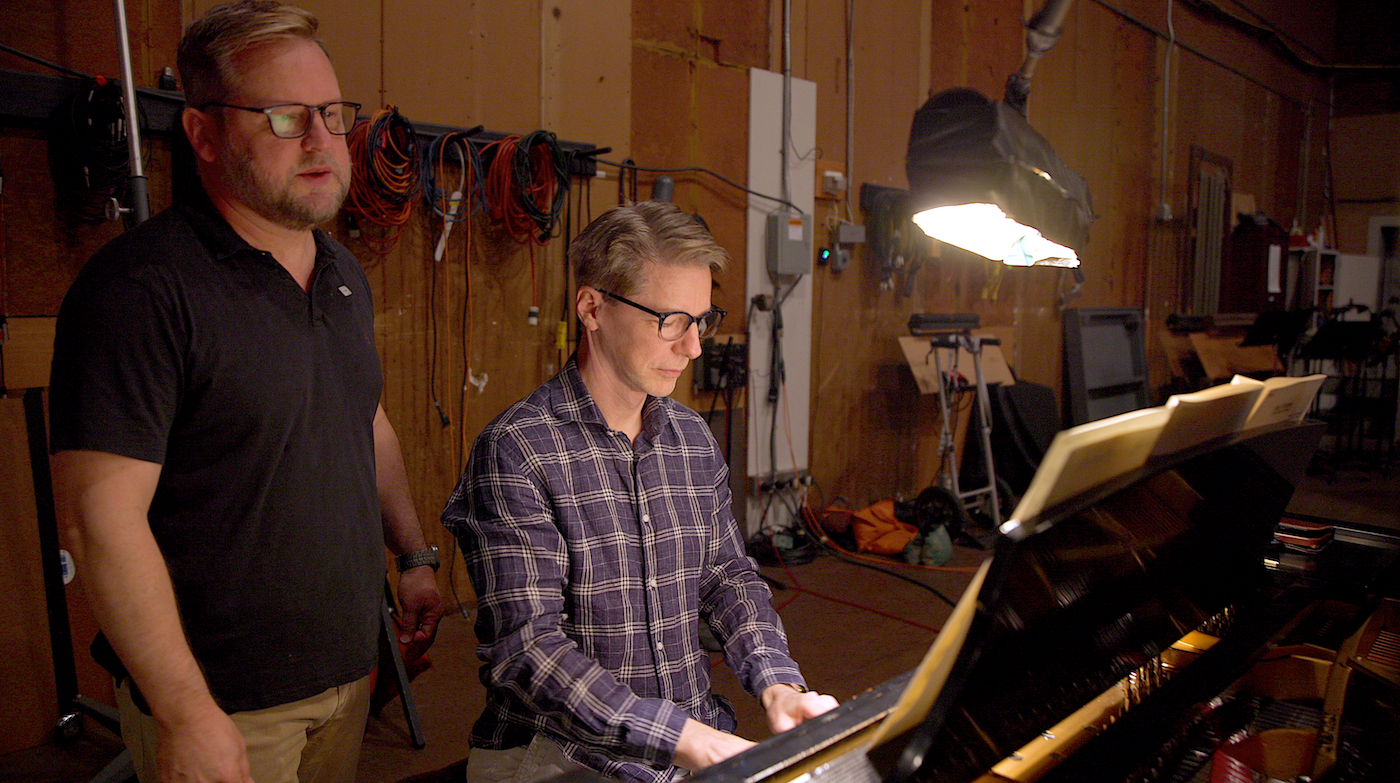
The project became a family connection to Iowa, too. Icenogle invited his father, Larry, an Iowa graduate and former marching band member, to play trumpet in the orchestra. His husband, Sean Hayes, played piano.
Icenogle also hired a crew to document the recording session, wanting to preserve an experience he described as the kind that might happen only a handful of times in a career.
“To be asked to do something like this very much felt like a pinnacle moment in my life,” he said. “I felt so honored to do it.”
Now he wants the music itself to remain at Iowa. Icenogle plans to give the university the conductor’s score and individual instrumental parts so the piece can be performed again.
His hope, he said, is for it to become “a little piece of tradition that lives on at Iowa.”
Keeping the other thing
Icenogle’s path from communication studies student to composer wasn’t a matter of abandoning one interest for another. It was a process of discovering connections he couldn’t yet see as a student.
That’s what he wants today’s students to remember when something they love doesn’t appear to fit neatly with what they are studying.
“Never lose touch with that other thing that you’re excited about doing, because it balances you,” Icenogle said. “Even if you don’t make a career out of this other thing, bring it into your life and keep it into your life enough so that you feel balanced and you feel fulfilled.”
For Icenogle, that “other thing” never stayed on the sidelines. Music remained what he calls his “fire in the belly”—the thing he wants to interact with every day.
Eventually, it converged with what he learned at Iowa about communication and storytelling. And decades later, those paths led him back to the place where they first ran alongside each other.
Icenogle will make remarks and share the full recording of the original composition as the premiere of Ode to Voxman on Thursday, Oct. 29, 2026, at the 10-year celebration of the Voxman Music Building.