By Jessica Lien
Some instructors stay with you long after the final exam.
When the College of Liberal Arts and Sciences (CLAS) surveyed alumni and asked which faculty members they remembered and missed, two names that surfaced were Ron McMullen, associate professor of instruction in political science, and Marian Wilson Kimber, professor of musicology in the School of Music.
Both remain at the University of Iowa, where they continue asking students to stretch beyond what they already know—McMullen by bringing the wider world into the classroom, and Wilson Kimber by teaching students how to find answers and solve problems.
Each is known for being a challenging teacher who expects a lot from students. Both describe teaching approaches built around mentorship, feedback, and helping students develop skills they can carry with them long after graduation. And both still hear from former students who discover, sometimes years later, that something from a University of Iowa classroom followed them into their lives and careers.
Ron McMullen: Bringing the world to Iowa—and Iowa into the world
McMullen is still bringing the world into his classrooms. Having lived, worked, or traveled in 128 countries, he draws on that experience to connect political science to life beyond the classroom.
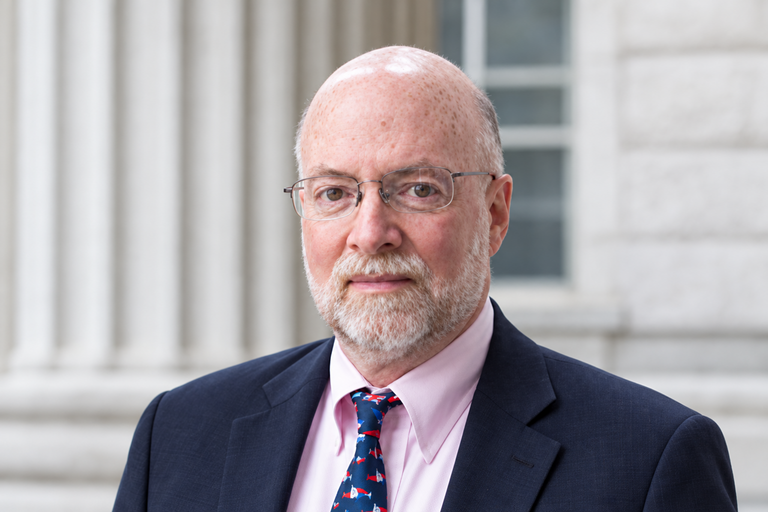
He also asks students to participate actively in his coursework. His classes include briefings, small-group projects, role-playing simulations, and plenty of opportunities to practice communicating ideas clearly and professionally.
What do you hope students take away from your classes?
“I try to provide that bridge between Iowa and the world. Even if students don’t pursue an international career, if they have international exposure while they’re at Iowa, they’ll be better citizens. They’ll be more engaged with the world and understand Iowa and the United States’ place in the world better.”
What might former students remember from your classroom?
“Students play the role of National Security Council members—the secretary of state, secretary of defense, secretary of the treasury. Somebody plays the president and vice president, and they have to make a major U.S. foreign policy decision. We do it in professional dress and use professional terms of address. When they get into it, they really enjoy it.”
Or, they may still have a piece of Iowa displayed on a shelf somewhere.
For years, McMullen has handed out geodes and fossils as prizes in his classes. Iowa’s state rock is a geode, and it has become a small but memorable way for students to take a piece of Iowa with them when they leave CLAS.
“A lot of students have been getting rocks as prizes for a long time. I give students who get A’s on tests a geode, which is the Iowa state rock, so they remember their Iowa roots. I had a former student who was moving from Houston to Washington, D.C., and she told me she was taking her shelf of ‘McMullen rocks’ with her.”
Do former students tell you that anything from your classes has stuck with them?
“One former student working as a political risk analyst told me the most important thing she learned at Iowa was how to give a concise, one-minute briefing. She said she became the person colleagues called on when they needed someone to come in and brief a new concept, customer, or idea.”
McMullen says many students describe his classes as among the hardest they took at Iowa—but also among the most interesting. His goal is not simply to make students work hard; it is to give them practice using the skills they will need beyond college.
What would you tell your former students today?
“Be engaged, but do so professionally. Always be aware of other people’s perspectives. Looking at something through a different lens or perspective often yields interesting answers.”
McMullen follows his own advice. This summer, another trip abroad reminded him that encountering the world firsthand can challenge even long-held assumptions—one reason he continues encouraging students to study abroad, pursue Fulbright opportunities, and seek adventures beyond what they know.
Marian Wilson Kimber: Teaching students how to find answers and solve problems
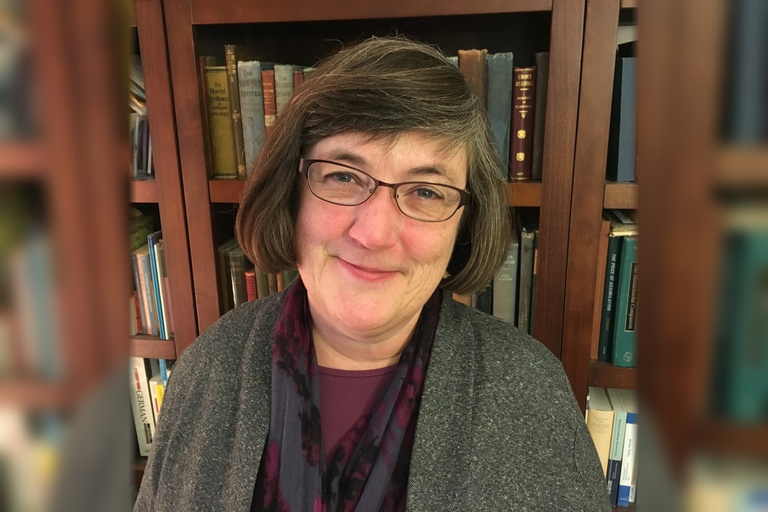
Wilson Kimber continues to teach in the School of Music, where her courses ask students to look beyond the notes on the page to understand music through its history and culture, and develop the research skills to pursue questions of their own.
Her scholarship often explores women’s stories in music history, an interest that carries into courses on female composers and one of her most memorable seminars, MUS 6310: Music in the World of Jane Austen. In her research courses, meanwhile, she gives students challenging, hands-on problems designed to prepare them to navigate an increasingly complex world of information.
Wilson Kimber’s courses can be challenging, but she also emphasizes that she wants to provide support to help students succeed. Students receive detailed checklists, can ask questions about assignments, and are strongly encouraged to seek help when they need it.
What might former students remember about taking a class with you?
“In my research class, I talk about a kazoo concerto by a fake kazoo virtuoso with the ridiculous name Herindinickidish Berschmerkes. I have program notes for the kazoo concerto—good ones and bad ones—and a fake term paper. For a while, students are like, ‘Wait a minute …’ and then they catch on.”
There is a serious purpose underneath the joke: Wilson Kimber wants students to learn how to evaluate information rather than simply accept what they encounter.
Research, she says, is harder than it looks. Students may be accustomed to finding information through Google, but that does not necessarily mean they know how to conduct rigorous research or solve the problems that arise along the way. Her goal is to help them develop the problem-solving skills and resilience to keep searching for the answer when it is not obvious.
Over the years, you’ve taught a popular course called Music in the World of Jane Austen. What makes that class distinctive?
If you took Wilson Kimber’s Jane Austen class, you may remember an entirely different experience from what you expected: dancing.
“We study the music that Jane Austen and her female relatives owned, music in the novels, and the soundtracks for the movie adaptations. And we have a day where we dance—we have a little ball. Students learn about the way the music and dancing fit together and about the social interchange. We even read an etiquette manual before we show up to the dance.”
The course has led students in unexpected directions, including dissertation projects as they pursued advanced degrees. That continuation and application beyond the classroom is exactly what Wilson Kimber hopes to see.
“I’m excited when something they did in my class leads somewhere—when they give a concert of repertoire they learned in my class or write a dissertation related to it. When the learning continues outside of the class, I feel like that’s what’s supposed to happen. It’s not just that students take my class, read some scholarship, and listen to some music. They take something away that they can use.”
For Wilson Kimber, teaching also means showing students what it looks like to keep learning and making things happen herself. Some of the projects that grow out of her research eventually make their way into her classrooms, concerts, and public events she organizes.
What would you like former students to know?
“I always love to hear from people and learn what they’re doing. Come back and visit!”
The Voxman Music Building is about to celebrate its 10th year. Wilson Kimber, who was at Iowa during the 2008 flood and spent eight years working outside the School of Music’s permanent home, remains especially appreciative of the building and the supportive community within it—and would be happy for former students to come back and see its concert halls and music library.
For two professors who have spent years challenging CLAS students to think harder, ask better questions, and see beyond the classroom, perhaps the most meaningful measure is what happens after graduation: former students who remember, return, and discover that those lessons still have something to offer.