The College of Liberal Arts and Sciences is recognizing six faculty members for their outstanding contributions to the classroom and community during the 2025-26 academic year with Collegiate Teaching Awards.
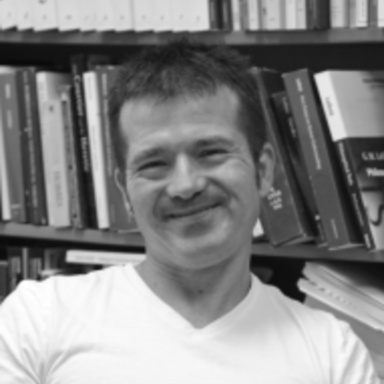
David Cunning is a professor in the Department of Philosophy. Known for making complex philosophical ideas accessible, he uses his large general education courses as spaces to connect abstract questions to everyday life.
These structured, discussion-driven classrooms are cultivated to engage students directly with philosophical problems. Through detailed summaries and collaborative dialogue, Cunning helps students move beyond identifying philosophical concepts to actively considering ideas.
Ali Hasan, associate professor and department executive officer in the Department of Philosophy, wrote of Cunning, “The summaries also incorporate and credit student contributions, often mentioning students by name, reinforcing the message that philosophical inquiry is collaborative and that their voices matter.”

Ashley Howard is an assistant professor in the Departments of History and African American Studies, teaching Black history through archival research, experiential learning, and public-facing work that connects historical study to lived experience.
Howard builds rigorous, engaged classrooms that connect writing, research, and public history. She integrates community-based learning and archival work, helping students develop critical thinking skills while contributing to broader conversations in history and African American studies.
Colin Gordon, professor and department executive officer for the Department of History, wrote of Howard, “Her teaching, in this respect, is a model of pedagogy at a research university. It is deeply informed by her own scholarship in ways that vastly enrich the student experience.”

Kristin Marrs is an associate professor of instruction in the Department of Dance. Marrs focuses on rethinking ballet training through movement science and somatic practice, helping students engage technique through awareness rather than tradition.
Marrs creates classrooms that prioritize exploration and individual growth. She challenges traditional ballet structures and supports students in developing technical skill through internal awareness, experimentation, and collaborative learning.
In her nomination of Marrs, Jennifer Kayle, professor and department executive officer in the Department of Dance, wrote, "Importantly, Kristin’s ability to engage all types of learners, and tailor learning to each student’s discipline, can translate immediately to professional health and performance. Kristin’s teaching reinforces cross-unit learning and models integrative creative practice that benefits students in both Dance and Music."

Rachel McLaren is an associate professor in the Department of Communication Studies. McLaren teaches communication as a practical skill, helping students apply theory to relationships, conflict, and everyday interaction.
McLaren cultivates experiential, discussion-driven classrooms. Through role play, reflection, and applied research, she helps students develop communication skills they carry into relationships, workplaces, and community settings.
Director of undergraduate studies David Supp-Montgomerie, wrote of McLaren, “Students consistently report that they apply what they learn in her courses to everyday interactions, family dynamics, and workplace settings.”

Louise Seamster is an associate professor in the Department of Sociology and Criminology who connects research on racial and social inequality to public issues, giving students direct experience with community-engaged and policy-relevant work.
Seamster cultivates collaborative, inquiry-driven classrooms and research labs in which students engage in complex social issues through hands-on projects, developing analytical and technical skills while contributing to work with real public impact.
Michael Sauder, professor and department chair of Sociology and Criminology, wrote, “Professor Seamster has developed an innovative laboratory class that brings together undergraduate and graduate students to work on—and the opportunity to co-author on—research projects.”

Benjamin Swanson is an assistant professor of instruction in the School of Earth, Environment, and Sustainability. Swanson conducts hands-on, field-based teaching that connects environmental science to real-world careers and decision-making.
Swanson builds courses around applied learning through fieldwork, data analysis, and professional practice. Students gain experience solving real environmental problems while developing technical skills and professional readiness.
Emily Finzel, department executive officer for the School of Earth, Environment, and Sustainability, wrote of Swanson, “Students consistently comment on his clarity, enthusiasm, and availability, noting that he takes the time to ensure they understand not only the ‘what,’ but also the ‘why’ behind the science.”