By Samantha Miller
Kelsey Klein (AuD ’20, PhD in speech and hearing science ’20) has spent much of her career thinking about what happens after the earliest years of intervention for children who are deaf and hard of hearing.
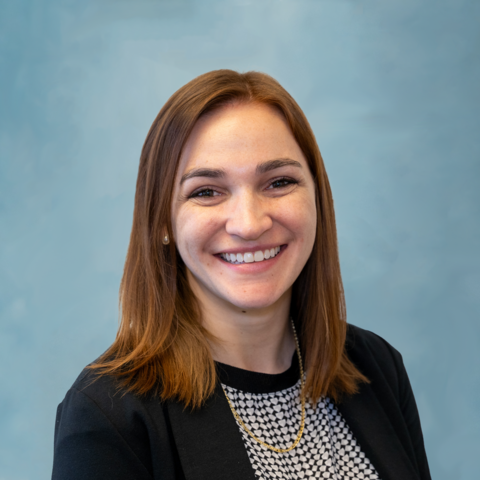
Now a research scientist at the House Institute Foundation in Los Angeles, Klein studies listening and spoken-language outcomes, with much of her work focused on children ages seven to 17. While considerable research has examined early intervention, Klein is interested in what happens as children move through school and communication demands change.
“There’s relatively less research focusing on those school-age time periods, especially once you get into middle school and high school,” Klein said.
Some challenges during those years can be difficult to spot. Children may have used hearing devices for most of their lives and perform well on basic measures of language, even as classroom listening becomes more complex and expectations increase.
Klein wants to better understand those challenges—and the factors that help children succeed—so researchers and clinicians can develop more effective ways to support these children. Her interest in those questions grew from an education that kept research and clinical practice closely connected.
Discovering a field through research
As an undergraduate studying psychology with a concentration in linguistics at St. Olaf College, Klein wasn’t initially sure what career she wanted to pursue. During her junior year, she took a course on the psychology of hearing and joined a psychology research lab studying speech perception among people who use cochlear implants. Those experiences introduced her to hearing science and opened the door to research, something she hadn’t considered as a career path before.
A summer research internship at Mayo Clinic brought another piece into focus. Klein observed audiologists, speech-language pathologists and other clinicians while assisting with research involving children with cochlear implants.
Those combined experiences showed her that she could pursue questions about hearing and communication through research while remaining connected to work that affected patients’ lives. It’s also why she encourages students who are curious about research or audiology to seek opportunities to experience the work firsthand.
When Klein began looking at graduate programs, she was drawn to Iowa’s strength in audiology and cochlear implant research, along with the clinical resources available through the University of Iowa Health Care. Between the hospital and the University of Iowa Speech, Language, and Hearing Clinic, Klein had opportunities to work with patients while staying closely connected to research. Those opportunities aligned with her goal of pursuing clinical work and research simultaneously through an AuD and PhD.
For much of her six years at Iowa, Klein regularly moved between clinical training, coursework and research.
“It was really helpful to get that firsthand clinical experience and then be able to go to the lab and think about what I had seen and what that might mean from a research perspective,” Klein said.
What she saw in the clinic guided her scholarly pursuits. She saw firsthand that hearing loss was only one of many factors shaping a child’s communication and development. Family, teachers, clinical providers, and medical circumstances could all play a role in how a child communicates and progresses.
“In clinic, you realize each child has so many things that you need to be thinking about outside of just what’s going on with their ears,” Klein said.
Learning how a researcher builds a career
Klein found another model for connecting clinical experience and research through Beth Walker, now a professor in the Department of Communication Sciences and Disorders in the College of Liberal Arts and Sciences.
Walker became Klein’s primary PhD adviser during her second year at Iowa. At the time, Walker was a new assistant professor establishing her own research program, giving Klein a close view of what building a research career involved.
She watched Walker establish a lab and pursue early grants, experiences Klein later drew on when setting up a lab of her own. Walker also gave Klein opportunities to lead papers and shared drafts of her grant proposals. Seeing the work behind those finished products helped Klein build the confidence to pursue her own grants and research opportunities as an early-career researcher.
“It was really helpful as a student to see that your mentors, the people that you’re looking up to, are not producing perfect drafts the first time,” Klein said. “You get to see what that process looks like instead of just the shiny finished product at the end.”
Keeping clinical experience close to research
After graduating from Iowa, Klein eventually joined the House Institute Foundation, where she now devotes her time to research while remaining close to clinical care.
The House Children’s Hearing Center, a pediatric audiology clinic, is down the hall from Klein’s research lab, allowing researchers and clinicians to collaborate on health outcomes for the children the center serves.
One ongoing longitudinal project recruits children who use hearing aids, cochlear implants, or bone-conduction devices. Researchers examine listening and language outcomes alongside clinical measures to understand how child, family, and clinical factors may relate to communication outcomes.
The approach reflects something Klein learned through her clinical training at Iowa: hearing loss is only one part of a child’s experience. Understanding why some children thrive—and where others may need additional support—means considering the people, circumstances and clinical factors surrounding them.
That becomes particularly important as children grow older and prepare for adulthood. Earlier identification and intervention have improved outcomes, Klein said, but progress does not mean every question has been answered.
“There’s still a lot of work to be done to make sure that these kids are reaching their full potential,” Klein said.