By Bri Brands
Research in the College of Liberal Arts and Sciences can begin with a film, a patient encounter, a media text, or even the physical act of drawing against a wall. Four faculty members share what sparked their curiosity, where they hope their work leads, and what keeps them engaged beyond research and teaching.
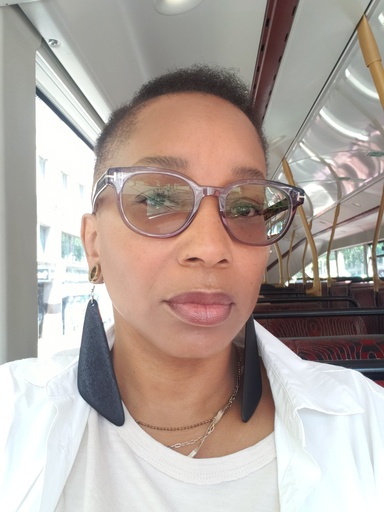
Tisa Bryant
Associate Professor, Department of English
What question are you trying to answer through your research, and what first drew you to that question?
I want to know: How does my attention shape and expand the contours of my everyday world? What does it mean to see and be seen, to read and be read, as a text, a film, a person, a lineage, a culture, a cosmology?
I’m focused on how writing can dramatize interior and exterior realities from any point of view and in film’s powerful sonic and visual language. Central to this is my focus on Black women’s lives, talk, knowing, and subjectivity. The frictions and affinities between writing and film, and between film and Black vernaculars—visual, spoken, feminist, and textual—energize my experiments with literary form and genre.
What led you to pursue a career in research and higher education?
I’m a life-long learner, a book lover, a talker, and I wanted to teach. My writer friends and mentors moved between various communities and higher education. They modeled ways of living and being that I admired. My research and teaching allow me to contribute to and share in intergenerational and international conversations, ongoing scholarship, collaborations, artmaking, and social spaces. It’s exhilarating and a privilege.
What would be the most exciting thing for you to discover through this research?
I would love to discover the films or writings of a previously overlooked African or African diasporic woman filmmaker from before 1950 or 1960—or really, from any era. What a treasure that would be. What questions did she ask? What were her skills, techniques, and curiosities? I would be thrilled to share such a discovery.
What is something you're passionate about that has nothing to do with your research?
Growing houseplants. I enjoy having their special sentience and aliveness around me when I’m not outside. I’m drawn to big-leaf trees, vining plants that trail upward, and plants with richly veined, patterned, or textured leaves, such as calathea, alocasia, and the purple waffle plant.
I’m hoping the quality of my care and attention has evolved enough to grow begonias again without killing them, especially the high-drama rhizomatic ones. That would be very satisfying.
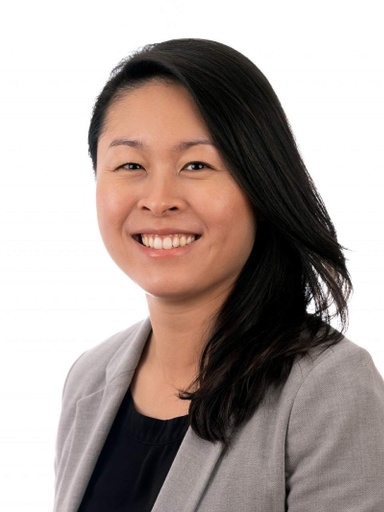
Kanokwan "Mandy" Bunsawat
Assistant Professor, Department of Health, Sport, and Human Physiology
What question are you trying to answer through your research, and what first drew you to that question?
My research focuses on integrative human physiology, with an emphasis on age- and sex-related health disparities among people who have or are at risk for cardiovascular, kidney, and metabolic conditions. I investigate what contributes to dysfunction of the autonomic nervous system and blood vessel health, the physiological consequences of that dysfunction, and which therapeutic approaches may improve these outcomes.
I was drawn to these questions through clinical research and interactions with patients with conditions such as heart failure and chronic kidney disease. Seeing patients experience severe exercise intolerance and significant cardiovascular burdens made me want to understand whether neurovascular dysfunction could be a contributing factor—and therefore a potential therapeutic target.
What led you to pursue a career in research and higher education?
Two things motivated me. First, my curiosity about integrative human physiology and medicine drives me to identify gaps in knowledge and pursue research questions that might help address them.
Second, I have had the privilege of being mentored by amazing leaders in the field who supported and uplifted me throughout my career. Those experiences instilled in me the desire to pay it forward as a mentor and teacher for aspiring young scientists.
What would be the most exciting thing for you to discover through this research?
Although I know my research is unlikely to cure a disease, I am always most excited to learn that it has either contributed to an improvement in a patient’s quality of life or helped a student feel motivated and inspired to pursue advanced training in the field. Both are exciting and rewarding.
What is something you're passionate about that has nothing to do with your research?
I am passionate about mentoring people and will always be happy to offer my two cents if it would help them.
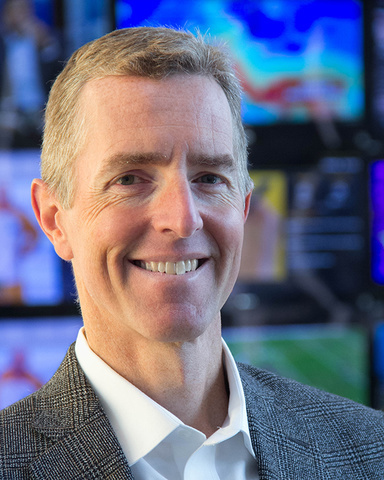
David Dowling
Professor, School of Journalism and Mass Communication
What question are you trying to answer through your research, and what first drew you to that question?
In the broadest sense, my research asks how media reflects the ways a culture thinks about itself. I study published and unpublished media in print, visual, audio, and digital forms to understand the discourses and values of a culture.
As an undergraduate, professors in communication, English, anthropology, and history showed me the importance of closely examining cultural artifacts. That fascination developed into research on cultures of media production, from author networks in print publishing to digital publishing by news organizations, brands, and nonprofit advocates.
Today, I study how political and environmental communication is shaped by media designed to influence mass culture. My latest projects examine political communication in my forthcoming book, Extremist Voices: The Global Rise of the Far-Right Podcast Ecosystem, and environmental communication in The Ballad in the Street: Transcendentalism and the Restoration of Local News.
What led you to pursue a career in research and higher education?
I became fascinated by what media could reveal about why people work the way they do and how they understand capital in both social and monetary terms. Studying theories of cultural production and authorship eventually led me to investigate the industries and technologies that shape media.
I also wanted to understand how media could advocate for marginalized populations and strengthen civic participation. More recently, I have studied media producers working to undermine democratic principles. Media can build democracy, but it can also tear it down. Research can help us understand how that happens and illuminate possibilities for more constructive forms of media and civic participation.
What would be the most exciting thing for you to discover through this research?
I would like to develop a deeper understanding of how storytelling, technology, and business models can produce more politically, socially, and environmentally constructive results.
Media changes quickly. Podcasts, for example, came to occupy a political role few would have anticipated when the medium was emerging. I’m interested in what forms of media might now be underused for strengthening democratic participation and environmental justice, and how digital technology can enable—or limit—the stories told through political and environmental communication.
What is something you're passionate about that has nothing to do with your research?
My passion for endurance sports often finds its way back into my research. Running led to a project on athletic brand advertising. Cycling during RAGBRAI exposed me to alternative farming practices connected to my environmental work.
Kayaking Lake Macbride and exploring the ravines and woodlands around Coralville Lake also provide a source of peace and fascination. Those experiences remind me how closely my interests outside the university remain connected to questions of environmental communication.
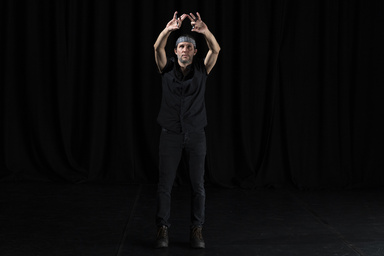
Tony Orrico
Assistant Professor, School of Art, Art History, and Design
Assistant Professor, Department of Dance
What question are you trying to answer through your research, and what first drew you to that question?
The questions behind my work explore relationships between body and mind and between bodies as they negotiate shared space. I use physical practices and performative scores to examine attention, shared power, and sustainability.
Early in my career as an artist and dancer, I began bringing my knowledge of the body and somatics into drawing and painting. While coping with physical misalignments and pain, I began drawing against the wall, standing for long periods. My attention shifted beyond hand-eye coordination toward a more holistic sense of the body as a system of response, balance, and leverage. Those discoveries led to a body of visual and performance-based work and collaborations that allowed me to explore these ideas more deeply.
What led you to pursue a career in research and higher education?
College is where I first encountered dance and came to understand it not only as a practice, but as a field of scholarship around the body and performance. I began to see dance as something profoundly universal and innate.
I always anticipated returning to higher education to remain connected to young artists and creative scholarship. Educational institutions are important places for cultural and creative forms to advance and flourish. These aspects of our humanity do not always need to articulate themselves through capital; they can instead operate through economies of togetherness and reciprocity.
What would be the most exciting thing for you to discover through this research?
I would love to discover more ways that artistic and embodied thinking can serve society. I want to advocate for how choreographic thinking and artistic vision can help communities, organizations, and institutions solve problems by seeing—and feeling—unanticipated pathways.
What is something you're passionate about that has nothing to do with your research?
Outside of making and teaching, I am passionate about food, gardening, family, friends, and social justice. I learn from how things are, and I help—or step aside—so they can move freely.