By Jessica Lien
Helen Lillie has found that a health story can lose its power at the exact moment it tells readers what to do.
“The more we’re thinking about and having to reflect on something ourselves, the more that sticks in our minds,” Lillie said.
Lillie, an assistant professor in the Department of Communication Studies in the College of Liberal Arts and Sciences (CLAS), studies health communication at two different points: before a health problem occurs, when messages can help people understand risks and prevention; and after a diagnosis.
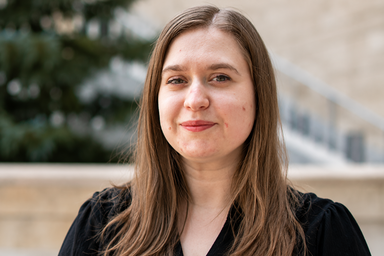
“I study how we can build resilience around health issues through communication,” Lillie said.
Let them form their own conclusions
Much of Lillie’s health messaging research has focused on skin cancer prevention.
In her studies of skin cancer narratives, she found that stories that end with a character urging readers to wear sunscreen or get a skin check leave them with less to think through.
“When we have people in the story dumb things down and provide those conclusions for us, we’re less invested, and we maybe feel like it’s manipulative,” said Lillie.
Those readers reflect less on the story and report less intention to protect themselves. Leaving readers to reach their own conclusions is only part of what makes a story effective. Emotion matters, too: when readers encountered a story about someone who regularly wore sunscreen, developed skin cancer, delayed seeing a doctor, and died, participants said they intended to do more skin self-exams. They also said they planned to use more sunscreen.
A journal reviewer asked Lillie why a story in which sunscreen had failed would make people want to use more of it. Lillie believes the death in the story reinforced the seriousness of skin cancer without overturning an already established belief that sunscreen helps prevent it. She has since conducted a study building on that finding, which is now under review.
Now, she is studying emotional reactions to health stories as they happen.
In Lillie’s lab, participants read health narratives while an eye tracker records where they look. A camera captures their facial expressions, and a device attached to their fingers measures changes in skin conductance associated with emotional responses.
Together, the tools allow Lillie to track where in a story a reader’s emotional response rises and falls.
Her current project compares responses to a survivor story and a story in which the subject passes away. The work is still being analyzed and has not undergone peer review, so the results are preliminary.
Early heat maps showed a noticeable difference: readers of the survivor story showed little facial reaction, while readers of the story in which the person passed away showed emotional expression throughout much of the narrative.
Her next question is whether those emotional effects last. Lillie is preparing a grant application to the National Cancer Institute to study whether a compelling health story can influence decisions over time rather than produce a behavioral change that fades after a short period.
Eventually, she hopes the research could inform a story-based melanoma prevention campaign in Iowa.
Facing a health crisis
Lillie’s other line of research began when she was a master’s student and joined a project interviewing breast cancer survivors about communication with their romantic partners during diagnosis and treatment.
“It was incredible to talk to these women and learn about their experiences and what things helped them or not,” Lillie said. “I thought, wow, this is something really important.”
She now uses the communication theory of resilience to study everyday communication practices that can help people navigate illness and caregiving.
One practice is creating a sense of normalcy. In one case, a breast cancer survivor and her spouse who had regularly taken long hiking trips together could no longer do so during treatment. Instead, they drove somewhere with a beautiful view and talked about the experience, much as they had during their hikes.
Another is affirming identity. Many of the women in the breast cancer study were mothers, and it mattered when their partners continued to treat them as important parents in their children’s lives, even when treatment changed what they were physically able to do.
A third is staying connected. Family members, health care teams, and support groups can help people find the information they need and connect with others who understand what they are experiencing.
Why Iowa
At Iowa, Lillie’s work connects with researchers approaching health and communication from different perspectives, something she said pushes her to think more deeply about her own research.
She is also a member of Holden Comprehensive Cancer Center, where melanoma and cancer survivorship clinics connect with both sides of her work.
The prevalence of melanoma in Iowa gives the research particular relevance to the state and reinforces Lillie’s interest in eventually translating her findings into prevention efforts.
“It makes me feel like this is an important place for me to do this kind of research,” Lillie said.
Whether she is examining a story intended to prevent disease or a conversation that helps someone live through it, Lillie’s research centers on the same question: how communication can better support people when health decisions matter.