By Fatima Salinas
A mural can start with something as small as a pencil sketch. For Ali Hval, that sketch might eventually become a wall-sized charm bracelet, a sculpture covered in rhinestones, or an installation that fills a gallery. Her work often begins simply, but she is interested in what happens when those ideas grow beyond the sketch and into the spaces people move through every day.
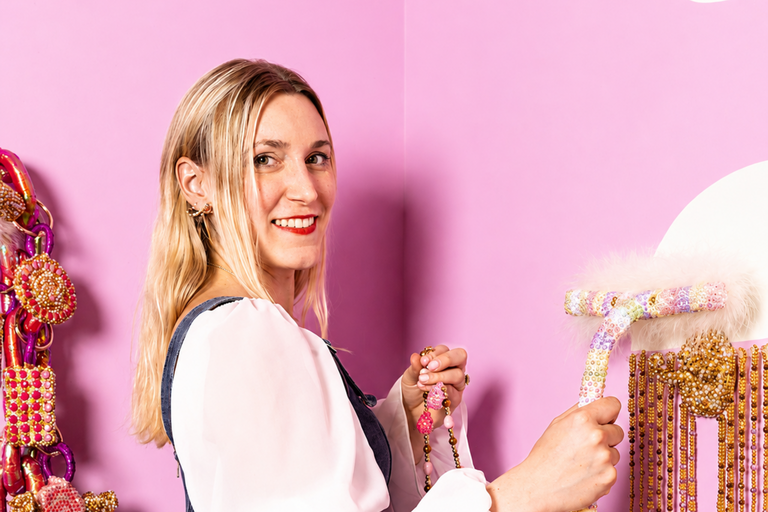
Hval, assistant professor of instruction in painting and drawing in the School of Art, Art History, and Design, returned to Iowa after earning her MFA in painting and drawing from the university in 2019. Her work now moves between her studio, the classroom, and public spaces, with more than 50 murals and public art projects completed across the country.
Taking ideas beyond the studio
“Drawing is a process which unfolds immediately for me, like stream of consciousness writing,” Hval said. “Everything I make begins with a drawing using the simplest tools of paper and pencil.”
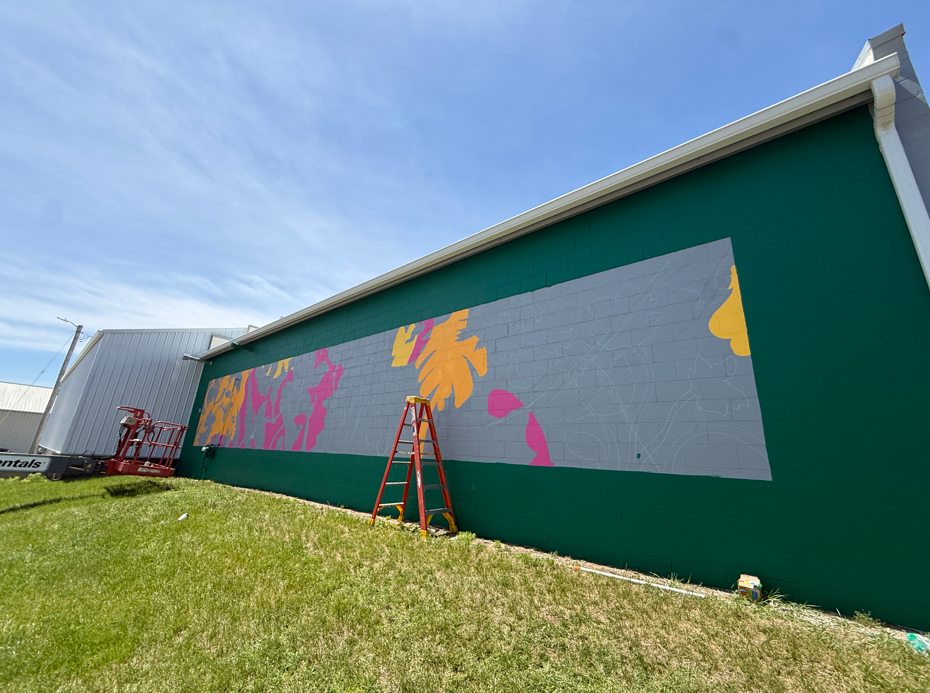
Her first mural came in 2017 while she was a graduate student at Iowa. Moving from the studio to a much larger scale changed the way she thought about her work. She began paying closer attention to how a space could affect the mood of an artwork and how people might experience it as they moved through it.
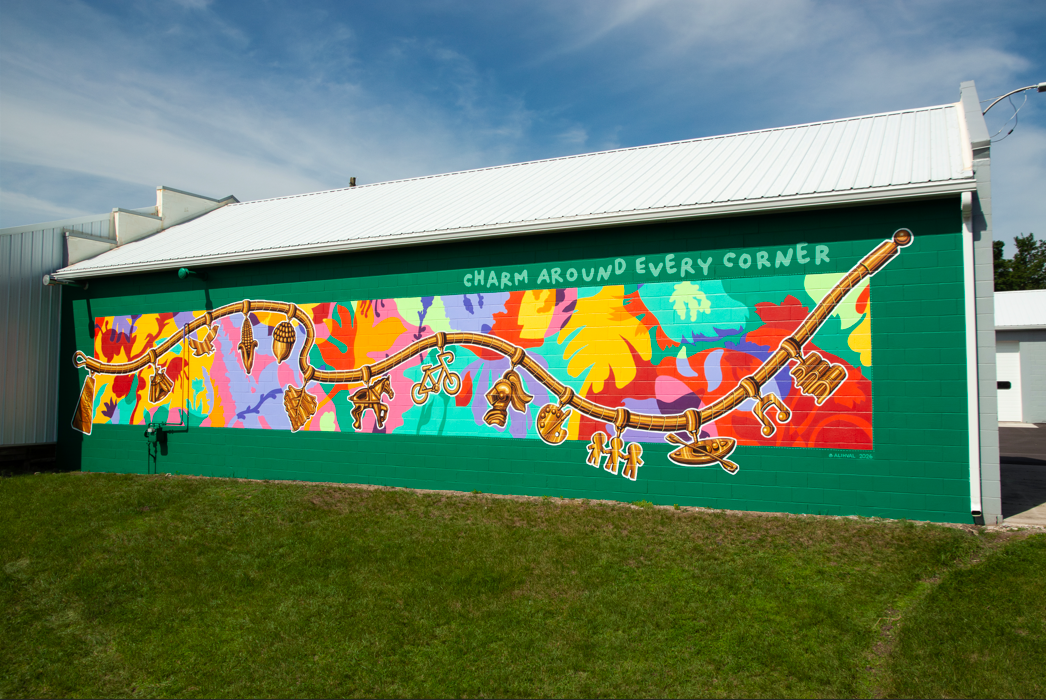
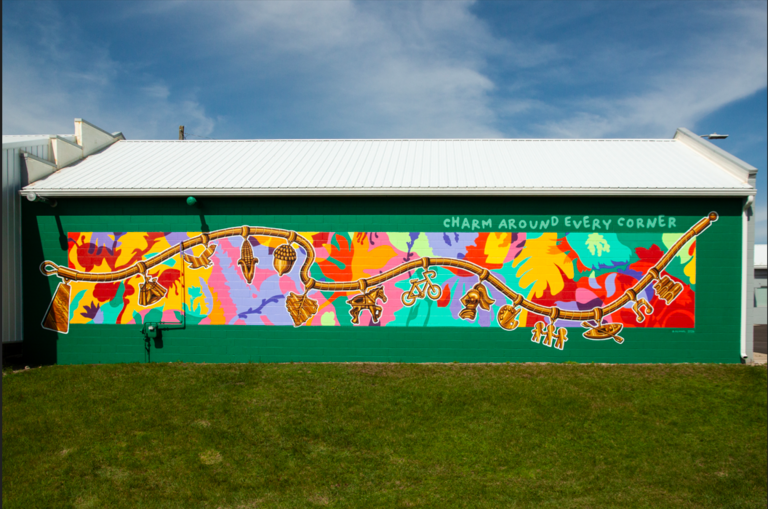
That approach is especially visible in Hval’s recent work as one of two artists selected for the Iowans Create Community Mural Program. For a mural in Waverly, Iowa, she brought an idea from her studio practice to a long wall along a busy bike trail: an oversized charm bracelet.
Hval regularly creates oversized pieces inspired by jewelry, shoes, and domestic objects, using materials such as ceramic, fabric, and rhinestones to explore ideas of femininity, autonomy, and motherhood. The Waverly mural allowed her to take that familiar studio language and make it part of the community.
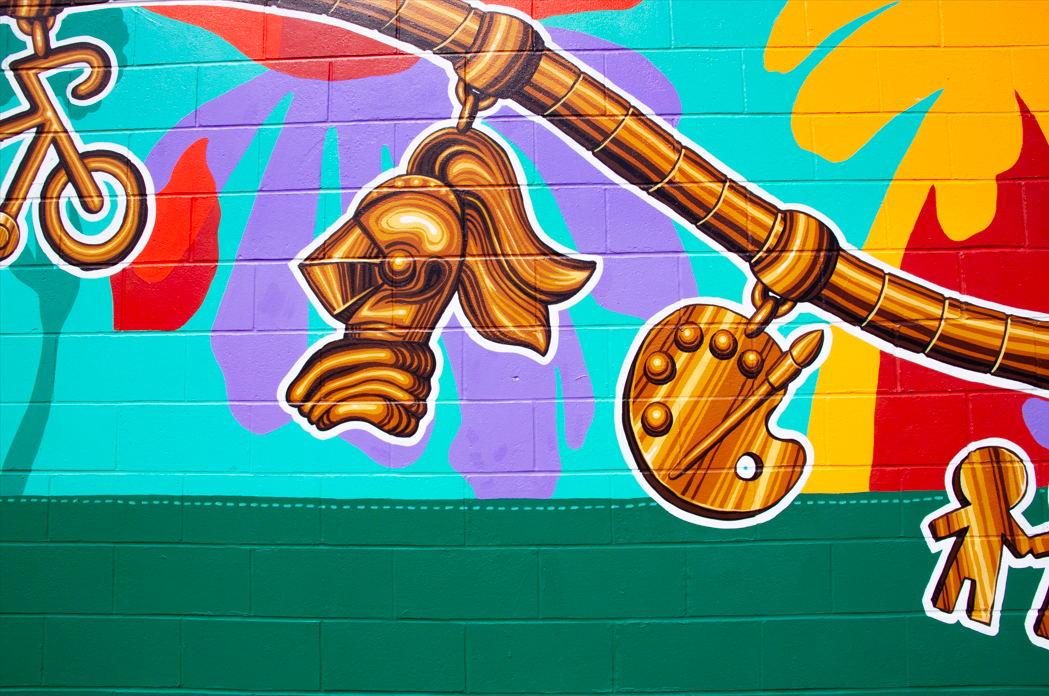
Each bracelet charm tells part of Waverly’s story. Three paper figures holding hands represent the pride and care residents have for their town. A bicycle reflects the trail where the mural sits, while a horse points to Waverly’s long history of horse sales. Other charms, such as a cottonwood leaf, may not be immediately recognizable, inviting viewers to pause and wonder about their meaning.
Art that connects with community
The mural also gave Hval another opportunity to experience one of the things she enjoys most about public art: the people who gather around it.
“The compassion of a community always shines while I’m out there chipping away at a mural,” Hval said. She recalls strangers bringing her water or snacks while she painted, and even buying her dinner after seeing her covered in paint.
That connection between making and sharing art carries into Hval’s teaching. She encourages students to return to the fundamentals of drawing, including gesture, which she describes as a way of understanding movement and how lines influence the way viewers read an object or space.
Her experience as a practicing artist also shapes how she talks with students about life after graduation. Hval emphasizes that a career in the arts may take time to build, but consistency and persistence matter.
“I hope my students are urged to find a mode of creating art that works for them so that they can sustain their own artistic practices doing what they enjoy,” she said.
Whether she is working in a studio, teaching students, or standing in front of a mural with paint on her clothes, Hval continues to explore what happens when an idea moves beyond the canvas. Sometimes, it becomes something a community can walk, bike, or live alongside.