By Jessica Lien
When a student is struggling, there is someone in the College of Liberal Arts and Sciences (CLAS) whose entire job is to help them figure out what to do next.
Emily Hurst, CLAS’s first student care manager, was hired in March 2024 through the Hawkeyes Helping Hawkeyes Fund, a philanthropic initiative supporting student mental health and well-being within CLAS.
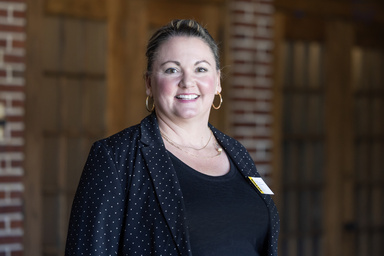
Most students who reach out to Hurst meet only briefly with her, but the stakes can be high. A student might be struggling with anxiety, grief, housing concerns, or a family crisis. Others simply need help understanding their options. Whatever brings them through the door, the goal is the same: helping them identify a path forward.
Maybe that’s why Hurst describes her role less as a therapist or coach, but more as a wayfinder. By helping students navigate available resources and understand what to expect, Hurst helps remove some uncertainty at moments when even taking the first step can feel overwhelming.
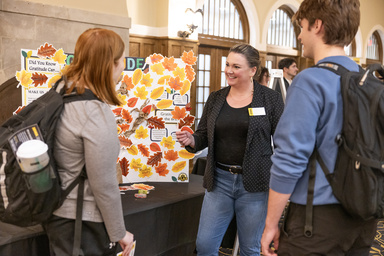
The student care manager is also a resource for faculty and staff as they support students navigating difficult circumstances.
Over the past two years, the number of contacts from students has tripled and appointments have increased by nearly 80%. As demand grew, faculty and staff increasingly sought guidance on how to support students facing challenges. Hurst offered reassurance.
"I try to help faculty recognize that they already have many of the skills they need," Hurst said. "Often it's about helping them feel comfortable having those conversations and knowing where to refer students."
That support became especially visible following an off-campus shooting that affected several CLAS students. Hurst organized and staffed a dedicated support space in which students, friends, and family members could gather, process what had happened, and access resources. She also worked with faculty and department leaders as they supported affected students and classes.
"We couldn't have planned for that," Hurst said. "You just have to have somebody dedicated to being there and then responding to anything students bring in."
Opportunities for connection and well-being
In addition to helping students manage times of crisis, Hurst also works to create opportunities for connection and well-being across CLAS.
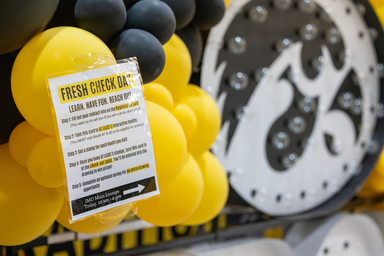
"I think students are increasingly looking for spaces where they can feel connected to other people and to the university in ways that don't always revolve around academics or crisis. Sometimes, support does look like helping someone through a difficult moment. Other times, it's creating opportunities for students to feel grounded before they ever reach that point," Hurst said.
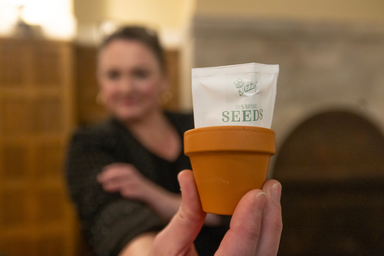
Recent programs Hurst has managed have included therapy dog visits, yoga sessions, and guided campus tree walks. Hurst has partnered with the Departments of Theatre Arts and Rhetoric, and the local Rape Victim Advocacy Program chapter, to help support students engaging with difficult topics both inside and outside the classroom.
When a school within CLAS needed a little more student and faculty support during a hard-to-navigate time, Hurst set up an office within the department to make herself available as needed.
For Hurst, having a physical presence on campus is important. “We want to be where students are. We want to limit barriers to receiving help,” Hurst said.
Shaping a culture of student support
Hurst is also helping shape future approaches to student support within the college. This year, she partnered with seven students in the President's Leadership Class to research mental health peer-support models at other universities, and explore what a student-led program might look like at Iowa.
"What I learned is that students are the experts on what peer support should look like," Hurst said. "They are the peers."
Hurst’s project combined national research with student feedback, and laid groundwork for future wellness initiatives designed by students, for students.
Hurst remains committed to a culture that supports well-being and destigmatizes reaching out because, "Students, all people, really, do better when they know there are people paying attention and who are willing to show up for them when things get difficult. Everyone deserves to feel supported while they're finding their footing.”
The Hawkeyes Helping Hawkeyes Fund made Hurst’s role as a student care manager possible. In a short time, the role has already become an important source of support for students, faculty, and staff across the college.
If you have questions or want to learn about other ways you can support CLAS, please contact the UI Center for Advancement by emailing susan.horan@foriowa.org.