By Bri Brands
College of Liberal Arts and Sciences faculty members across a multitude of disciplines have found unique ways to collaborate with medical professionals in the Roy J. and Carver College of Medicine.
From studying migraines in mice to infections in hospitals, these researchers all seek to make a difference in the world. Learn more below about how interdisciplinary research is coming to life in CLAS.
Department of Mathematics

As a mathematician collaborating with medical researchers, Department of Mathematics Associate Professor Colleen Mitchell describes what she does as “quantitative thought experiments.”
"People may not really understand what a mathematician can bring to a project, but most people understand the value of a really good thought experiment,” Mitchell said.
Mitchell said that applied mathematicians generally ask two questions: How do I think it works? and if that’s how I think it works, how do I think it will behave?
Mitchell is working on several medical research projects, including studying how mitochondria divide during heart stress, how drugs can behave in unexpected ways, how ions move through the airway epithelium, and how changes in metabolism reveal reaction rates in metabolic processes.
Mitchell deeply embeds herself in each collaboration, making sure to put in the time and effort necessary to allow her to pull the mathematical questions from the medical questions.
“I am endlessly curious, so my wonderful collaborators who let me be in that space and learn are my primary motivation,” she said. “We want problems that are going to answer important questions on the biological side, but at the same time they open up the possibility of new mathematical questions to investigate.”
Department of Statistics and Actuarial Science
Department of Statistics and Actuarial Science Associate Professor Sanvesh Srivastava uses his statistical research methods to collaborate with neuroscientists Rainbo Hultman and Hanna Stevens in the Carver College of Medicine, helping to solve neurological or neural problems, such as depression and migraines.

Srivastava’s neuroscientist collaborators study mouse models by recording the brain’s electrical activity with and without the presence of a migraine. For his part, Srivastava is helping to develop a new statistical methodology for extracting the maximum amount of signals from the data.
"Answering questions like this involved a more sophisticated toolbox, so it motivates both new scientific questions as well as new statistical questions,” Srivastava said. “We all do research, so it's a good synergy.”
Srivastava said that statistics, by definition, is a very interdisciplinary field.
“As we have progressed, science has progressed, so it’s a symbiotic process,” he said. “Scientists are going to answer new questions through new experiments and new data collection mechanisms, so statistics has to adapt accordingly.”
As a statistician, Srivastava can improve the translation of findings from mouse models to humans by leveraging realistic models and modern statistical methods.
Because of their close proximity, the group is able to meet weekly and discuss updates on the research.
The University of Iowa's standing as a research university provides greater opportunity for collaboration between scientists and statisticians.
“In a sense, it advances both fields together,” he said. “Before these collaborations can be productive in terms of papers or grants, spending a lot of time building trust is fundamental.”
Department of Computer Science
Alberto Segre, chair of the Department of Computer Science, has been working at the intersection of computing and epidemiology, or the study of diseases, for 20 years; however, he never envisioned his work mattering as much as it has since the start of the COVID-19 pandemic.
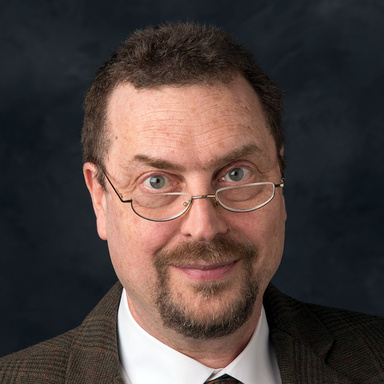
His interdisciplinary work focuses on minimizing the risk of infections in hospital settings. To do so, he and his team make models based on large quantities of data collected with various instruments and use the data to reflect what happens in a hospital setting.
When he first came to the University of Iowa, Segre was working at the Tippie College of Business. As he started to interact with more professionals in Iowa City, he became acquainted with a medical researcher who needed Segre’s help analyzing data.
In the early 2000s, he began working with an infectious disease physician and continues this research today.
Segre has conducted interdisciplinary research for over 20 years; not only because of the joy he finds in being outward-facing and looking for things that are interesting, but also because of the improvement he sees being made in people’s lives.
“In computer science, it’s rare to be able to work on problems that can make people’s lives better,” he said. “The intersection with medicine is interesting because some of the things technologists can do can help people live a better life, which is not something computer scientists think they’re trained to do.”
Despite the advances his research has made, Segre never expected his work to have such a positive impact.
"Having that sort of impact makes me motivated to keep researching," he said.