By Bri Brands
For Emily Thomas, clinical associate professor in the Department of Psychological and Brain Sciences, stress plays a major role in the physical health of a person.
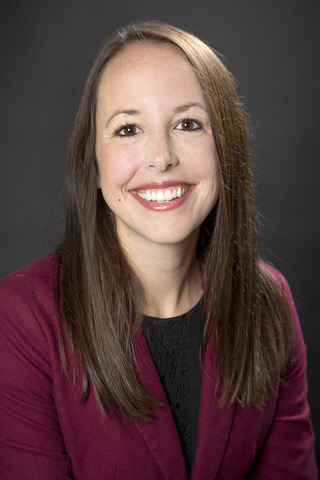
As a research interest of hers, Thomas has spent the last two years leading a project that aims to improve mental and physical health in rural veterans.
Collaborative Action following Rehabilitation for Engagement, or the C.A.R.E. Pilot, is a telehealth behavioral health tool designed to help veterans maintain healthy habits after a cardiac event or diagnosis. The program is funded by the Office of Rural Health within the Veterans Health Administration, U.S. Department of Veterans Affairs (VA).
Thomas got involved with the project after a conversation with Kariann Drwal, cardiac rehabilitation director for the VA, in which they discussed the need for maintenance of health behavior change in veterans with cardiac disease or following a cardiac event.
While participation is cardiac rehabilitation is low nationwide and not unique to the VA, the low numbers served as a reason to initially create the program.
Thomas helps patients maintain lifestyle changes in nutrition, exercise, medication adherence, and stress management, after they initially make them.
“Folks are often able to make changes, but maintaining the changes is really difficult,” she said. “Our goal of this pilot is to work toward maintenance of some of these changes and to continue to build upon those gains.”
To help maintain those changes, the program uses an empirically supported therapy method called Acceptance and Commitment Therapy, or ACT, which helps individuals understand and accept their feelings rather than avoiding them, in pursuit of their personally chosen values.
To tailor ACT to this population, Thomas and her team performed qualitative interviews with veterans during the first year of the C.A.R.E. Pilot, discussing the challenges to making sustained health behavior changes, and what they would like to see during behavioral health sessions.
“When developing and tailoring an intervention, it’s super important to get the perspective of people who would actually have a stake in it,” she said. “We wanted to make sure they were part of the decision-making process every step of the way.”
Following the qualitative interviews, the team worked with expert psychologists at the University of Iowa Health Care who deliver and train others on ACT therapy, developing an intervention that captures the veteran's perspective and empirically supported principles.
While the pilot is geared toward veterans in rural communities, the criteria is broad, allowing anyone who wants to make a change to be able to participate.
The first four sessions are focused on building psychological flexibility or helping people do the things that matter to them, even when life gets in the way.
The latter four sessions are geared towards helping the patient set a goal specific to themselves—goals can range from eating more vegetables to strengthening relationships with family members.
A key part of the project is also iterative revision, as the team makes sure to incorporate feedback and make changes as quickly as possible.
As Thomas has continued her work on the pilot program, she has realized a passion of hers is the process of tailoring interventions to specific groups of people.
“We know what works—that’s been established,” Thomas said. “Now it’s about getting the best possible and most fitting intervention to the people who need it most, and often the people who need it most are the people who have the least access.”
With the C.A.R.E Pilot, participants have already engaged in a minimum of 12 weeks of virtual intervention with a VA provider. Thomas knows that they are willing to participate in virtual programs, but she wants to make their health journey continuous.
“This gives us an opportunity to pick up where they left off but also add in some of our unique skill set and hopefully help people respond to some of the difficulties that life presents and that cardiovascular disease presents,” Thomas said.
A large part of the program is helping the veterans recognize what internal barriers have a possibility of showing up when working toward those goals, and how to notice what those barriers might be signaling.
“The discussion around values is really unique,” Thomas said. “There are not a lot of times in life when somebody asks you what kind of person you want to be. For folks who are willing to engage in those discussions in a deep way, they can be really impactful."
Thomas has also been able to use the pilot to help train graduate students, especially those who are eager to learn ACT. Under close supervision, the graduate students are able to facilitate the sessions themselves.
“It’s an important piece of their clinical degree to get this kind of face-to-face training, so they get to build these skills with close supervision and work with people who are experts in ACT,” Thomas said.
Thomas said CLAS’s support of her graduate students has been meaningful for the project, as the graduate students on the project are funded through a graduate research assistantship from the VA funding.
“The flexibility to be able to work with the VA to apply for this sort of funding is fantastic,” Thomas said. “It benefits veterans, but it also benefits students in my lab in terms of getting this training and being able to conduct this study and involve different people.”
Although Thomas is the leader on the project, she said it would not be possible without the team of people backing her.
“Everybody has their role, but it doesn’t happen if anybody isn’t a part of it,” she said. “From intervention development to the qualitative interviews, at every stage the team has been essential.”
This work was supported by the U.S. Department of Veterans Affairs, Veterans Health Administration, Office of Rural Health (NOMAD #04129). The views expressed in this article are those of the authors and do not necessarily reflect the position or policy of the Department of Veterans Affairs or the United States government.