By Jessica Lien
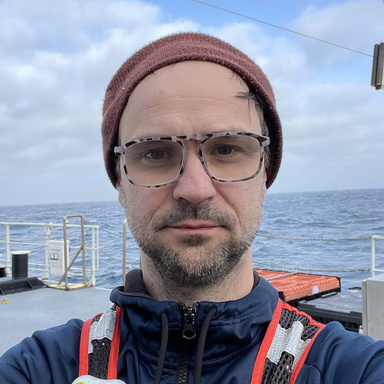
When Terry Conrad brought a handmade ukulele aboard a scientific research vessel, he hoped it might bring people together.
Conrad, an artist, joined scientists aboard the ship to deepen his understanding of humanity’s impact on ecosystems around the world. The project received funding from the National Science Foundation.
On an earlier expedition, he had noticed a social divide between the scientists conducting research and the sailors operating the ship. Though their work depended on one another, conversations between the groups were brief.
He played the ukulele for the scientists and then showed it to the sailors.
“What is all this?” they asked.
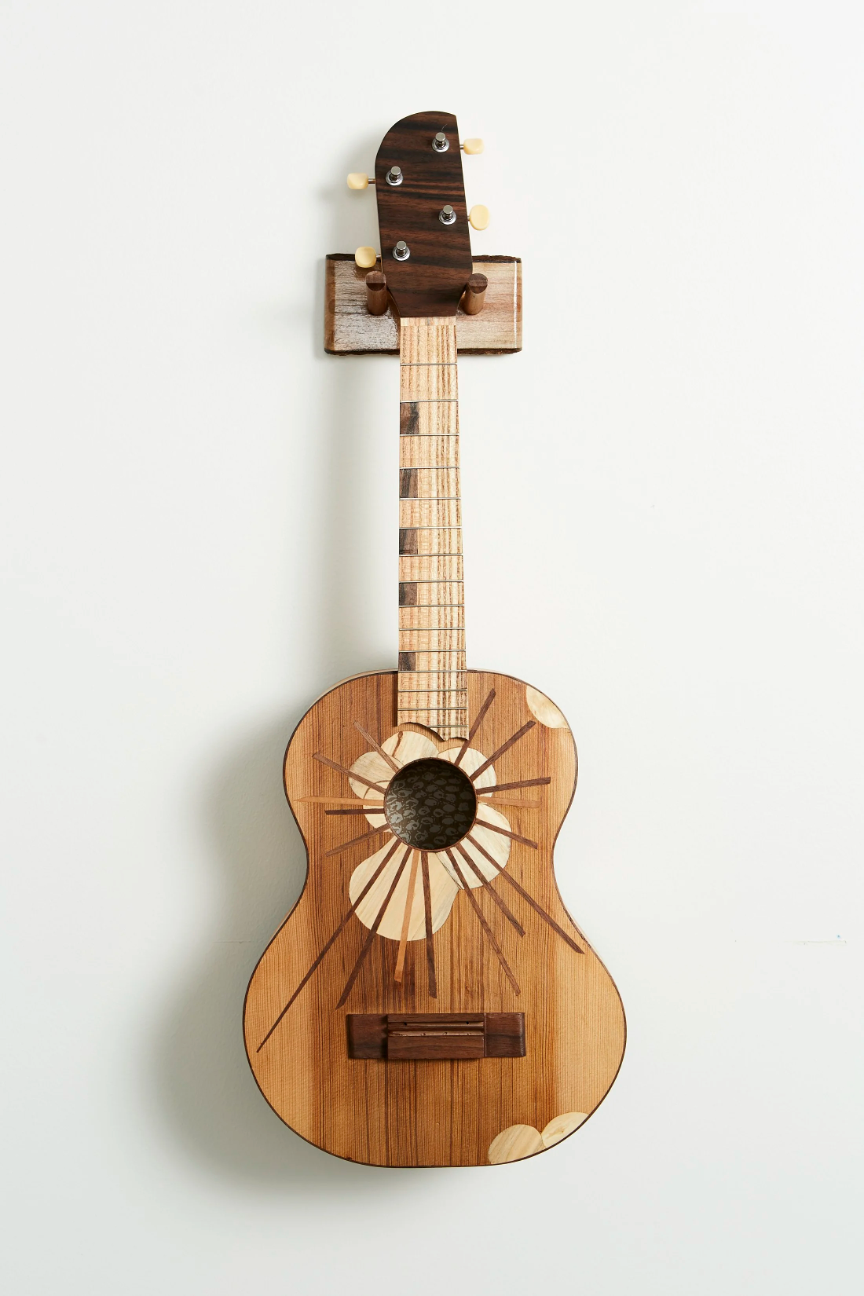
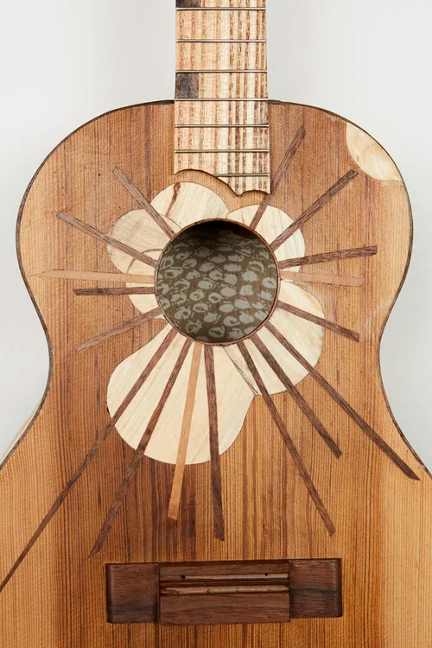
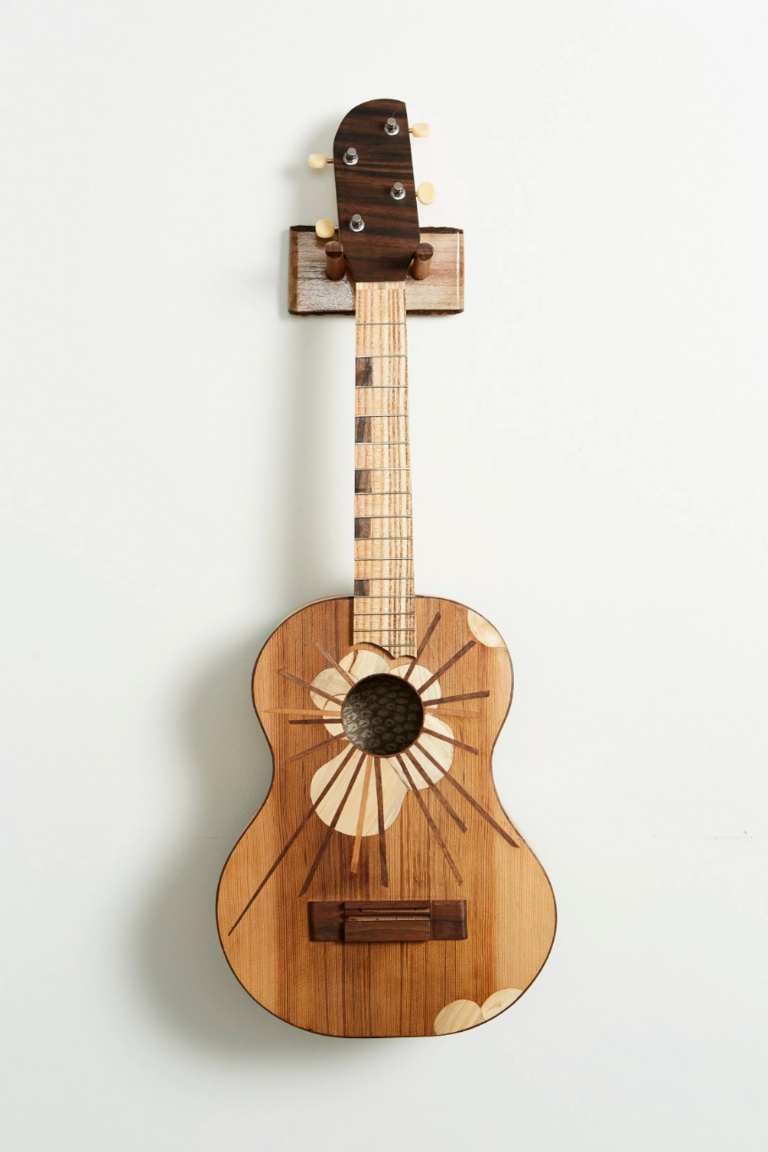
The ukulele’s intricate design depicted a microorganism the scientists were studying, sparking conversations between the two groups.
“It was this fun way to communicate with the sailors and be this in-between,” Conrad said.
Later, Conrad collaborated with a doctoral student and a chemist to write a song about the microorganisms in the ukulele, admitting it was "really hokey." They performed it for the crew as the ship returned to shore.
“It was really funny,” Conrad recalled, “and also just felt really meaningful.”
Conrad is an associate professor of printmaking in the School of Art, Art History, and Design within the College of Liberal Arts and Sciences. His art explores humanity’s relationship with the environment, often transforming discarded materials into tools for creative expression and scientific communication.
Building from found materials
Conrad’s ukulele is deeply connected to Iowa’s landscape.
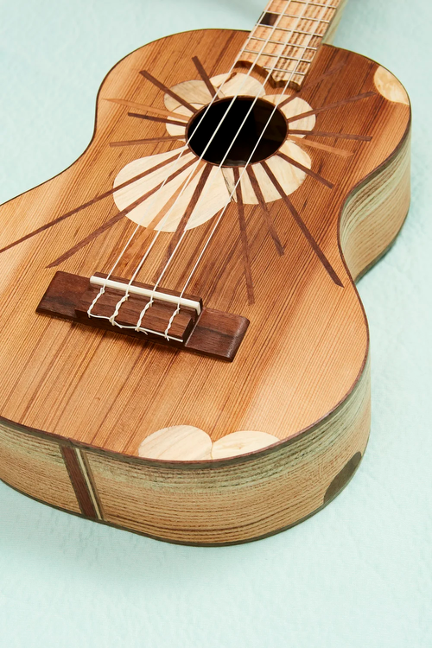
He built it from locust, cedar, walnut, and pear wood collected after the 2020 derecho. He gathered fallen trees around Iowa City and learned to mill lumber. It took about one year to dry the wood per inch of thickness.
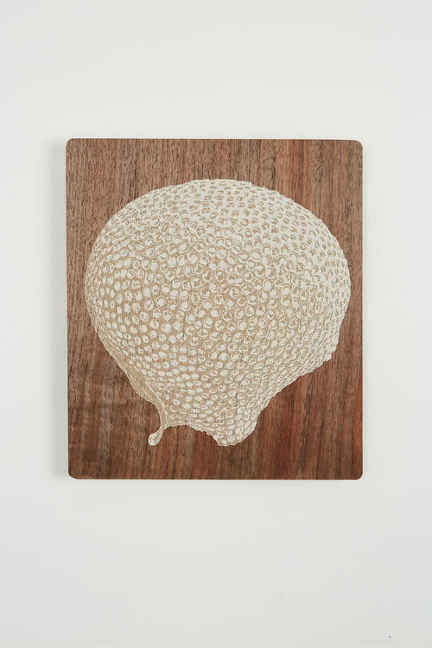
Conrad screen-printed an image of Globorataloides hexagonus, a species of foraminifera, on the surface of the ukulele.
These tiny, single-celled marine organisms have hard shells that preserve clues about the ocean conditions in which they lived, helping scientists study environmental and climate changes.
“These organisms are talking to us,” he said.
His scientific collaborations began after a researcher attended one of his exhibitions in 2014. That encounter eventually introduced him to scientists at Woods Hole Oceanographic Institution, and in 2018, he began joining their research expeditions.
Through prints, sculpture, and musical instruments, Conrad seeks “to be an advocate and translator of scientific research” while drawing attention to environmental issues.
Art and utility
Asked why he would bring such a carefully crafted instrument into the salty sea air, he offered a simple explanation: “I do love them, but they’re also tools meant to be used.”
Conrad’s resourcefulness and practical approach took shape growing up in rural New York, where he was surrounded by farmers and builders who could repair nearly anything with materials at hand. His father once fixed a car’s catalytic converter with a tin can.
He calls this approach “farmer craft,” explaining, “It might not look like a pretty fix, but it functions well.”
Today, he applies the same thinking to printing presses he assembles from found objects, including discarded scientific equipment collected during research expeditions.
“The second life of things is really important,” he said.
Creativity and the skill of adaptation
For Conrad, printmaking itself is rooted in community, built around shared presses, tools, and studio spaces.
He brings that collaborative spirit into the classroom, often making his own artwork while demonstrating printmaking techniques so students can see his experiments, decisions, and problem-solving firsthand.
Conrad welcomes students into his studio and creates opportunities for them to exhibit beyond campus. He arranged for students in his graduate printmaking workshop to show their work alongside his exhibit at Concordia College in Minnesota.
For Conrad, inspiration goes both ways. He enjoys watching students master new techniques, particularly when they discover something he didn’t already know.
“Your greatest skill is that you’re creative, not that you’re good at woodworking or know how to make a print,” he said. “It’s that you’re adaptable.”
During the pandemic, Conrad found himself at home with his infant daughter and away from the print shop. He returned to playing guitar after nearly 15 years and began building simple instruments as a way to communicate with her through music.
One of those instruments went to sea and brought people together into conversation.
Conrad encourages his students to recognize the importance of the people around them as well.
“Lean into your community,” he said. “Support the people that support you. Show up for people.”