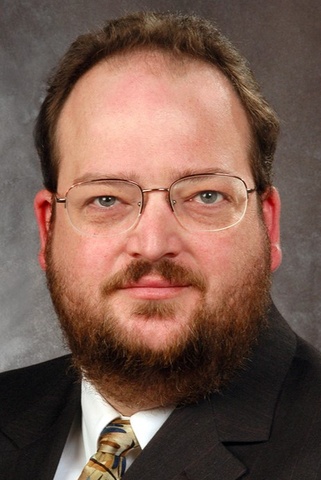
Michael Flatté, a professor the Department of Physics and Astronomy in the College of Liberal Arts and Sciences (CLAS), has received $750,000 in funding to advance quantum computing research as part of a $290 million initiative from the U.S. National Science Foundation. Flatté will contribute to the Manufacturable and Resilient superconducting Quantum Information Systems (MARQUIS) institute, one of eight research centers supported by the initiative.
Led by Princeton University, MARQUIS will receive $27.9 million over five years to develop new materials and manufacturing methods for superconducting quantum computers.
The research focuses on improving Josephson junctions, essential components of superconducting quantum processors. These components have relied on largely the same materials for approximately 25 years, presenting challenges for developing larger, more capable quantum computers.
Flatté will use theoretical calculations to investigate how different combinations of materials behave in Josephson junctions. His research will examine how defects and impurities interfere with their performance and explore ways to reduce those effects.
MARQUIS brings together researchers from two dozen laboratories across nine institutions, including Iowa, to address this longstanding challenge.
"This multidisciplinary framework forms a unique scaffold to bring new expertise and creative ideas to this longstanding challenge in quantum computing," Flatté says.
The institute will also support quantum education and workforce development initiatives, while Flatté's research will contribute to efforts to make large-scale superconducting quantum computing more reliable.