By Bri Brands
What if you could step inside a photographic image? For Kaia Olsen, professor of practice in the Department of Cinematic Arts, questions like this are at the center of his research.
"What I'm doing right now is finding ways to merge this idea of virtuality, which would be digital spaces, with reality, which is what we can touch and feel right in front of us," Olsen said.

Expanding the possibilities of visual storytelling
Olsen has always been fascinated by telling engaging stories without uttering a single word. To him, form, color, shadow, and light are the building blocks of visual storytelling, working together to create expanded narrative possibilities.
"Every image is speaking to you in its own language," he said.
Building on years of experience in photography and computer animation, Olsen is now exploring how digital technology can expand the possibilities of visual storytelling.
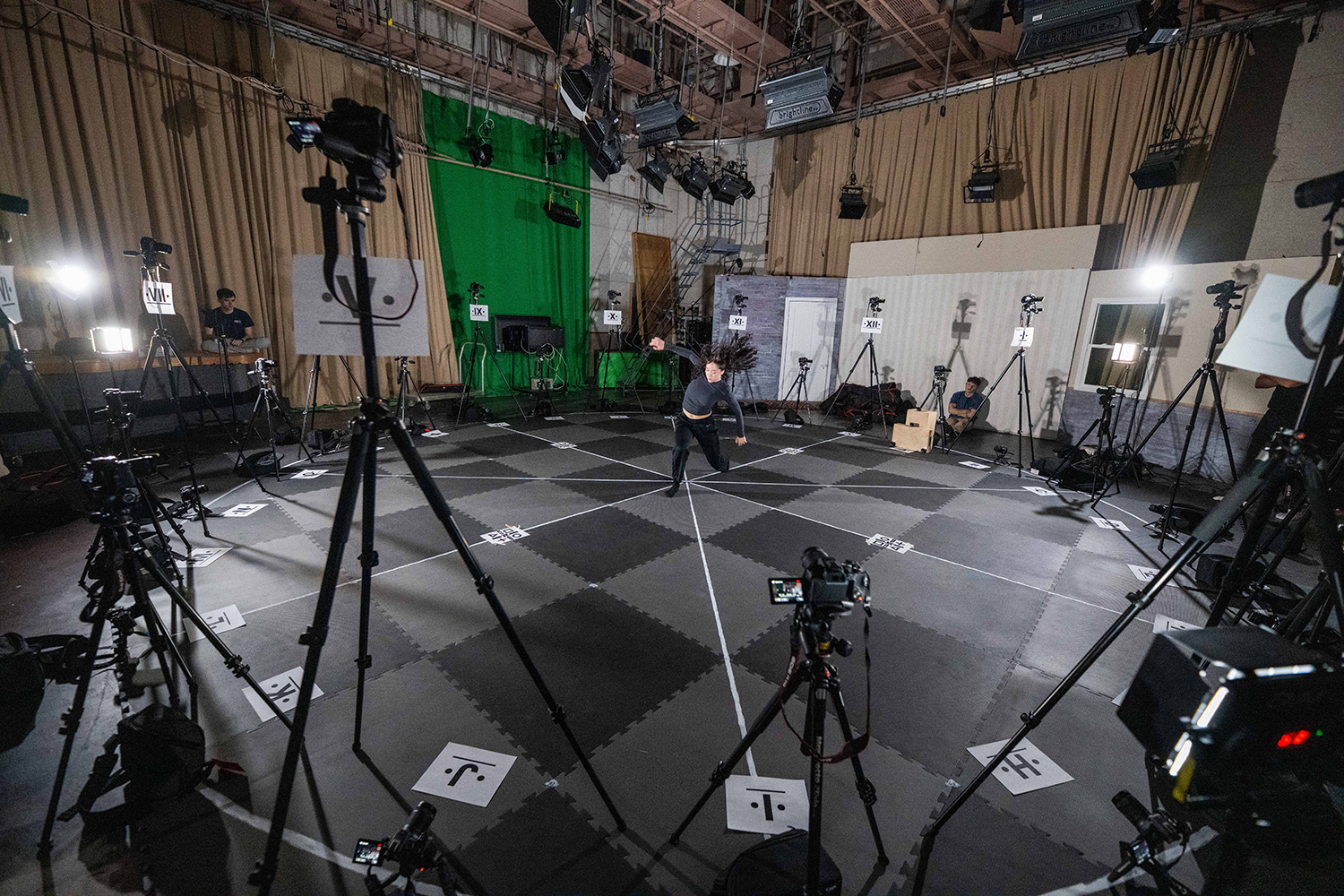
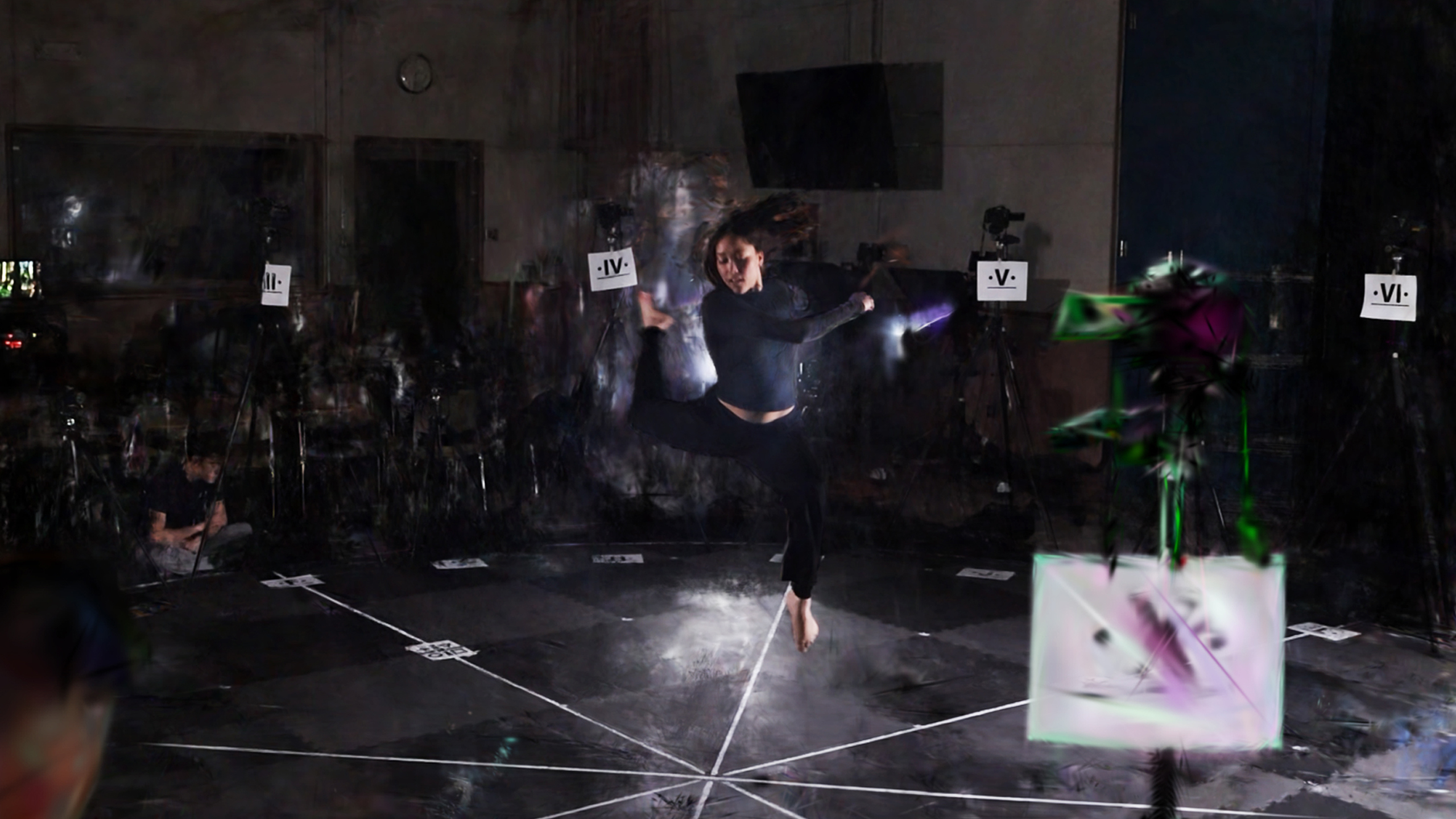
His work explores what Olsen calls Gaussian Narrativity, an experiential condition that emerges as audiences navigate and engage with photographically captured scenes reconstructed as three-dimensional spaces.
Instead of experiencing a scene only from the perspective originally chosen by a photographer or filmmaker, audiences can move closer, watch the action from other angles, or even play with the flow of time itself. Each new perspective has the potential to reveal details and relationships that may otherwise remain unseen.
“The closer you can get into each of these stories or these engagements, the more stories come out of it,” he said.
Experimentation at the heart of art and education
Olsen grew up surrounded by art and has always believed it is important to break traditional norms when it comes to art. At his heart, Olsen is an experimentalist, which is why the University of Iowa community is important to him.
"Being able to come into this program that is doing this proper combination of teaching important fundamentals while also allowing for a huge amount of artistic theory and conceptuality is so rare," he said.
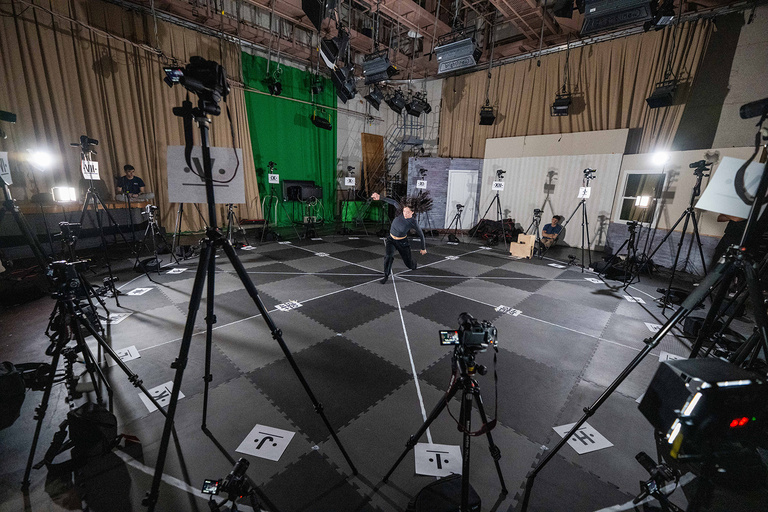
Though many people view computers as cold tools that can contribute to disconnection, Olsen sees them as opportunities to extend humanity in new ways. His work creates opportunities to engage with visual, cinematic, and performing art both spatially and viscerally, even when audiences are experiencing events captured in a different time and space.
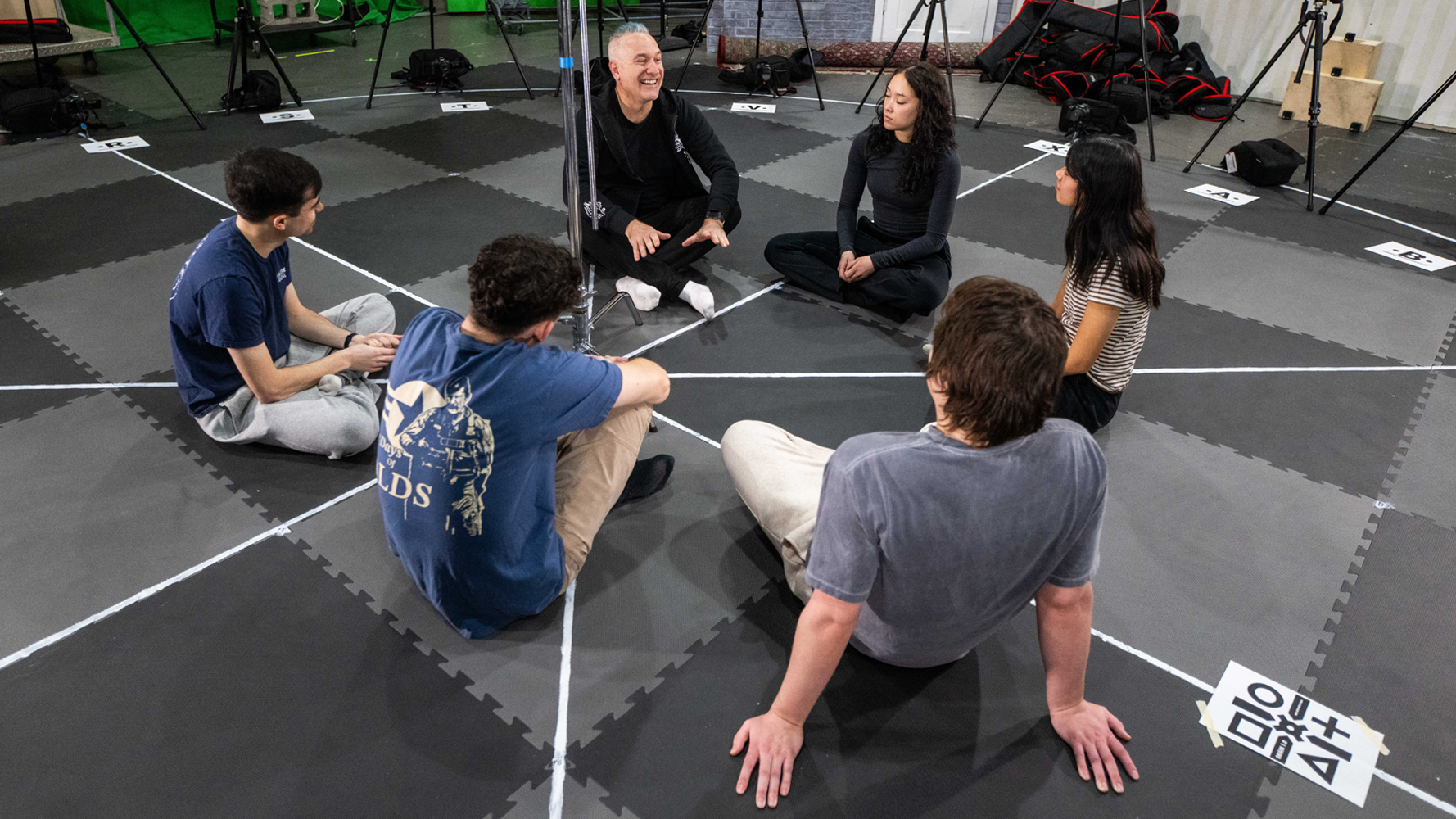
Olsen particularly enjoys sharing his knowledge with students and helping the next generation hone what they want to say and how they want to say it.
“The more we get vulnerable and share the things that matter to us, or how we're really feeling, and share that emotionality, the more it breaks down a lot of barriers between each other and allows us to draw closer and see each other from different perspectives,” Olsen said. “Art is the expression of the human condition, and my hope is that this research encourages other folks to experiment, explore, connect, and ultimately share their stories with each other in new and exciting ways.”