
By Ben Hill
From trumpet performance to financial planning; physics to engineering software for NASA; anthropology and classics to petroleum geology; and from English to law.
Those are just a few of the professional journeys taken by a group of University of Iowa alumni whose paths all began in the College of Liberal Arts and Sciences (CLAS). As varied as their careers may be, their paths converge today through service on the CLAS Dean’s Advisory Council.
The council brings together alumni with a wide range of professional and life experiences to advise the dean and CLAS leadership on challenges and opportunities facing the college. Drawing on perspectives developed well beyond campus, members offer an outside view as leaders consider where CLAS is today and where it is headed.
“Our alumni show students the many directions a liberal arts and sciences education can take them,” said CLAS Dean Sara Sanders. “Their careers may look very different, but they share a foundation that prepared them to think critically, communicate clearly, and adapt. As members of the council, they bring those skills—and decades of experience across professions and communities—back to CLAS, with questions and ideas that challenge our thinking and help us see new opportunities.”
The “cross-discipline advantage”
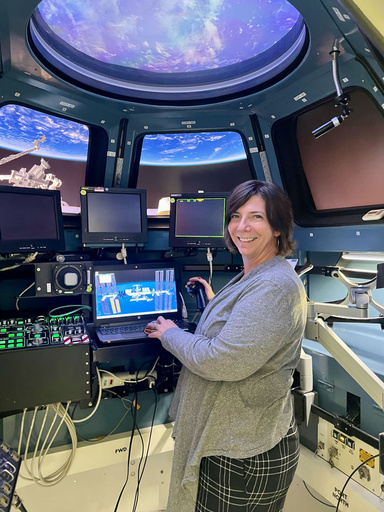
Amanda Acevedo (BA ’96) has built a professional life at the intersection of science and technology. A physics major and computer science minor at Iowa, she now owns Vedo Systems, a Houston software engineering firm that develops, integrates, and tests software for NASA.
Looking back, Acevedo describes one of the most valuable parts of her education as a “cross-discipline advantage.” Technical knowledge was essential, but so was learning to write and communicate clearly, ask probing questions, listen, and collaborate with people working in other fields.
She sees that combination becoming even more important as technology advances.
“We need people who can look beyond their own areas of expertise, understand different perspectives, and connect knowledge across disciplines,” Acevedo said. “Those who develop that cross-discipline advantage will be especially well prepared to navigate—and lead—in a rapidly changing world.”
Prepared for a professional pivot
Shane Swanson (BM ’89) arrived at Iowa with a very different destination in mind. He came to study trumpet performance and dreamed of playing professionally. Instead, he built a career spanning more than 30 years in financial services and financial planning, helping individuals and families make complex decisions and prepare for their futures.
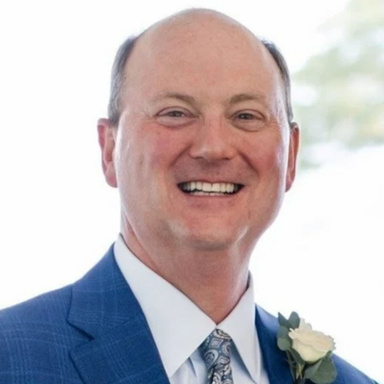
The connection between those two worlds may not be obvious on a résumé, but Swanson can see it in hindsight. Performing taught him to stand in front of thousands of people with confidence. Professors challenged him to become a better writer and thinker, while his broader education exposed him to people and perspectives beyond what he had previously known.
“Most careers—and lives—don’t follow a straight line,” Swanson said. “Students need the freedom to explore, discover what they care about, and develop the ability to think critically, communicate clearly, and adapt when opportunities take them somewhere they never expected.”
Swanson sees his own career as an example: “I came to Iowa planning to be an orchestral trumpet player. I spent my career in business. CLAS helped prepare me for both.”
Finding connections in surprising places
For Amy Sullivan (MS ’86), a series of academic interests that might once have seemed unrelated ultimately became a career.
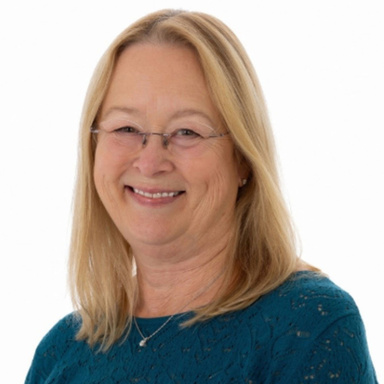
Sullivan earned undergraduate degrees in classics and anthropology along with geology, followed by a graduate degree in geology. Studying anthropology led to archaeology fieldwork, which brought her back to Iowa to study geology. Her subsequent research on fossil pollen became a memorable point of common ground during interviews with major oil companies, and helped launch her 31-year career as a petroleum geologist with Mobil, ExxonMobil and Royal Dutch Shell.
“My career grew out of connections I never could have anticipated,” Sullivan said.
That experience continues to shape how she thinks about education. Scientists need technical expertise, she said, but they also need to understand geopolitics, renewable energy, sustainability, and global economic trends that affect major business decisions.
“My own path showed me the value of being able to draw connections across disciplines and apply knowledge in unexpected ways,” Sullivan said.
Bringing it back to CLAS
Acevedo, Swanson, and Sullivan represent only three of the many paths council members have taken. Others have moved from journalism into marketing, mathematical sciences into global IT leadership, communication disorders into health care leadership, statistics and actuarial science into financial leadership, and English into law.
Their careers span industries but reflect many of the same skills; now, they are helping the College of Liberal Arts and Sciences navigate its own path forward.