By Claire McGranahan
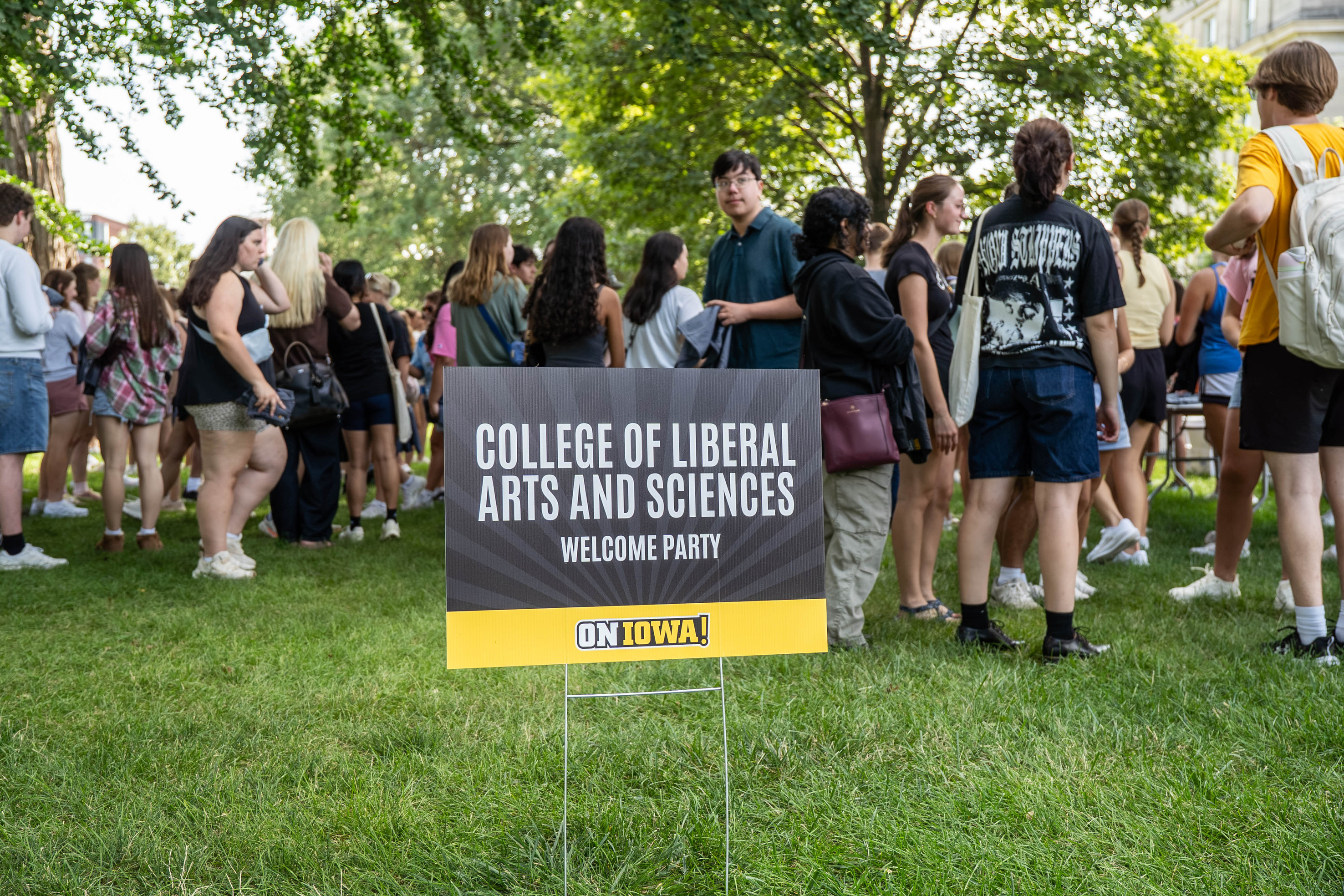
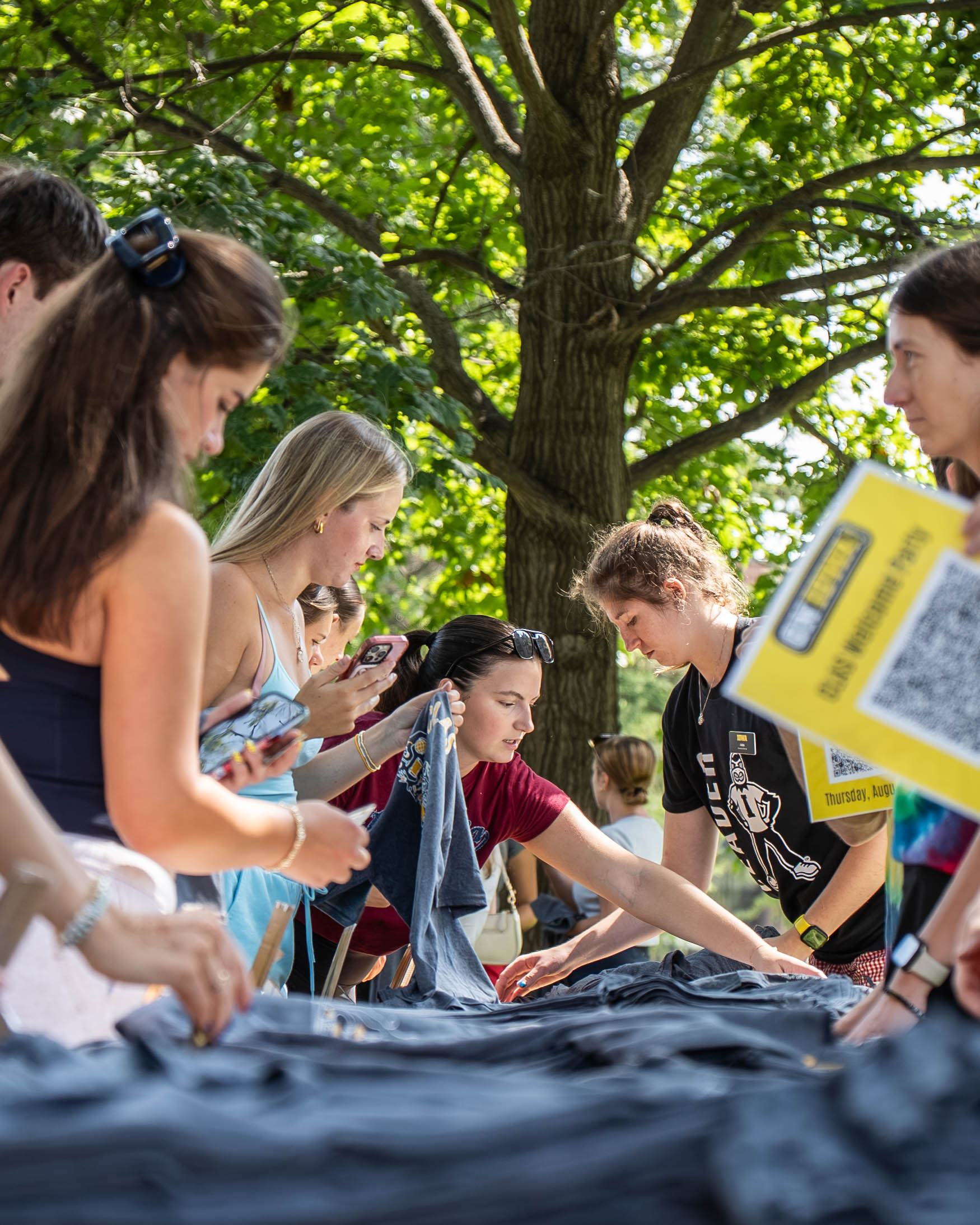
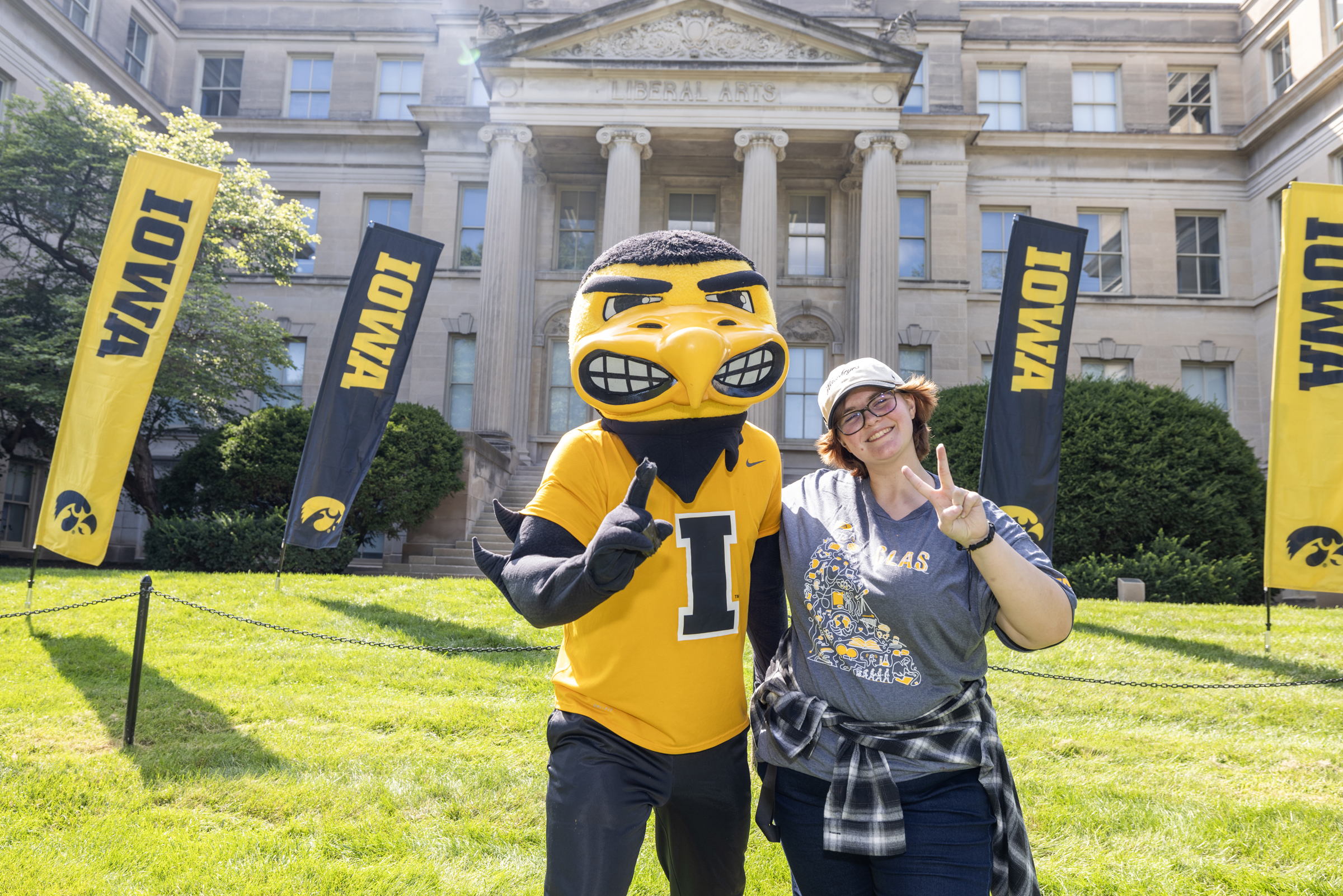
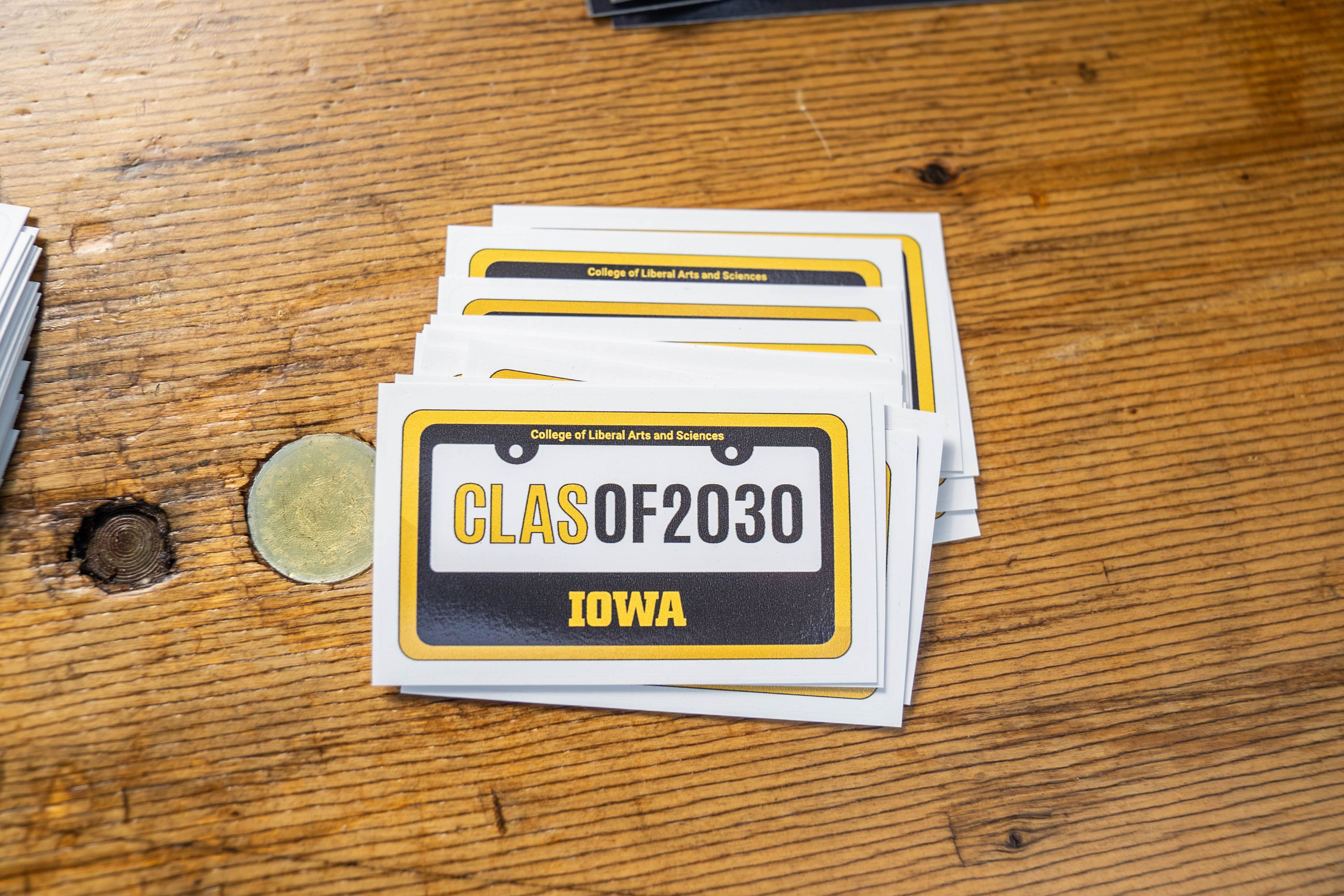
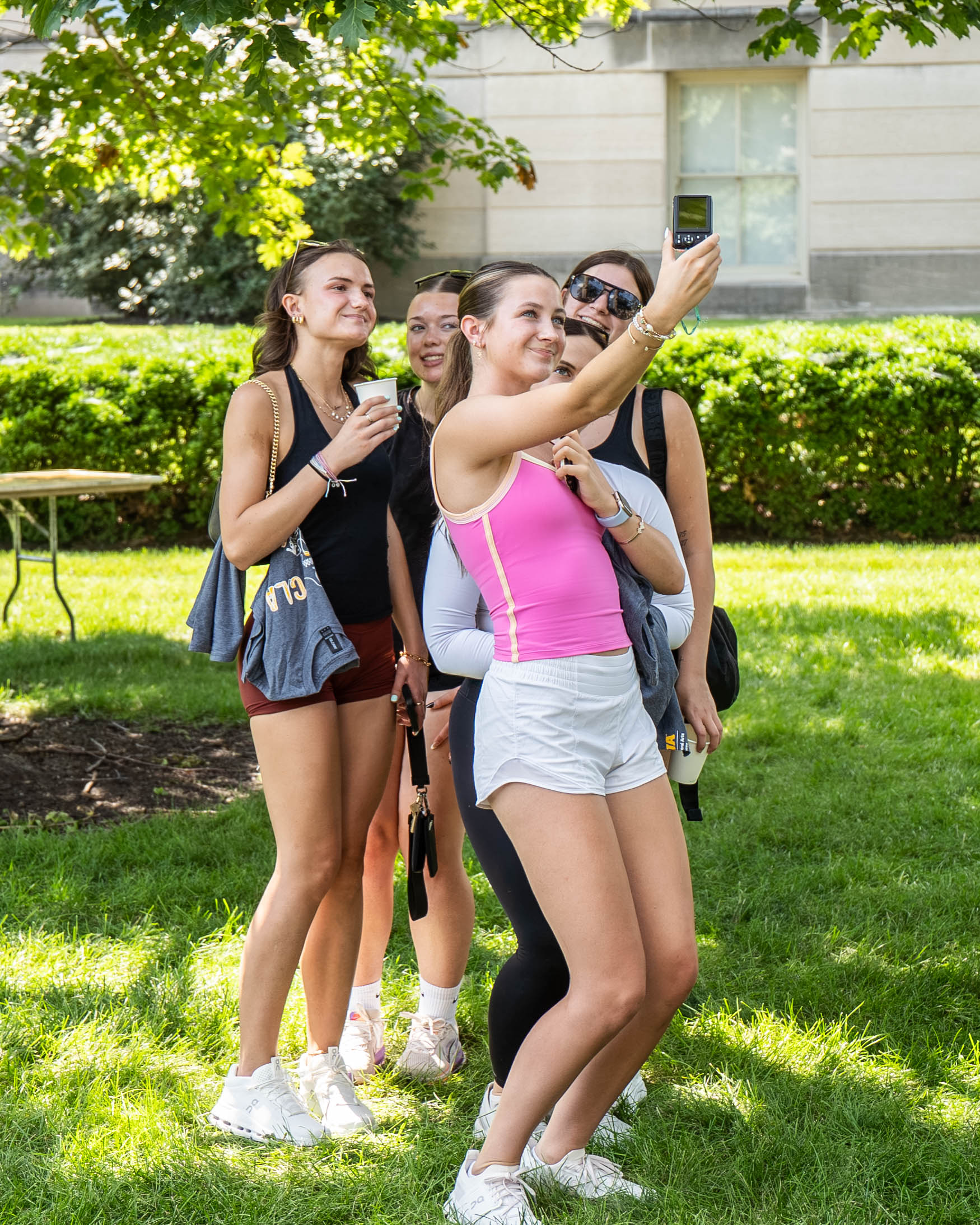
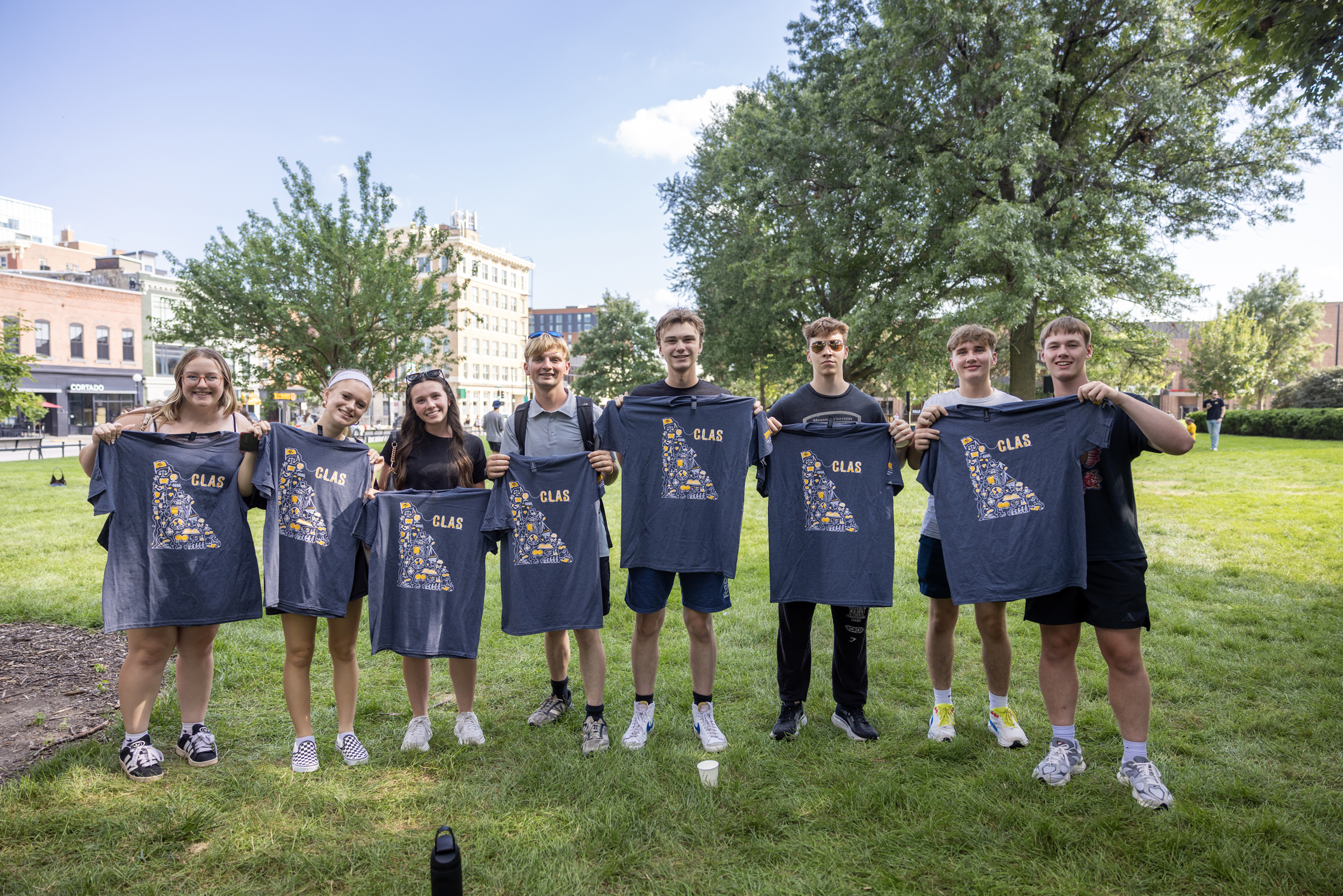
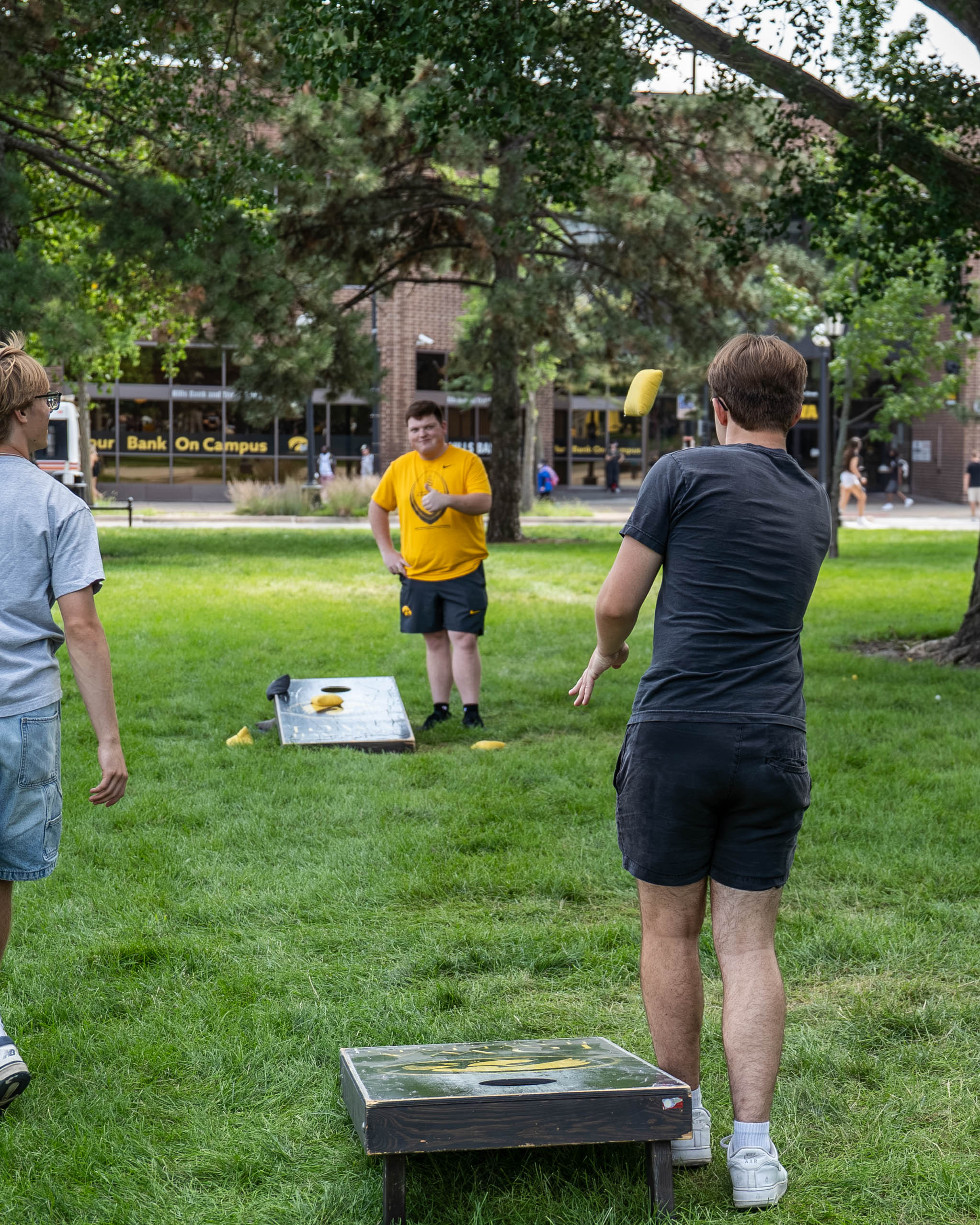
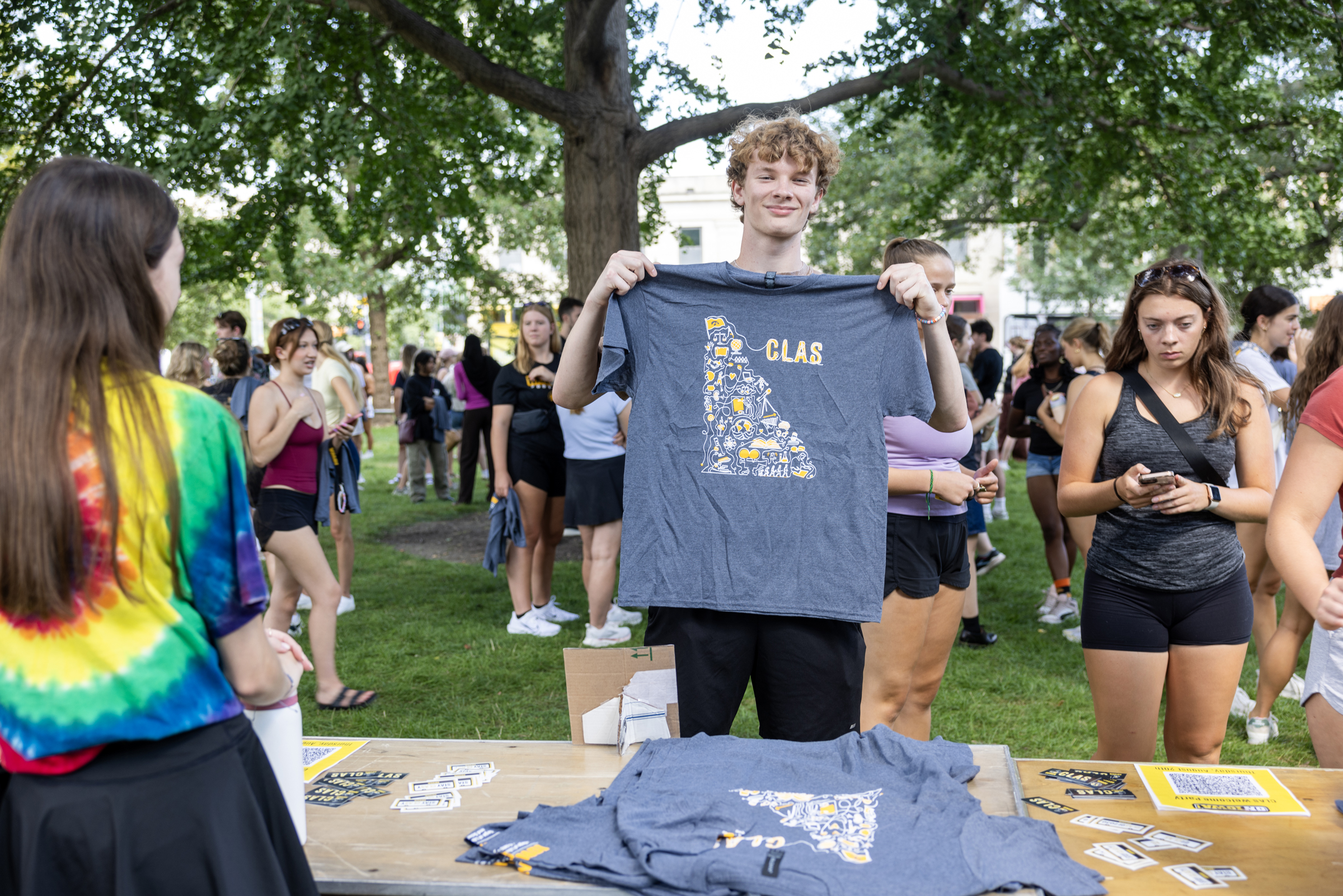
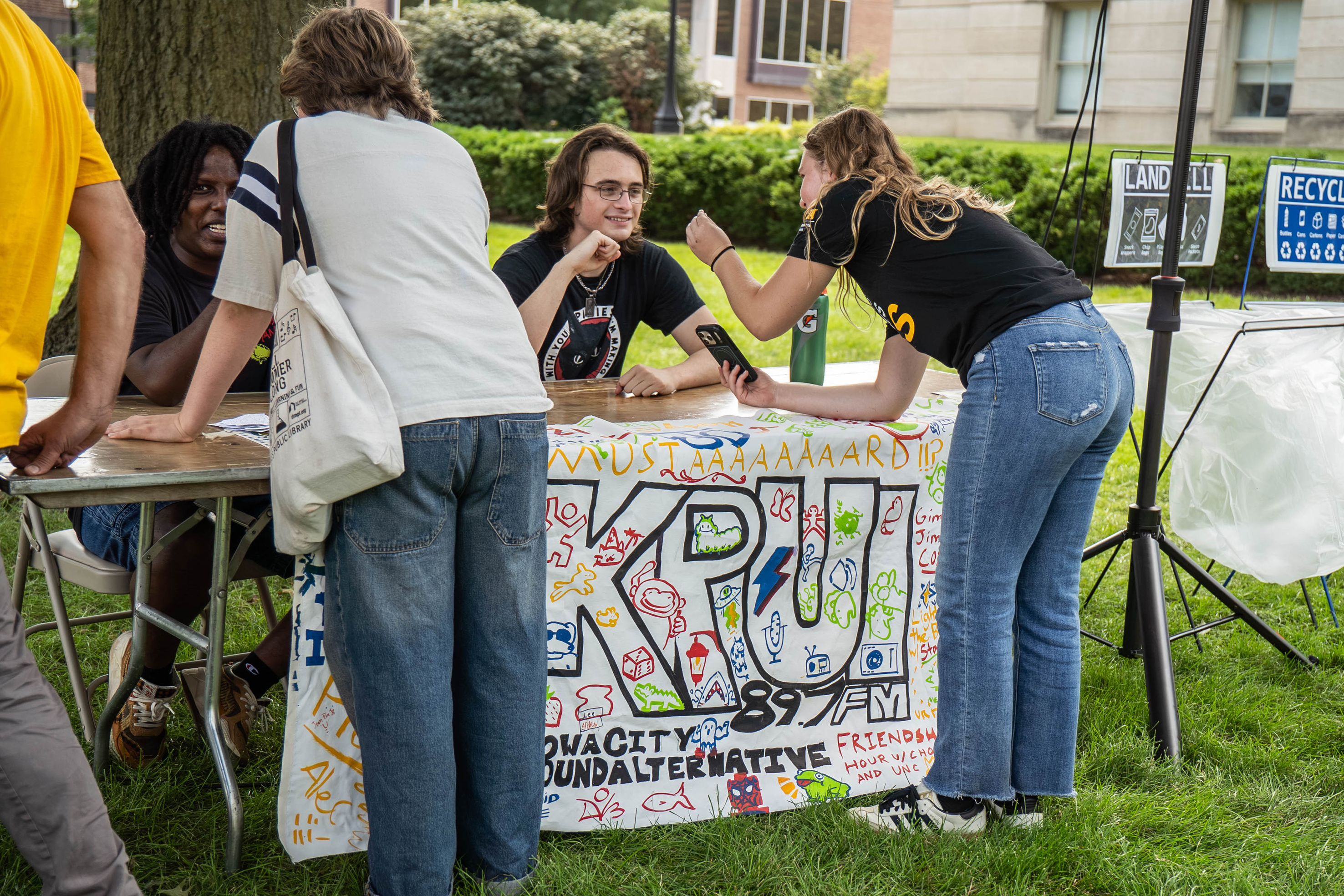
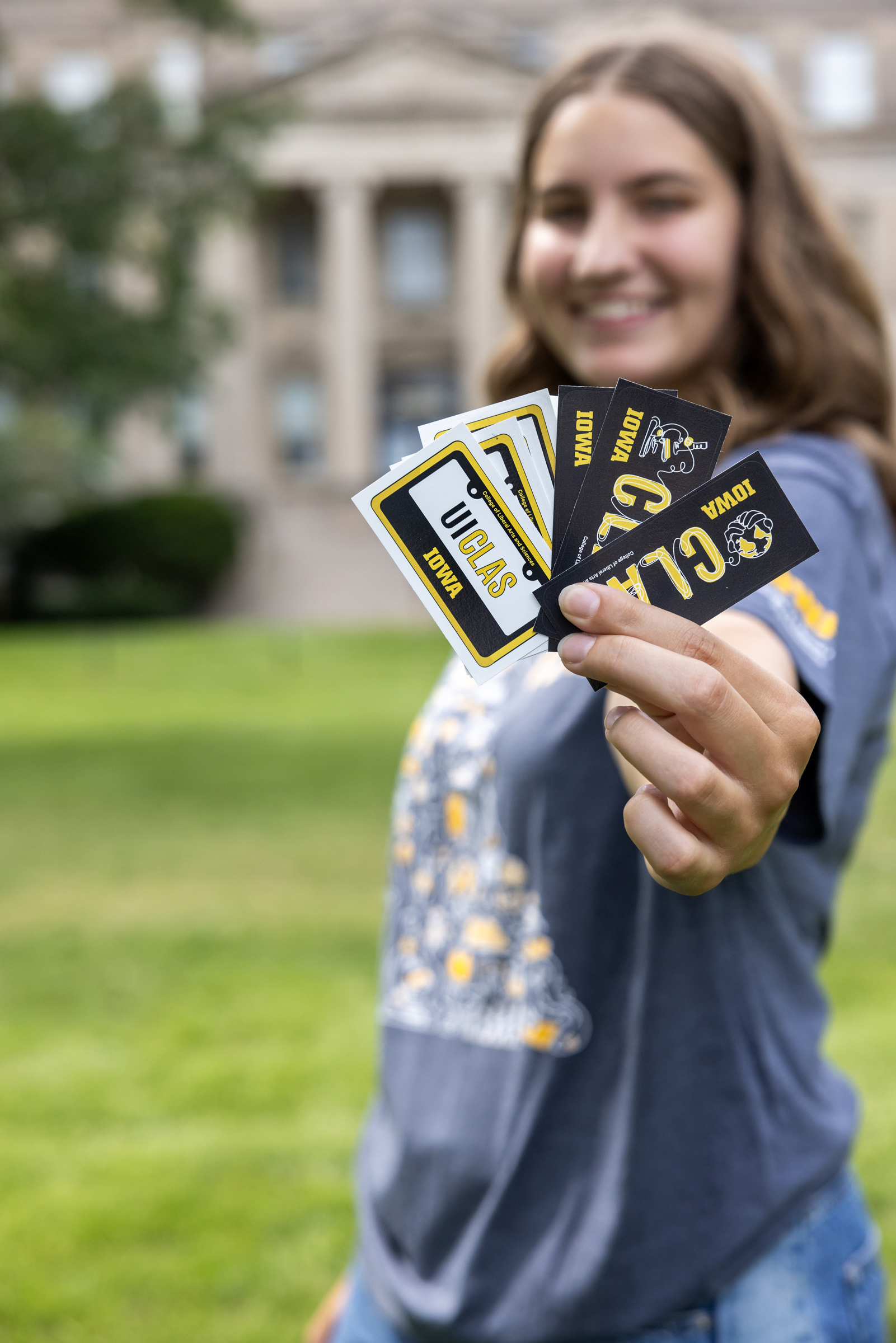
Every fall, almost 800 incoming College of Liberal Arts and Sciences (CLAS) students gather on the Pentacrest lawn for the CLAS Welcome Party. There are lawn games, music from student-run radio station KRUI, snacks, photos with Herky, and limited-edition T-shirts and stickers for students to mark the occasion.
For the first time, a current CLAS undergraduate from the School of Art, Art History, and Design created the artwork for those keepsakes. Sienna Warner, a graphic design student who is already working professionally in the field, took the project from sketches and squiggles to finished designs created for her fellow students.
Finding the design

Warner began developing the Class of 2030’s designs by considering how to represent the breadth of academic interests across the college. She looked through the many CLAS majors to identify symbols that might translate into illustrations, researched linework for inspiration, and sketched her own interpretations. Bringing those individual pieces together required her to think about more than what looked good; each choice needed a reason for being there.
“The intention is what motivates people to be interested in your design,” Warner said. “Every move I make is intentional.”
That approach shaped a design filled with details for students to discover. Warner’s own eye tends to land first on the painter or the hands holding a globe, but someone else might notice something entirely different. That interaction between a design and the person encountering it is part of what draws Warner to the field. A movie poster might inspire someone to see a film; an interesting T-shirt might be the one someone reaches for in the morning.
For the Welcome Party project, Warner wasn’t simply making something she liked. She was designing for an unusually broad audience representing STEM fields, the social sciences, writing, the humanities, and the arts.
Where coursework and professional practice meet
When the CLAS Welcome Party team asked Jeremy Swanston to consider recommending a student to design this year’s T-shirt, Warner’s ability to move between the creative and technical sides of design had already caught his attention.
Swanston, associate professor of graphic design and area head of graphic design in the School of Art, Art History, and Design, taught Warner in an interaction design course. In a capstone assignment, students create designs for desktop and mobile web environments, then build responsive websites that work fluidly across them.

“Students can usually do the first part. It’s the second part that is really difficult,” Swanston said. “ But Sienna excelled at both. Not only did she develop a strong design from the beginning, she also had the technical ability to carry that vision through to a polished, responsive site.”
Warner is already applying her design skills professionally. While still working to complete her undergraduate degree, she works as a graphic designer for an Arizona-based business, creating materials for advertising, print, apparel, social media, and other uses.
Those experiences have taught Warner that design involves more than producing a finished piece. She regularly explains the thinking behind her creative decisions to people who may approach a project differently, and actively seeks feedback from professors to understand how they see her work and where she can improve.
Just as important, she said, is knowing when to stop working and give an idea time to develop.
“If you try to rush that process, then you lose the ability to change your work, improve your work, look back on your work,” Warner said. “Art really is just the practice of patience."
Designing for a response
Warner discovered graphic design in high school, when a teacher held movie poster competitions and invited other teachers to vote on the strongest designs. Having grown up drawing and painting, Warner was drawn to a medium that combined those artistic instincts with her competitive streak.
Movie posters have remained a fascination and helped shape a career goal she still has today: designing them professionally.
“My goal as a designer is to plant a seed of initiation in the people who view my work,” Warner said. “Whether that’s a spark of joy or a movement or just a change in their daily habits, I think that’s the main goal for me.”
At the Welcome Party, Warner’s work reached its audience. New CLAS students picked up her T-shirts and stickers on the Pentacrest, wearing and carrying her designs into their first days at Iowa. A design created by one CLAS student had become part of another’s introduction to the college.