By Jessica Lien
At its simplest, geographic information systems (GIS), works by attaching information to a location and stacking that information in layers so relationships become easier to see.
Think of a stack of transparent maps. One layer might show roads. Another might show rivers or tree cover. Others could contain soil type, elevation, property boundaries, census data, or historical maps. GIS line those layers up precisely, allowing researchers to examine how they intersect and ask questions across them.
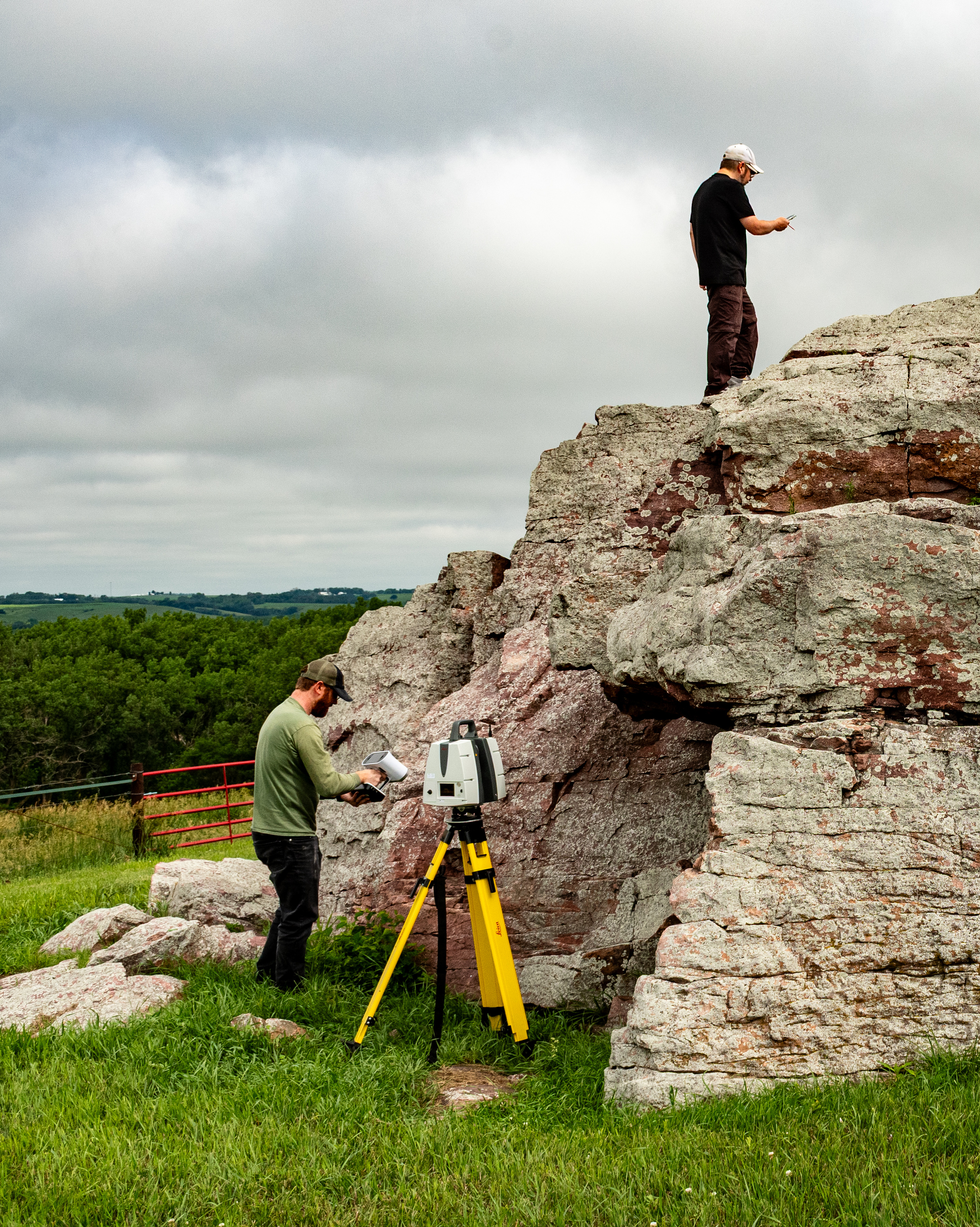
Adam Skibbe is a senior GIS administrator and adjunct instructor whose work centers on geospatial technology and the questions it can help researchers answer. He provides GIS support across the College of Liberal Arts and Sciences and the university, works with faculty and students on research, and teaches students how to use geospatial tools they may encounter in their careers.
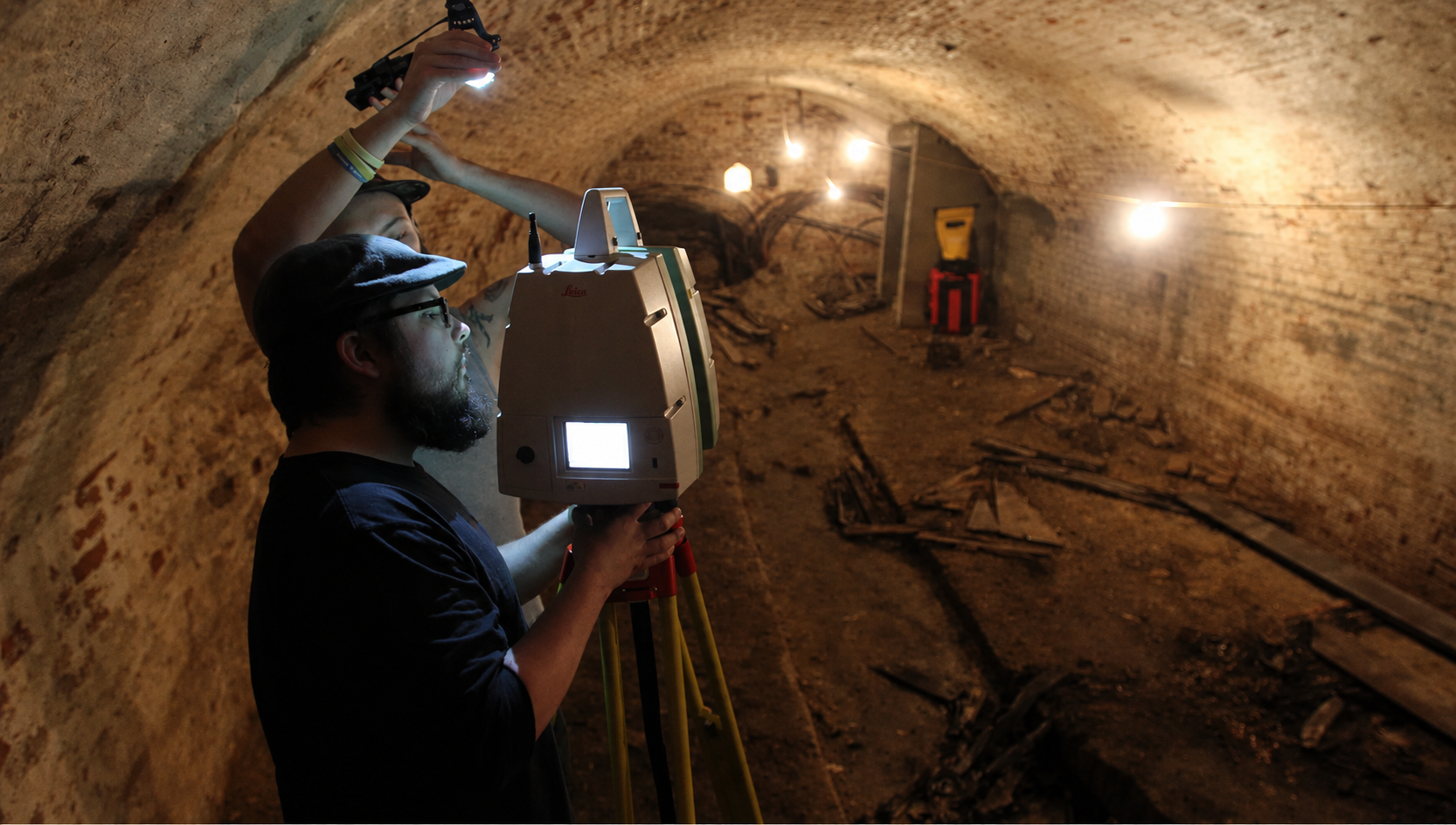
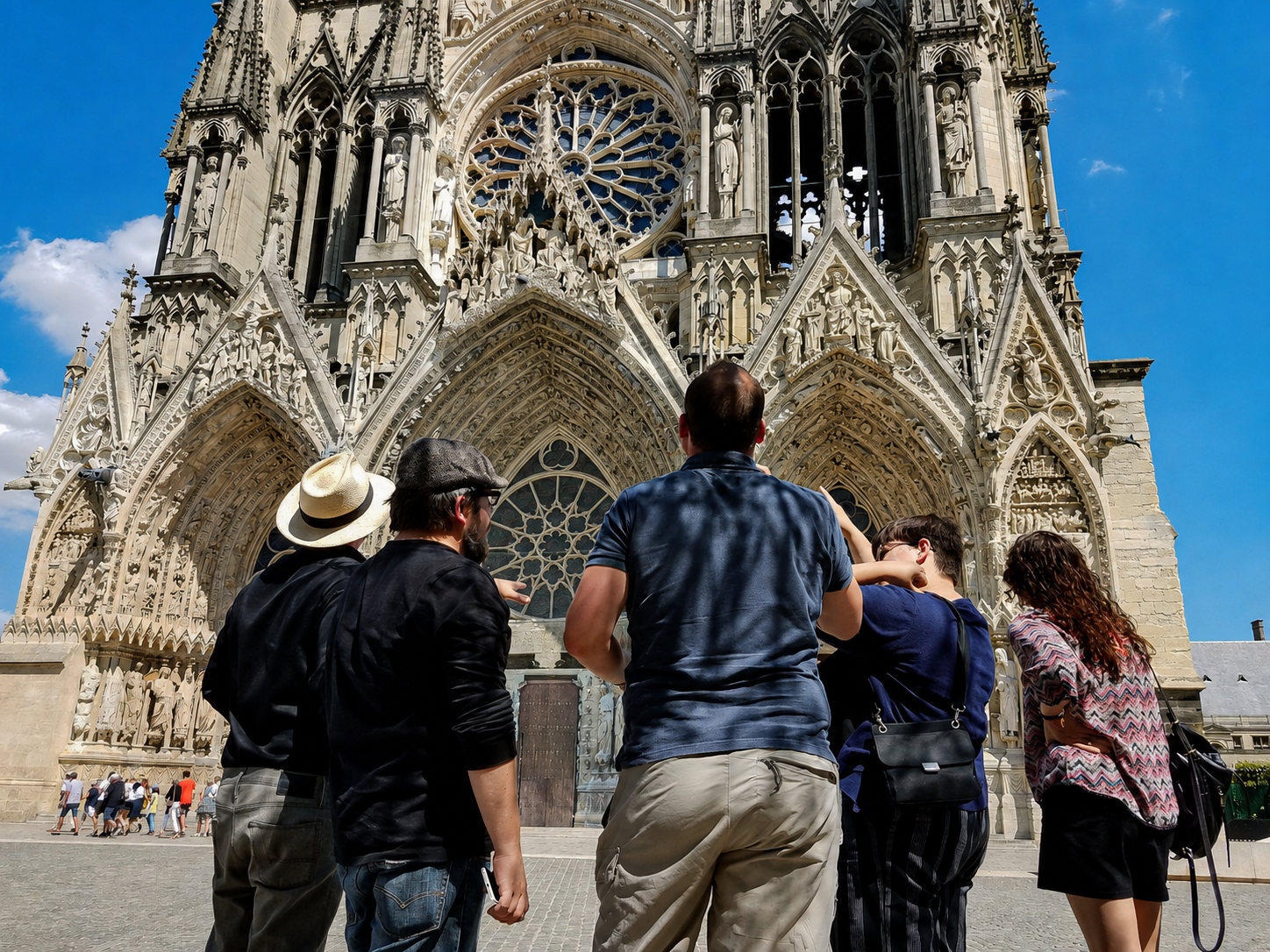
Skibbe mapped potential conservation areas in suburban Chicago for his graduate research, then spent years studying wildlife and prairie ecology at Konza Prairie outside Manhattan, Kansas. At the University of Iowa, he worked with biologist Andrew Forbes on a cicada emergence study published earlier this year, joined art historian Robert Bork on a lidar-scanning trip to French cathedrals, and led public lidar scans of the Iowa City beer caves that became community conversations about local history.
"I really just enjoy applying GIS and geospatial technology in a wide variety of disciplines," Skibbe said. "I've been very fortunate over the years to engage in a lot of different projects and work with some incredible collaborators."
Honing questions in the black box
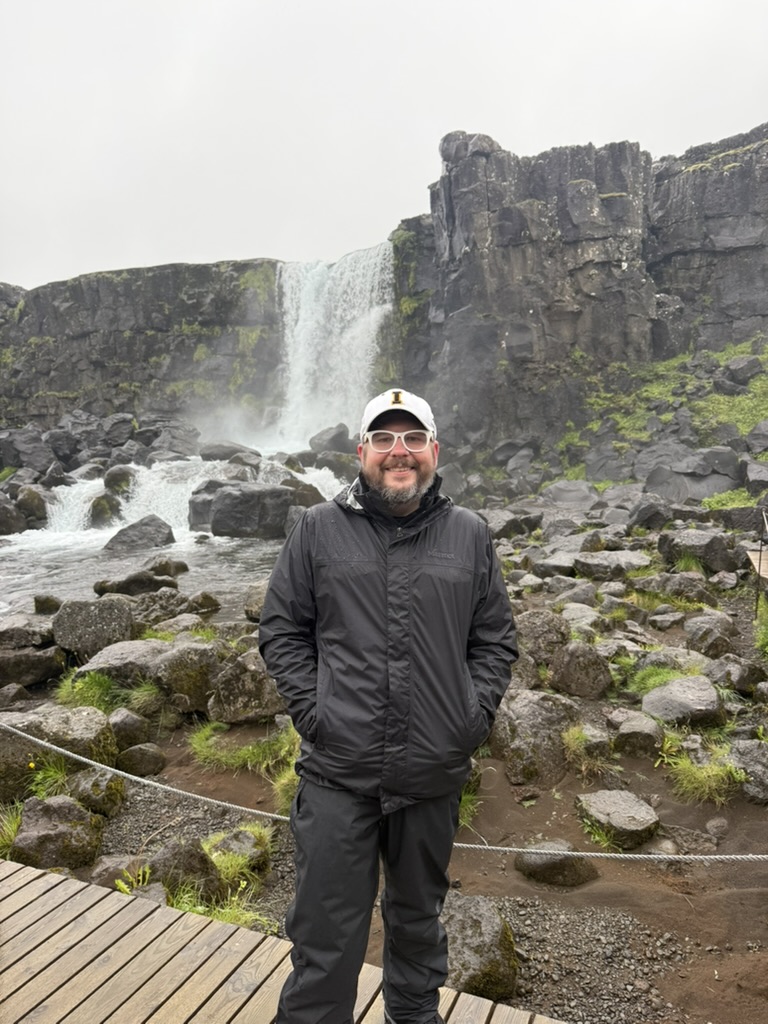
This summer, Skibbe traveled to Iceland with faculty, staff, and students to launch high-altitude balloons carrying sensor packages designed and built by students. The trip, built on a special topics course, was inspired by another of Skibbe's regular summer activities, the Edge of Space Academy.
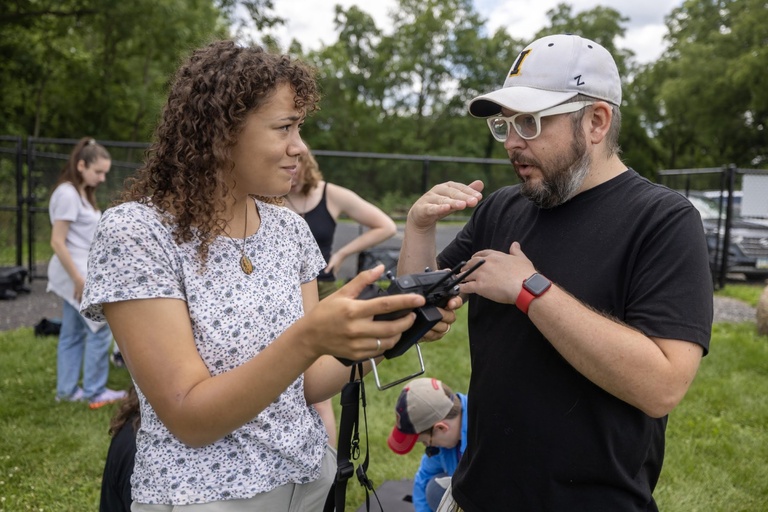
The Edge of Space Academy is a summer program he has helped lead for five years, in partnership with the School of Earth, Environment, and Sustainability and the Department of Physics and Astronomy. Each summer, 12 to 16 undergraduates from across the country compress roughly a summer’s worth of research into two and a half weeks.
The timeline forces students to make research decisions quickly. For Skibbe, the decisions that lead to an answer matter as much as the answer itself.
Skibbe emphasizes process over outcome. He wants students to sit with a problem rather than rush toward a solution, especially as AI tools make it easier to produce an answer without understanding the thinking behind it.
"In traditional coursework, you tend to do A, B, and then C, but that black box between A and B or B and C tends to be overlooked by students," Skibbe said. "I try to get students to focus on that process. Don't just complete the task. Think about why you're doing it and how you got there.”
That approach traces back to his own mentors, including faculty advisor Mary Whelan, who introduced him to GIS during his senior year studying anthropology at Iowa, and longtime colleagues Bob Setter and Bruce Scherting.
Skibbe remembers them as accessible mentors who cut through formality and made it easier for students to engage and bring them questions. It is a style he has tried to carry into his own work.
"If it takes you two months to get comfortable talking to me, that's two months of missed opportunities," Skibbe said.
Seeing new angles
Skibbe's emphasis on access and perspective goes beyond research and teaching.
He was part of the ad hoc group that formed the original CLAS Staff Council in 2018, and later served on its executive committee. Through the council, he met staff across job categories and areas of the college he otherwise might never have encountered.
"It's just been wonderful to be able to continue to expand my perspective, see CLAS from new angles," Skibbe said.
For Skibbe, CLAS Staff Council reflects an approach similar to research and teaching: understanding what might be missing, hearing from people with different experiences, and creating space for them to participate in the process.
"We can only be successful with engagement from our people," Skibbe said.
When students or faculty come to Skibbe for help with research, he encourages them to approach a problem from multiple angles—sometimes five different way—to see what each perspective reveals. He thinks about the college much the same way.
"In shared governance, the best ideas don't come from just one person or one small group," Skibbe said. "It has to be everybody."