By Fatima Salinas
Faculty across the college are engaged in fascinating work. Take a look below to meet and get to know four CLAS researchers and artists.
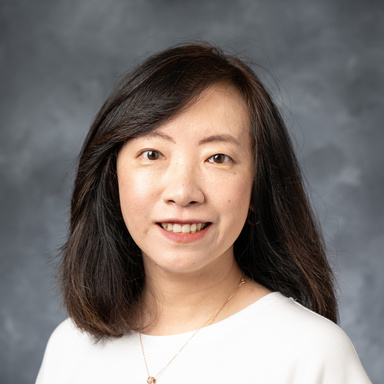
Man (May) Guo
Associate Professor
School of Social Work
What is the focus of your work?
My work focuses on understanding the diversity of aging experiences, particularly among immigrant and racial/ethnic minority populations. I examine how factors at multiple levels, such as family relationships, community environments, and broader structural inequalities like discrimination, shape health and well-being in later life. A central goal of my research is to move beyond singular views of aging by highlighting both the challenges and the resilience that emerge from people’s social and cultural contexts.
Tell us about the broad impact you would like your work to have.
I hope my work contributes to more equitable aging experiences by informing policies and services that better reflect the needs of diverse populations. By identifying both risks and sources of resilience across different groups, my research helps social work practitioners and policymakers design culturally responsive, strengths-based interventions. Although my work often addresses international and global populations, its insights are highly relevant to communities like Iowa, where growing demographic diversity is reshaping how we approach aging and caregiving.
What excites you the most about the environment in CLAS?
What excites me most about CLAS is the opportunity for interdisciplinary collaboration and the strong support for both research and teaching. My work sits at the intersection of social work, public health, sociology, and gerontology, and CLAS provides an environment where these perspectives can come together in meaningful ways. I also value the collegial and supportive atmosphere, which encourages innovation and helps translate research into real-world impact. For instance, I was able to co-write a textbook with the support from CLAS.
What are your hobbies and pursuits outside of work?
Outside of work, I enjoy reading, traveling, and spending time with my family. Reading is both a personal passion and a way to stay curious and engaged with new ideas, whether they relate to my research or extend far beyond it. Traveling allows me to experience different cultures and perspectives firsthand. Most of all, I cherish the time I spend with my son, whether we’re exploring new places or simply enjoying books together.
What are your favorite things to do in Iowa City?
I especially enjoy spending time at the Iowa City Public Library, which has been a meaningful place for both me and my son since he was a toddler. We’ve spent many hours exploring new books together. I also love attending performances at Hancher Auditorium—it’s a beautiful venue, and we’ve seen many memorable shows there.
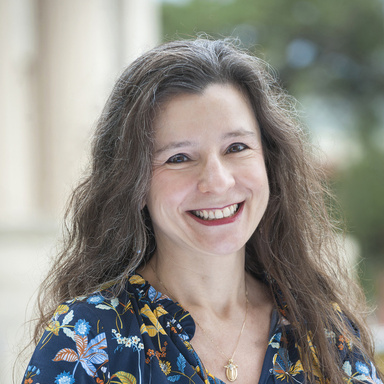
Monica Correia
Professor of 3D Design
School of Art, Art History, and Design
What is the focus of your work?
My work centers on design across furniture, product, interior, and textile weaving, with a strong emphasis on material exploration and hands-on making. With a background in architecture and design, I work with various design applications from functional objects to art installations. I employ both traditional craftsmanship and digital tools. My projects involve a wide range of materials including wood, metal, plastic, and textile.
Approximately two years ago, my practice expanded to include handwoven textiles. After working with felt and velvet, I recognized textile design as a meaningful extension of my broader design work. This realization led me to study traditional weaving techniques which I now explore through both wall and functional textile pieces.
Today, weaving plays an integral role in my creative practice and teaching, and my work aims to create moments of joy and tactile engagement for both the viewer and the user.
Tell us about the broad impact you would like your work to have.
Through local, national, and international exhibitions, I would like my work to continue to create opportunities for dialogue and reflection around how design can foster joy, connection, and a meaningful user experience.
I hope experimentation and research continue to guide the 3D Design program and that students will continue to develop a diverse body of work for their portfolios and gain confidence working across disciplines and fabrication methods.
A clear indicator of the impact of my work is students’ success beyond university. Many have exhibited nationally and internationally in addition to securing professional positions in design-related fields.
What excites you the most about the environment in CLAS?
What excites me most about the CLAS environment is its strong culture of interdisciplinary collaboration. I value both collaborating with faculty across departments and teaching students from a wide range of academic backgrounds.
A few years ago, I collaborated with faculty and students from Theatre Arts, Dance, and Computer Science on a mixed-reality performance which later expanded to include a colleague from Engineering. This type of collaboration was made possible by the open, interconnected nature of CLAS that actively supports experimentation and cross-disciplinary research and teaching.
What are your hobbies and pursuits outside of work?
Outside of work I enjoy walking and exercising, particularly outdoors. I try to protect time to support both my physical and mental well-being. In addition to this, I also enjoy reading design-related magazines and books which helps me stay inspired and connected to current conversations in design, craft, and making.
What are your favorite things to do in Iowa City?
Some of my favorite activities in Iowa City include walking along the Iowa River and spending time in the City Park area. I also enjoy attending performances at Hancher Auditorium and concerts at the School of Music. Iowa City’s combination of nature, arts, and community engagement is something I value deeply.
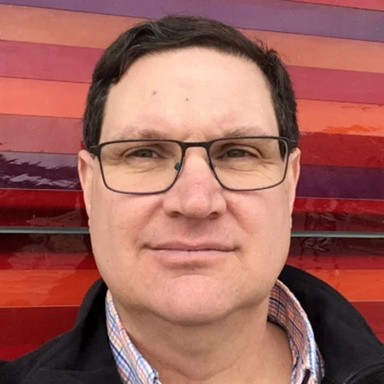
Matthew Hill
Professor
Department of Anthropology
What is the focus of your work?
I am an archaeologist that looks at how past people interacted with and shaped their environment across different times and places. I specialize in the study of animal remains from archaeological sites, so I have interest in understanding how people use and affect wild and domesticated animals in their lives. One part of my research explores how hunting influences the subsistence practices and land use of Native Americans, as well as considering how this hunting impacts the biology and populations of prey animals. Another part of my research examines how the human-dog relationship changes among Native Americans and Europeans during the period of colonialism.
Tell us about the broad impact you would like your work to have.
Through my research and teaching I try to show that many of the relationships modern society has with its environment today existed in the past. I try to show that if we are open to understanding from past people and cultures, we might understand how we got to where we are today, and we might even learn which of our adaptions could be successful in the future and which are problematic.
What excites you the most about the environment in CLAS?
Being a member of CLAS and the Department of Anthropology have exposed me to amazing colleagues and students who constantly inspire my research and teaching.
What are your hobbies and pursuits outside of work?
I don’t think I have any traditional hobbies, but I recharge by spending time with my family or relaxing at home, often reading or watching movies. When I can, I like to take road trips to new places in the Midwest or across the country.
What are your favorite things to do in Iowa City?
There are many very good restaurants across Iowa City, so it is fun finding new places to eat. I am also fond of walking around the historic neighborhoods around downtown looking at the different architecture styles and finding the old trash dumps people used before the city collected household and business rubbish.
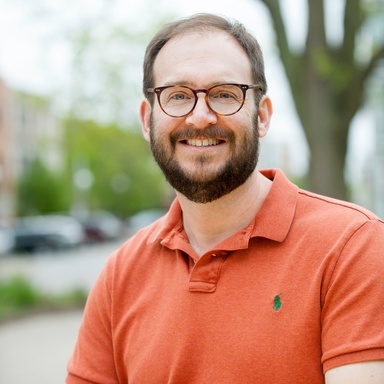
John Freeman
Dewey B. and Velma P. Stuit Professor
Deparment of Psychological and Brain Studies
What is the focus of your Work?
My research focuses on the brain mechanisms of learning. Humans and other animals learn about signals in the environment that predict good things and bad things. We want to understand how brains learn about these signals and make predictions.
When I started this research, we were interested in which brain areas learn and how information is stored in them. Over the years our perspective has changed, and we now recognize that multiple areas of the brain work together during learning. We use neuroscience methods to measure how brain systems talk to each other as learning develops and later when the learned information is remembered. We examine how communication among brain areas unfolds at different timescales during learning such that we can measure dynamic changes in brain communication occurring within a fraction of a second, as well as across days, weeks, or even years. Our hope is that we can understand the language of brain communication and use that knowledge to determine how information gets stored in the brain.
Tell us about the broad impact you would like your work to have.
The broad impact of our work is advancing fundamental knowledge of how learning and memory are organized in the brain. One promising application of our research is for treating cognitive deficits caused by brain damage or illness using interventions such as brain stimulation. Brain stimulation is most effective if it facilitates the natural modes of brain function and communication among brain areas. If we can crack the code for brain communication, we can optimize brain stimulation treatments for improving cognition.
What excites you the most about the environment in CLAS?
The CLAS and University of Iowa provide an outstanding environment for neuroscience research. Through the Iowa Neuroscience Institute, there are numerous opportunities to collaborate with neuroscientists in multiple areas of specialization. CLAS also gives me the opportunity to teach classes in learning and neuroscience. It has been an immense pleasure to teach students about topics that inspire me.
What are your hobbies and pursuits outside of work?
I enjoy outdoor pursuits (fishing, hiking, and golf) as well as music, poker, and cooking. Smoking meats is an obsession of mine. I also enjoy domestic and international travel.
What are your favorite things to do in Iowa City?
My wife and I hang out with friends in our neighborhood and across Iowa City. We also like to dine out at some of the excellent restaurants (probably too much) and attend shows at the Englert Theater and Hancher Auditorium. Hawkeye sports events are often on our agenda, including football, basketball, and baseball. During the warmer months, we can be found at Finkbine golf course.