By Fatima Salinas
Faculty across CLAS are engaged in fascinating work. Take a look below to meet and get to know four CLAS researchers and artists.
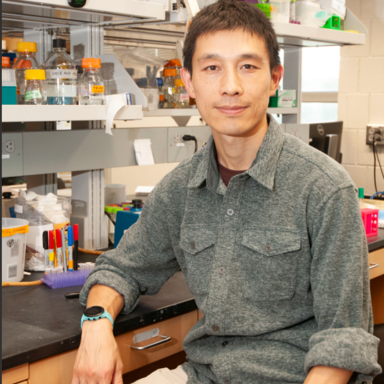
Bin Z. He
Associate Professor
Biology
What is the focus of your work?
The long-term goal of our lab is to understand the genomic adaptation behind the multiple origins of human fungal pathogens—pathogenic fungi, including yeast pathogens, emerged multiple times in evolution and novel pathogens continue to arise, posing a great threat to human health. We approach this question from an evolutionary angle, focusing on two features: divergence in stress-response gene regulatory network, and adhesin gene-family expansion.
Tell us about the broad impact you’d like it to have.
I aim to make broad impacts on three areas with our research and outreach. First, we would like to identify shared genomic changes behind the repeated emergence of human fungal pathogens, thereby offering new biological targets for the prevention and treatment of fungal infections. Second, we aim at using stress response as a model to uncover general principles about the evolution of gene regulatory networks, which are a major driver for generating biodiversity. Lastly, I aim to use the courses I teach in CLAS and summer coding workshops as pioneering efforts to enhance computational skills for Biology and related majors.
What excites you about the environment in CLAS?
The interdisciplinary nature and the shared passion for excellence in educating our students while excelling in research.
What are your hobbies and pursuits outside of work?
I enjoy running. I'm a regular participant in the Iowa City Park run; a free, volunteer-run weekly 5k. We have a lot of colleagues, including those from CLAS, in the group!
What are your favorite things to do in the Iowa City area?
Visit Prairie Lights Cafe and browse the books, enjoy the locally sourced food from New Pi Co-op, and take advantage of the great trail system for running and biking.
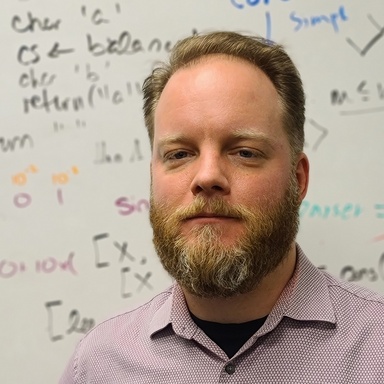
J. Garrett Morris
Associate Professor
Computer Science
What is the focus of your work?
My work is grounded in the belief that programming should be a fundamentally creative and joyful activity. Programming involves exploring and understanding a problem, giving it a precise computational form, devising a solution, and then being able to execute and evaluate that solution.
My group studies modularity, or structured code reuse. One way to understand our work is to move documentation and informal knowledge directly into the code, making reuse problems easier to identify. More broadly, we focus on discovering new and more expressive forms of modularity and modular programming.
Tell us about the broad impact you’d like it to have.
The broader impact of this work is to make programming more understandable, maintainable and fulfilling. By developing better forms of modularity, we want code reuse to become a natural and rewarding part of both writing programs and reusing them.
What excites you about the environment in CLAS?
I believe computer science fundamentally belongs in the liberal arts and sciences. Its foundations overlap with mathematics and the philosophical study of logic and epistemology, while human-computer interaction connects to psychology and cognitive science, and computing and society intersects with sociology and law.
Computer science also overlaps with engineering and has applications across the academy. Most importantly, students will face problems and systems very different from those of today and will need a broad understanding of computing and its roles to succeed.
What are your hobbies and pursuits outside of work?
I’ve always loved reading and am currently drawn to books about academia, including John Williams’ Stoner, which I’m midway through and find astonishingly beautiful and heartbreaking. I’ve also been an avid video gamer since grade school, though my gaming is currently limited by a partially disassembled PC.
Most of my time now is devoted to my nearly two-year-old son—watching and contributing to his development is a constant source of fascination, even when mixed with frustration.
What are your favorite things to do in the Iowa City area?
I love Downtown Iowa City. Yeah, it's small, and parts of it are very undergraduate-focused. But Prairie Lights is great; I really enjoy going to FilmScene and Riverside Theatre, and you can find me at Dandy Lion most weekends for brunch. Finally, a shout-out to the Iowa City Public Library.
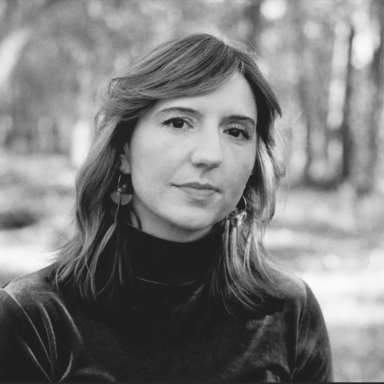
Sarah Minor
Assistant Professor
English
What is the focus of your work?
I’m a writer who works at the intersection of visual art, research, and creative nonfiction, with a focus on how readers learn through seeing as much as reading. I’m interested in the sheer number of images we encounter every day and how quickly we take in ideas, emotions, and information when text and images work together.
My books experiment with form and storytelling in unusual ways, such as chapters shaped like the Mississippi River that connect its ecological history to my family’s home along its banks, or a short, illustrated history of “slime” as a toy, a movie monster, and a fetish object. Like many nonfiction writers, I’m drawn to creative research and to the idea of “true stories” as something flexible—stories I can question, reshape, and explore through writing that lives both on the page and in gallery spaces.
Tell us about the broad impact you’d like it to have.
I believe that syntax carries emotion and that reading—while changing—remains essential. Despite its constraints, nonfiction is the most expansive and exciting space for creative writers. In my classes, I especially love working with poets and fiction writers as they discover that nonfiction can be just as inventive, playful, and wild as any poem or short story. Contemporary nonfiction invites writers to grapple with urgent questions of self-representation, truth, and inheritance, and it’s thrilling to see what new writers create when they embrace its permissive, experimental possibilities—whether through images, white space, or prose that moves like a poem.
What excites you about the environment in CLAS?
Being a creative writer at Iowa is uniquely rewarding. The college honors the history of writing while actively supporting its future in imaginative, unexpected ways. My published work draws on skills creative writers don’t always expect to learn—from shaping paragraphs into visual forms to working with archivists and writing travel grants. In the College of Liberal Arts and Sciences, I’m surrounded by the resources, opportunities, and colleagues that sustain my work. Teaching in CLAS allows me to move across disciplines: in the fall, I teach Multimedia Writing in English; in the spring, I collaborate with faculty in Art, Film, and Music to showcase powerful, interdisciplinary creative projects.
What are your hobbies and pursuits outside of work?
As a writer and professor, my work often overlaps with my hobbies. My newest book, Carousel, explores the history of embroidery and textile-based images, and lately I’ve been knitting at home and taking a sewing class at a local community craft space to learn how to make a complex jacket. The book also examines the dark history of the treadmill, which has me guiltily spending a lot of time running at the gym. Over break, I [began] learning video editing, writing grants for future projects, watching strange films, and reading a gothic novel for fun.
What are your favorite things to do in the Iowa City area?
I love spending time in Hickory Hill Park—a magical space to witness all seasons, a great place to see a dog, a spot that immediately feels like you’re no longer in Iowa City or on any timeline. This city is also a great biking city, and it took me far too long to learn about the easygoing community at the Bike Library. I love everything FilmScene is doing, and have a lot of fun running into friends at movies I decide to go see last minute and then eating popcorn for dinner. I also believe in Gabe’s and the downtown co-op. If I’m ever feeling blue, I go there.
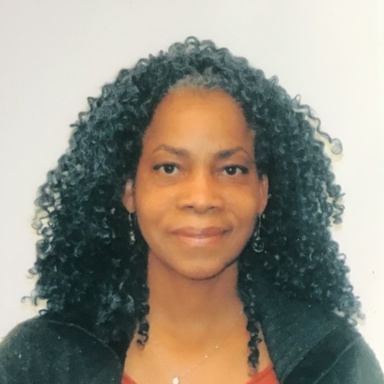
Anny-Dominique Curtius
Professor
French
What is the focus of your work?
Trained as a comparatist, my work draws from across the humanities to study artistic, cinematic and literary expressions in Francophone studies, particularly in the Caribbean, the Indian Ocean, and Sub-Saharan Africa. My scholarship emphasizes cross-disciplinary exchange, openness to diverse perspectives and creative thinking. It is also shaped by fieldwork, collaboration with scholars and informants, and archival research.
My first book, Symbiosis of a Memory: Caribbean Religions and Literatures, draws on Francophone, comparative Caribbean, and early modern studies to examine transatlantic slavery, colonial assimilation, and creolized Caribbean religious practices.
My second book, Suzanne Césaire: Literary and Artistic Archaeology of a Hindered Memory, is the first full study of the overlooked Caribbean intellectual Suzanne Césaire, reframing her as a cultural theorist, playwright, and critic of France’s Vichy regime rather than the silent wife of Aimé Césaire.
My third publication, Women, Theory, Praxis, and Performativities, is an interdisciplinary, co-edited volume centered on women’s lived experiences, activism, artistic production, and intersectional care.
My current book project, Tidalectical Archives: Rememory in Museums and Performances, explores how performance, art, and museums can reimagine memory through decolonial, non-hierarchical frameworks.
Tell us about the broad impact you’d like it to have.
I would like my work to be in conversation with research that unearths the groundbreaking work of unacknowledged women thinkers and artists, and with interdisciplinary scholarship that seeks to have a broader impact on society.
What excites you about the environment in CLAS?
CLAS cultivates the support and growth of interdisciplinarity, which allows me to think across borders and paradigms and schools of thought, and shape inspirational collaborations with an active and global community of scholars and students in the humanities at the University of Iowa.
What are your favorite things to do in the Iowa City area?
I practice yoga and enjoy Iowa City’s artistic and literary scene (the Stanley Museum of Art, Hancher, Prairie Lights, FilmScene, The Englert).