By Fatima Salinas
Michelle Voss is a professor in the Department of Psychological and Brain Sciences in the College of Liberal Arts and Sciences at the University of Iowa. Her research focuses on how the brain changes with age and how lifestyle choices, especially physical exercise, can support brain health.
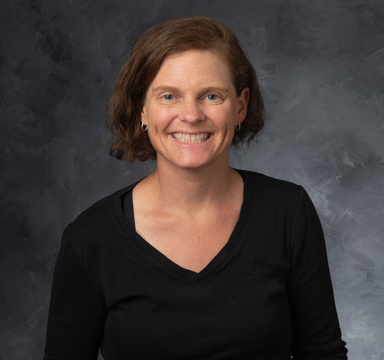
Voss was recruited to Iowa through the Aging Mind and Brain Initiative, a campus wide effort designed to address aging and memory loss through interdisciplinary collaboration.
The initiative created space for research that crossed departmental boundaries and allowed Voss to build partnerships across psychology, health sciences, radiology, and medicine.
In her early years at Iowa, Voss focused on building the research infrastructure needed to study how exercise affects the brain. That work included developing research protocols, establishing lab procedures, and forming collaborations with colleagues in the Departments of Radiology and Health, Sport, and Human Physiology.
Her research now spans cognitive aging, executive function, and brain network neuroscience, with a central focus on how physical activity and cardiorespiratory fitness influence brain systems involved in memory, attention, and higher-level thinking.
Voss’ work challenges the assumption that cognitive decline is inevitable, and instead highlights the role of modifiable behaviors in supporting long-term brain health.
“Many of the changes we associate with aging are not fixed,” Voss said. “Lifestyle choices, especially physical activity, can have a meaningful impact on how the brain functions over time.”
Voss is currently leading the BOOST Project; a research initiative focused on adults ages 40 to 65 that explores strategies for improving exercise adherence through cognitive skills. The project represents a new direction for the lab and expands its focus to midlife, while also providing additional opportunities for student involvement and interdisciplinary collaboration.
Student involvement is a core component of Voss’ research program. Her lab includes high school interns, undergraduate students, post-baccalaureate researchers, and graduate students who gain hands-on experience conducting research and working directly with older adult participants.
Through these experiences, students learn scientific methods while also gaining insight into the lived experience of cognitive aging.
“This isn’t just about producing research,” Voss said. “It’s about training students to think critically, ask good questions, and see themselves as active contributors to science.”
Voss emphasizes that student contributions are not only valuable for their own development, but also enrich the lab’s research. She encourages students at all levels to trust their curiosity and ask questions, creating a dynamic environment in which ideas can come from anywhere.
“Students should know their ideas matter, and they should stick to their curiosities,” Voss said. “I really believe in the value of being more involved and less impressed when students bring questions; it helps everyone. It can spark new perspectives, new approaches, and sometimes, even new lines of research.”
Community engagement also plays an important role in Voss’ work. As her research has grown, she has become increasingly involved in sharing findings with the public and addressing questions related to brain aging, dementia risk, and lifestyle behaviors.
These conversations help ensure that research remains grounded in real-world concerns and accessible beyond academic settings.
“I’m really excited about the potential for students to get involved with our research,” Voss said. “This has been such a great place to do the work we love, and with our strong Psychology department; Health, Sport, and Human Physiology; Radiology, and medical school, I feel like this is one of the best places to be conducting this kind of research and engaging students.”