By Bri Brands
Fascinated by giving her students hands-on learning opportunities and inspiring creativity, Rachel Yoder, assistant professor of screenwriting in the Department of Cinematic Arts, is exploring new ways to incorporate experiential learning into the classroom.

This semester, Yoder is instructing a folk horror narratives course, teaching her students about folk horror in text and on screen, which then culminates in students scripting rituals or ceremonies, along with the lore out of which they arise, and performing them.
Yoder believes that some of the best learning is done outside of the traditional classroom setting.
“The great thing about being an artist is that part of your process is experiencing life and experiencing new things,” Yoder said. “As a professor, part of my job is to fill up students’ creative tanks and give them experiences that might spark something or make them ask a question they wouldn’t have otherwise asked.”
After showing her students The Wicker Man, a 1973 British folk horror film about strange Pagan rituals occurring on a small Scottish island, Yoder immersed her students in two different experiences: the folk art of willow weaving and the Mabon celebration.
For willow weaving, the class was joined by College of Liberal Arts and Sciences alumna Anna Geyer from the Land Alliance Folk School, a local community space that aims to educate people about the land, themselves, and each other.
Geyer shared the tradition of folk schools as places where individuals can learn about the trade, practices, and arts and crafts of the land they are living on.
To demonstrate this idea, Geyer cut down and brought in willow plants from the Land Alliance Folk School farm, teaching students how to make them into chains, baskets, and crowns.
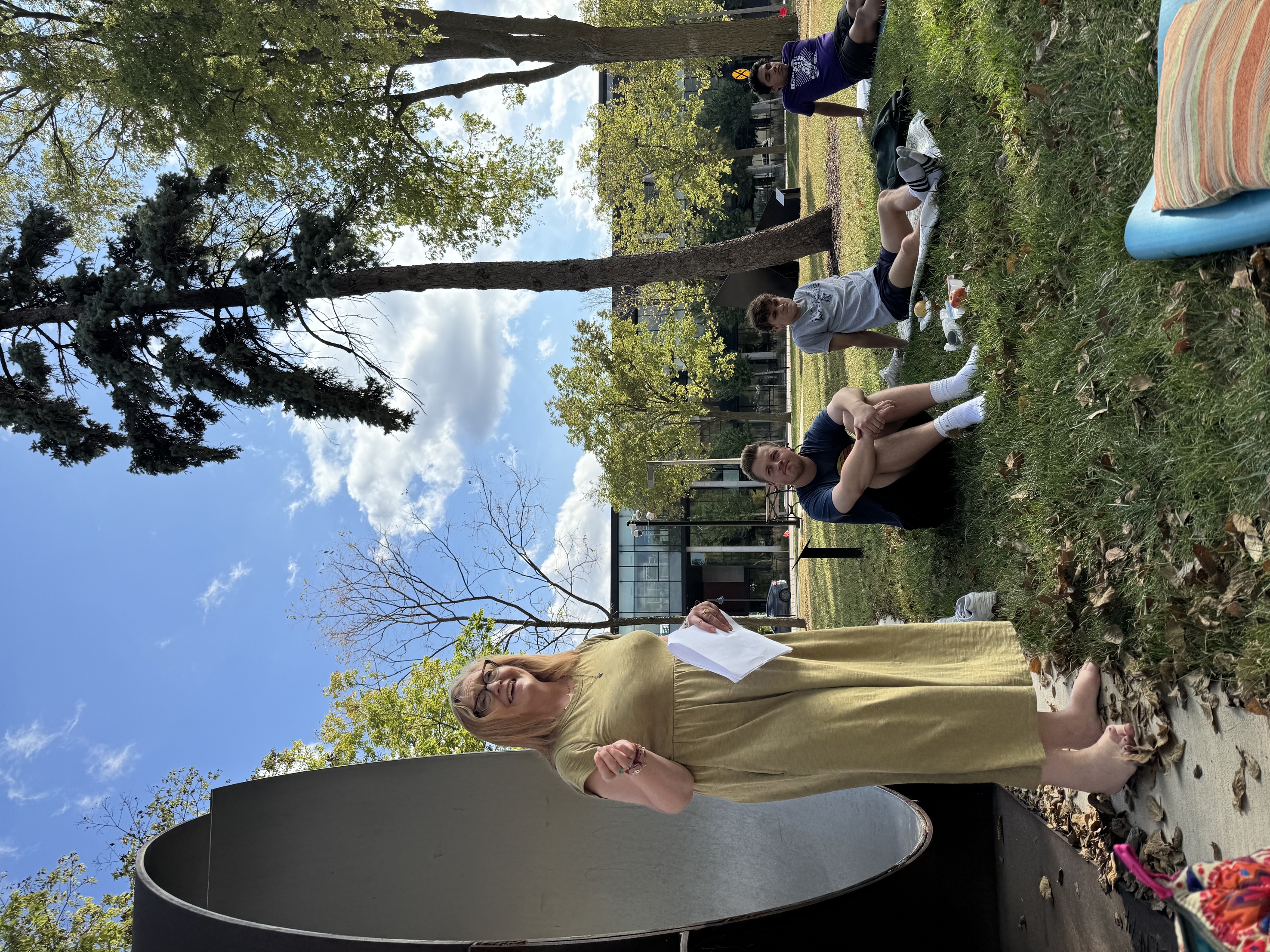
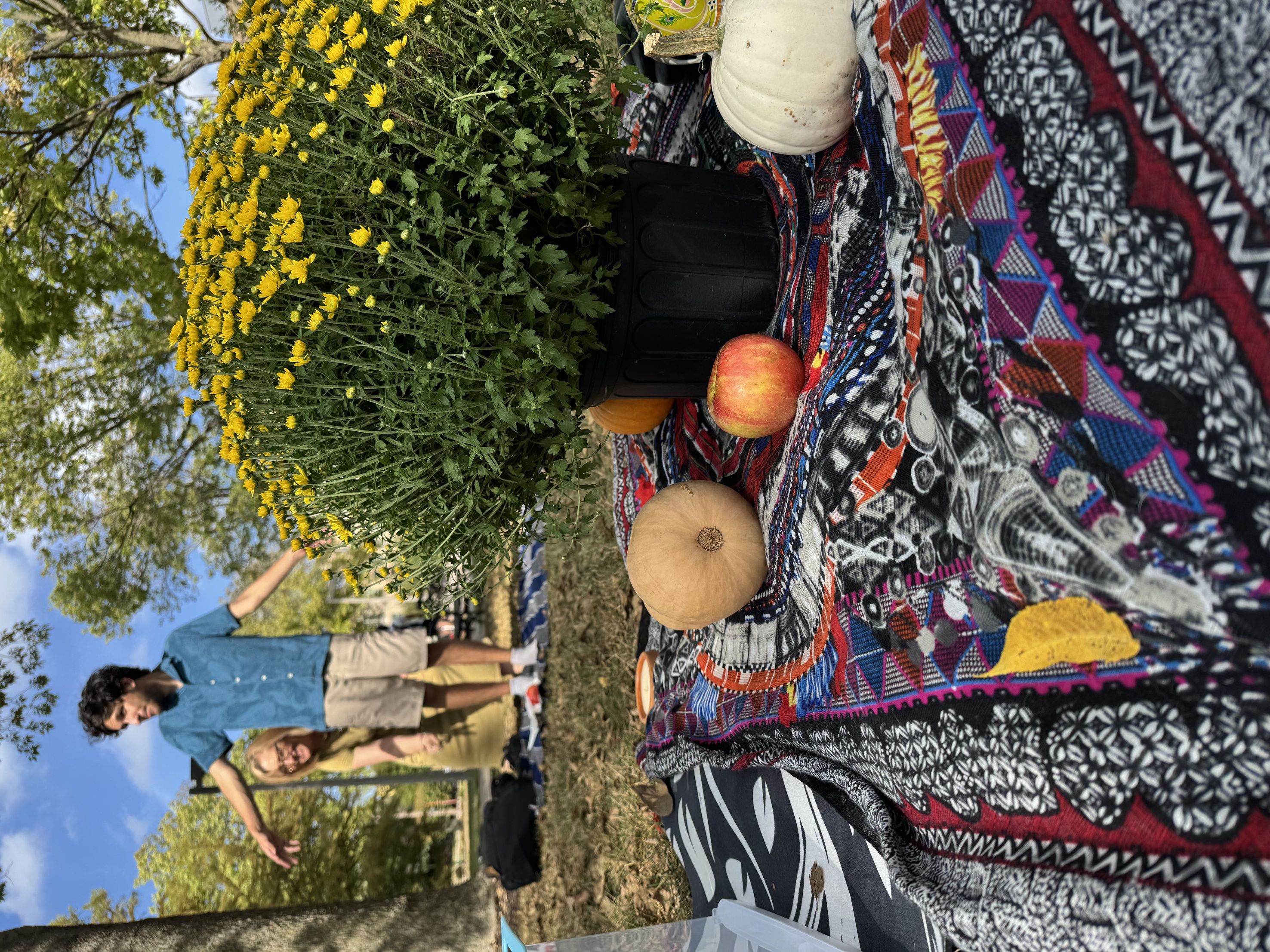
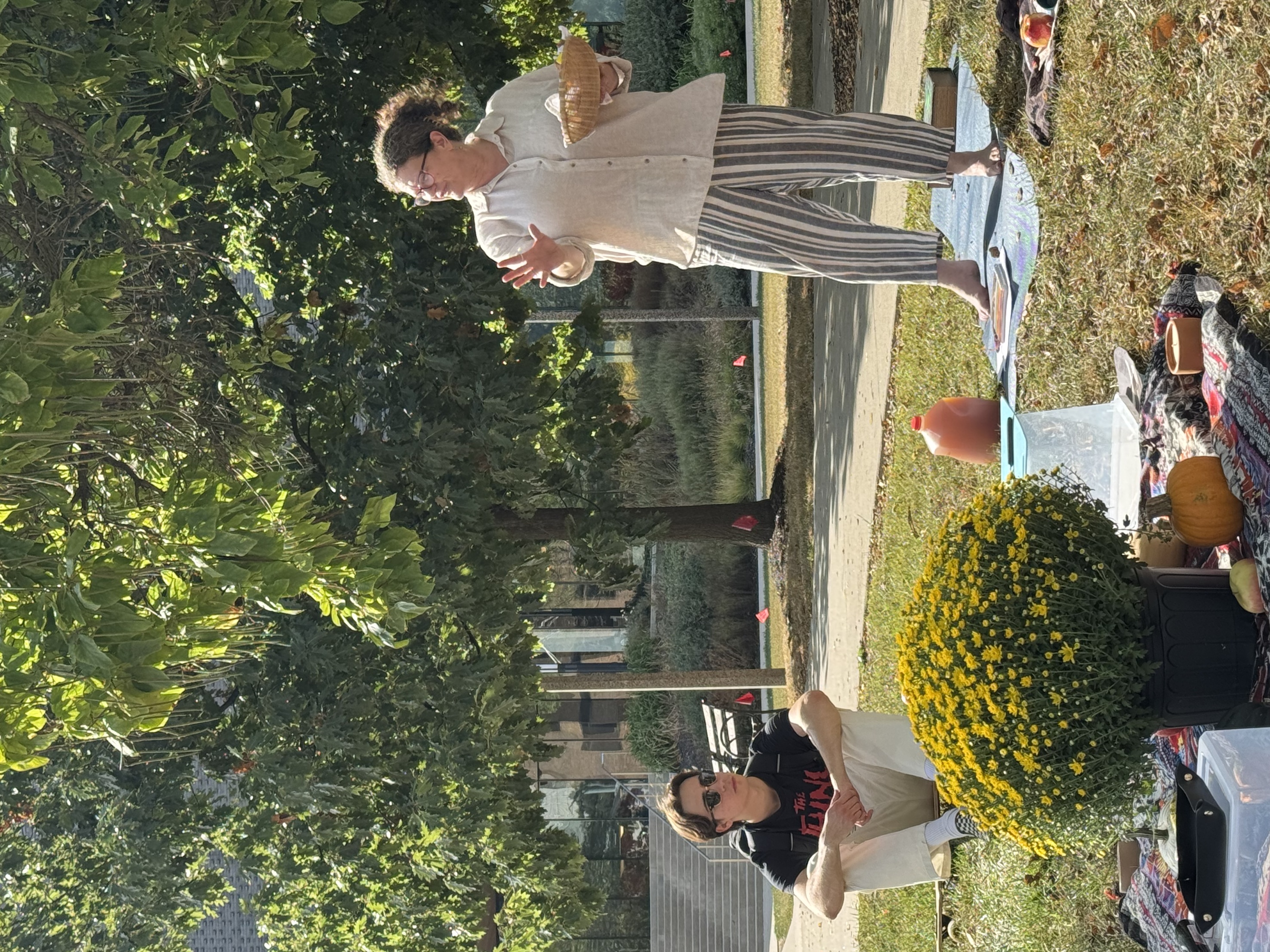
The Mabon celebration is a Pagan tradition tied to the fall equinox and celebrates the beginning of harvest season. Yoder and her students were joined by University of Iowa alumnae Robin Springer and Chris Humrichhouse, who walked the class through several Mabon traditions and the history of the celebration.
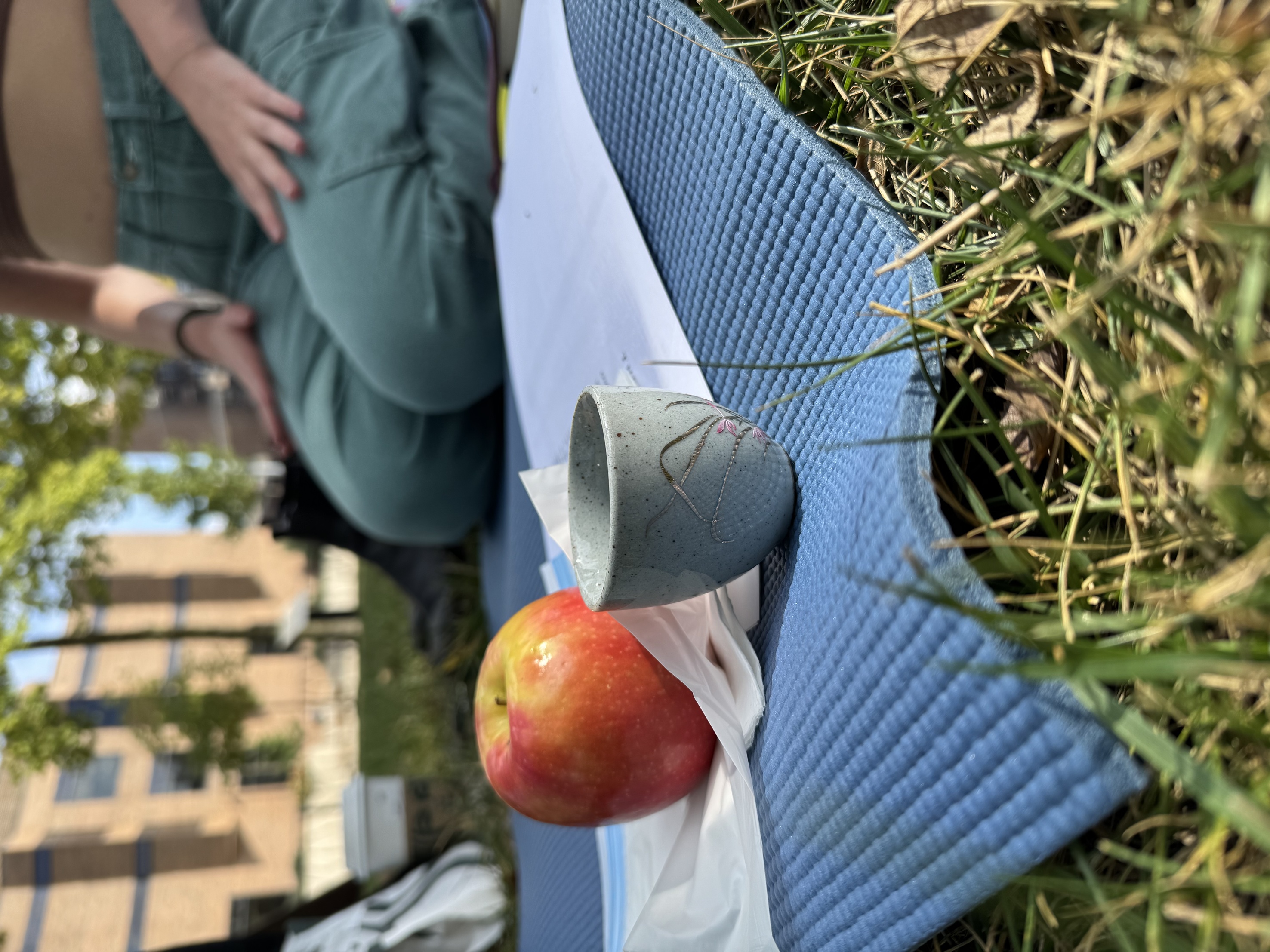
Rituals included bowing to each cardinal direction and calling different phrases into the wind, cutting an apple and planting the seeds, and writing something that they wanted to let go of on a piece of paper and burning it.
Yoder said the experiential learning opportunities correlate with the deeper pedagogical purpose of the class. For their final exam, students will write the lore of a ritual or ceremony and perform it. The traditions serve as inspiration for some of those projects.
“[The students] have said they’re glad to do something different,” Yoder said. “So many classes are tethered to the classroom. You learn well in the classroom too, but it’s nice to get out of the classroom, use your body a little bit more, and gain some inspiration through non-traditional avenues.”
Students’ final ceremonies will be advertised on the Department of Cinema Arts Instagram and are open to the public for attendance.