By Fatima Salinas
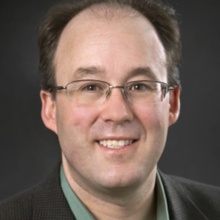
Professor Bob McMurray and his team in the Department of Psychological and Brain Sciences in the College of Liberal Arts and Sciences, received a $794,490 grant from the National Science Foundation to understand how children and adults hear and distinguish speech sounds.
McMurray’s work will bridge the gap between theories of speech perception and differences in real-world language and reading skills, as well as help better understand how kids learn to hear and read—and how to help those who struggle with it.
The research capitalizes on the strength of McMurray’s Growing Words Project, a five-year, NIH-funded research project studying how school-age children develop the ability to recognize both spoken and written words in real time—a critical skill for language and reading. Researchers want to understand how vocabulary grows, why some children struggle, and how this process connects to reading and language disorders.
“The new project is an exciting way to build on an unexpected finding from Growing Words,” McMurray said. “Our support from the National Science Foundation is critical in taking this next step and is helping us to bridge the divide between the cognitive science of how people process speech and real-world issues like reading.”
Growing Words began in 2021 and offers services to children in Iowa City and Cedar Rapids. The team has submitted a renewal application with the hope to continue the project.
An unexpected finding of Growing Words is that children with language and reading disorders seem to hear sounds inconsistently – they can hear the exact same recording in different ways from time to time. McMurray’s new project aims to leverage this to understand where these differences come from and to create practical tools for schools to help identify children who may struggle with reading or speech early on.
The project has a timeline of three years. McMurray and his team will study the concept on over 300 kids and 600 adults from Iowa City and Cedar Rapids.
The research team includes an assistant professor Ethan Kutlu, who has worked as an experimental linguist and the principal investigator of the VoiceLab. Leah Zimmermann, a faculty member from the college of education, department of Teaching and Learning and the Iowa Reading Research Center, whose research focuses on relationships between morphological processing and the reading abilities of middle school students.
The project will focus on a new concept called “categorization consistency.”
"This idea describes how reliably someone responds to the same sound over different encounters,” McMurray said. “Imagine you have a recording of someone saying ‘Herky.’ If you’re perceiving consistently, every time you play it sounds exactly the same. But for some people it might sound a little different every time.”
McMurray said that learning to read begins with connecting letters to sounds, like understanding that the letter “B” corresponds to the “b sound.” But that connection only works if the brain can first recognize and categorize speech sounds, a process that’s more complex than it appears as its sound changes depending on how fast someone is speaking, their accent, their age, or sounds around it.
“What really matters is the idea of consistency,” McMurray said. “When you hear a sound, do you hear it the same way every time?”
Research by McMurray’s lab and others has shown that speech sound categorization develops slowly and can take up to 18 years for people to understand even the simple distinctions between sounds like “ba” and “pa.” This slow development has important implications for children learning to read. While they are being taught to map letters to sounds at age six or seven, they are still learning how to make sense of the sounds they hear.
A key part of the project involves bringing research into classrooms through a new course at the University of Iowa for current and future teachers.
The course will connect cognitive science and education, with participants working together to create a school-friendly version of the visual analog scale test. This tool will be piloted in the Cedar Rapids Community School District to see how well it helps identify children with speech perception difficulties.
The team will conduct their research in labs in Iowa City and Cedar Rapids with input from experts in language, education, and neuroscience. A critical part of this project is a workshop where students in the College of Education will collaborate with students from the Cognitive Science Language certificate program to help design classroom-friendly solutions.
“We’re hoping to build momentum, with a goal of launching a full course by fall 2026,” McMurray said. “The course will bring cognitive scientists and teachers together in the same space. We’re all going to learn a lot from each other, and I think it’ll be exciting.”